Off the coast of Madeira, a ray glides over the seabed near the Desertas Islands. The footage, captured by underwater cameras, is being analysed by scientists who want to understand how marine protection is reshaping life beneath the waves.
Juan Mayorga, a marine biologist with National Geographic's Pristine Seas initiative, is part of an expedition bringing together around 200 researchers to study the archipelago's marine environment. "It's a good day when we see animals like this!" says the Colombian scientist, who studies the images to gauge the impact of protection measures.
The team, working from about 15 vessels, is surveying marine life across the archipelago, assessing ecosystem health and exploring how these habitats can better withstand the pressures of climate change. "As we protect this place, year after year, the fish get bigger and produce more and more offspring. That's protection working," Mayorga stresses.
Comparing protected and fished zones
The expedition's flagship is the 70-metre sailing ship Santa Maria Manuela, which has brought researchers from around the world to the Desertas, a group of three uninhabited rocky islets about 40 kilometres southeast of Madeira. Using baited underwater cameras mounted on metal frames, the team films fish at depths of 40 to 50 metres.
The goal is to compare two areas: the southern side of the Desertas, where fishing is completely banned, and the northern side, where some fishing is still allowed. "We're going to put these cameras in these protected marine areas and then also in zones where there is fishing, and we're going to compare the two," explains Jennifer Caselle, a researcher at the Marine Science Institute at the University of California, Santa Barbara.
Beyond visual surveys, the scientists collect water samples to detect traces of fish DNA from species that might evade the cameras. On the islands themselves, they measure rock temperatures in the intertidal zone to study how heat affects marine organisms, helping to predict how biodiversity may shift as the planet warms.
Rui Seabra, a 44-year-old researcher from the University of Porto, attaches temperature sensors to rocks exposed at low tide along a small cove. He wants to understand how crustaceans and sponges behave in sunny versus shaded areas—information that could help scientists forecast how marine biodiversity will respond to rising temperatures. "We need to understand how biodiversity will be redistributed, which species will migrate where, what conditions exist here, how they will change and which species we expect to find here in the future," he says.
The expedition comes at a time when protecting marine ecosystems is high on the international agenda. Emanuel Gonçalves, the expedition leader and scientific director of the Oceano Azul Foundation, acknowledges the importance of global meetings such as the 17th Conference of the Parties on biodiversity, held in Yerevan, Armenia, in setting political priorities. But he insists that fieldwork cannot wait for political decisions. "We cannot wait. And that's what science is telling us as well. This emergency for action does not allow us to sit back and wait for decisions that sometimes take decades to be made," he says.
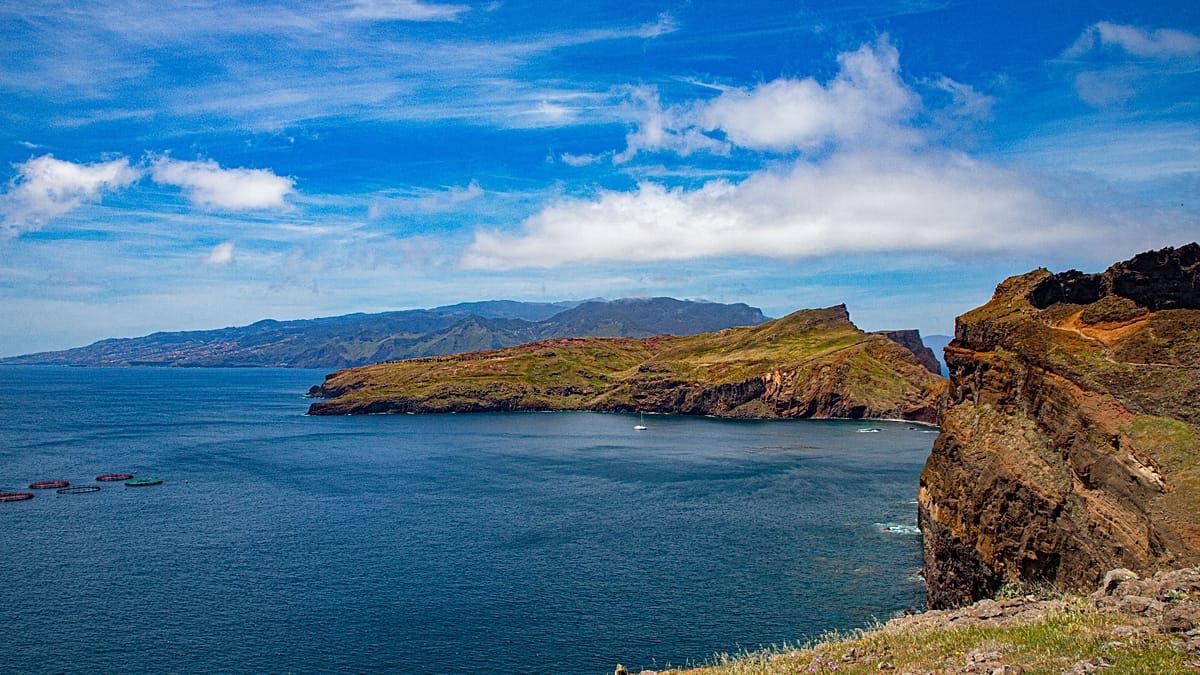
Madeira has long been a pioneer in marine conservation. The archipelago includes the main island of Madeira, the beach destination of Porto Santo, the Desertas Islands and the remote Selvagens Islands. In 1971, authorities created a reserve around the Selvagens to protect Cory's shearwaters, seabirds found around Madeira and other Atlantic islands. Expanded in 2022, the reserve now covers around 2,600 square kilometres, making it the largest marine protected area in the North Atlantic.
Another reserve, established around the Desertas Islands in the early 1990s, helped a colony of Mediterranean monk seals—one of Europe's most endangered marine mammals—grow from just eight animals to 31. The ongoing research aims to show whether similar recovery is happening across the food web, and whether such protection can serve as a model for other European waters. As EU auditors warn that marine protection targets will be missed, the findings from Madeira could offer both evidence and inspiration for stronger conservation efforts.