When European Commission President Ursula von der Leyen floated the idea of Canada becoming the EU's first "associate member" last month, it was met with resistance from several member states, most notably Germany. The term has since been softened to "ever closer association," reflecting a cautious but genuine willingness to deepen ties. The EU-Canada summit beginning today in Montreal is expected to adopt a joint declaration reflecting this new ambition.
There is broad agreement among the 27 member states on strengthening cooperation with Canada in areas such as defence, critical raw materials, energy, trade, and border security. Yet as the two sides move closer, questions are being raised about Canada's environmental commitments. The EU's climate chief recently urged member states to prepare for a 3°C warmer Europe, signalling that climate preparedness is a priority for Brussels. But what about Ottawa?
From climate champion to fossil fuel expansion
Prime Minister Mark Carney built an international reputation as a climate advocate during his tenure as governor of the Bank of England and as the UN's special envoy for climate action and finance. In 2015, he warned that the financial risks of climate change could materialise sooner than markets expected. "The catastrophic impacts of climate change will be felt beyond the traditional horizons of most actors," he said at Lloyd's of London, "imposing a cost on future generations that the current generation has no direct incentive to fix."
Since taking office in 2025, however, Carney's government has dismantled several key climate policies. According to groups like Climate Action Tracker and Environmental Defence, Ottawa has abandoned a planned cap on oil and gas emissions, weakened industrial carbon pricing, scrapped the electric vehicle mandate, and relaxed anti-greenwashing standards. Public transport funding has also been cut significantly.
Environmental critics argue these measures undermine both sides of Canada's decarbonisation strategy: reducing fossil fuel demand and investing in alternatives. While the government continues to support some clean energy projects, its emphasis on expanding oil and gas production creates a clear tension between climate commitments and economic strategy.
Accelerating oil and gas projects
The most visible sign of this shift is the push to fast-track major infrastructure projects. The 2025 Building Canada Act allows projects deemed to be in the national interest to bypass certain legal requirements. While the legislation was presented as a way to speed up critical minerals, renewables, nuclear power, ports, and hydropower, oil and gas projects have featured prominently.
In September 2026, the government introduced a law that would permit pre-approval of projects in designated regions, shorten major project reviews to one year, and give federal ministers greater power to remove environmental conditions attached to previously approved projects. Environmental groups warn that this weakens wildlife protections and reduces public oversight.
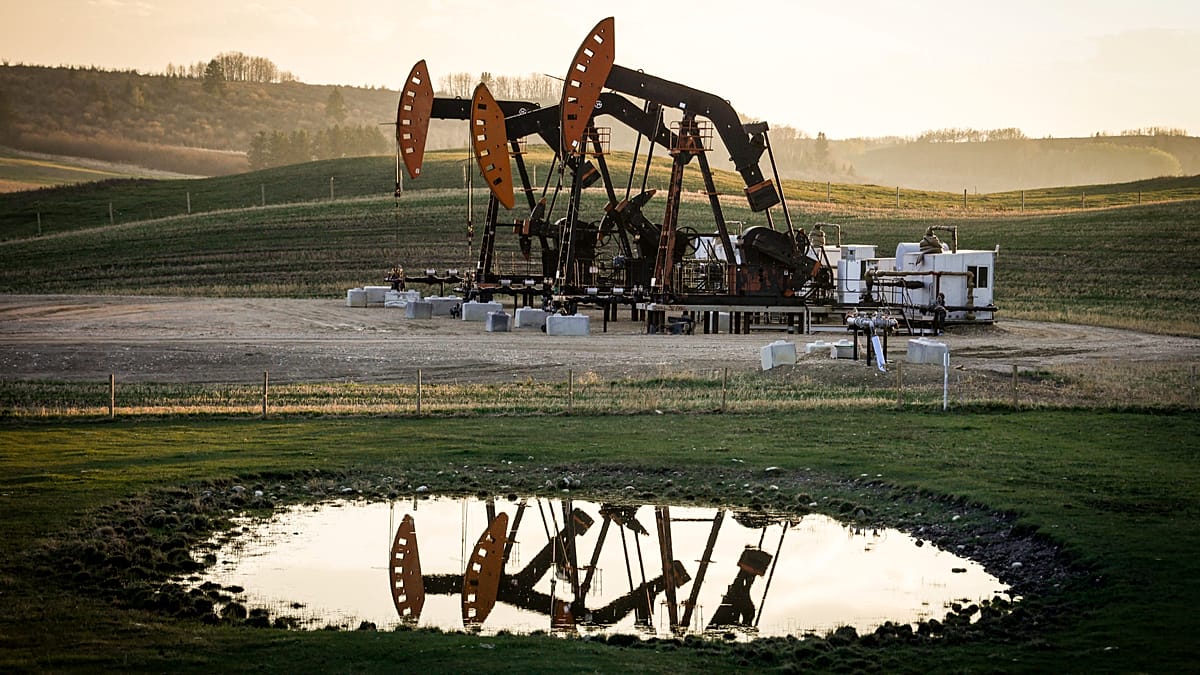
A proposed pipeline, the Pacific Link, would carry one million barrels of oil sands bitumen per day from Alberta to the Pacific coast of British Columbia. It threatens the habitat of endangered orcas and could increase greenhouse gas emissions by up to 18.7 million tonnes annually. This marks a significant departure from the climate credentials Carney once cultivated.
LNG expansion and the European market
Carney's energy strategy also includes expanding Canada's liquefied natural gas (LNG) export capacity. The government has backed plans that could double export capacity from the west coast and has signalled openness to developing gas exports from New Brunswick if the province reverses its fracking ban.
Ottawa argues it can provide reliable supplies to international partners seeking to diversify their energy sources. Ahead of this week's summit, the EU and Canada are expected to present a feasibility study on long-term LNG exports to Europe, according to a document seen by Euronews. For Europe, which has sought to reduce its dependence on Russian fossil fuels, additional supplies from politically stable producers could improve energy security. Asian markets are also potential destinations for Canadian LNG.
But greater availability of gas does not automatically translate into a faster energy transition. New LNG terminals and pipelines require substantial investment and can operate for decades, potentially locking in fossil fuel infrastructure. As European gas prices have tripled amid storage concerns, the appeal of Canadian LNG is understandable, but the climate implications remain contentious.
The EU's push for closer ties with Canada comes at a time when some member states are wary of overcommitting. The bloc's own climate agenda is ambitious, and partnering with a country whose emissions trajectory is uncertain could prove awkward. Yet the strategic benefits of cooperation on energy, critical minerals, and security are hard to ignore.
As the summit gets underway, the gap between Carney's international climate rhetoric and his domestic energy policies is likely to be a point of contention. Whether Canada can reconcile its ambition to become a global energy superpower with its climate pledges remains an open question — one that Europe, with its own climate goals, will be watching closely.