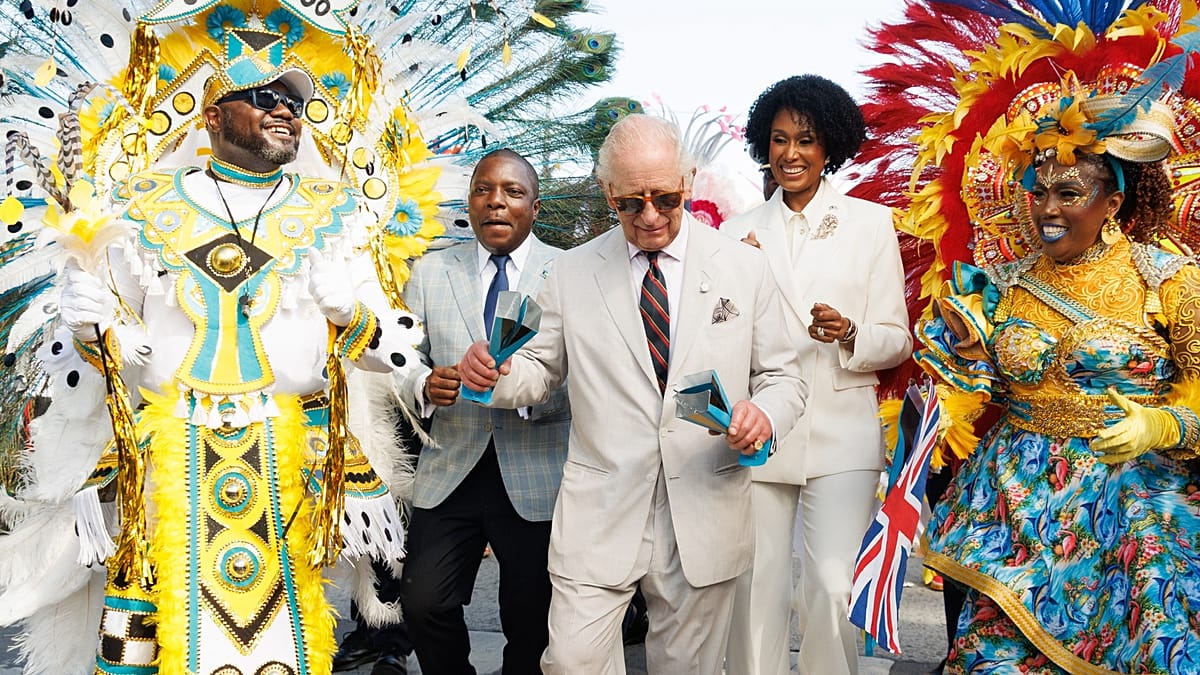
King Charles III displayed an unexpected flair for rhythm as he joined a vibrant Junkanoo street parade in Nassau, the capital of the Bahamas, on Wednesday. The occasion formed part of his inaugural Caribbean tour since his accession to the British throne, a journey that has blended ceremonial duties with cultural engagement.
A monarch embracing local traditions
The King, dressed in a light-coloured suit, was seen moving to the beat of the traditional Bahamian festival, which features elaborate costumes, cowbells, and brass bands. Junkanoo, a street parade with roots in the African diaspora, is a cornerstone of Bahamian cultural identity, and Charles's participation was widely interpreted as a gesture of respect towards the Commonwealth nation.
Witnesses described the monarch as relaxed and approachable, as he exchanged greetings with performers and onlookers alike. The parade, held in the heart of Nassau, drew large crowds eager to catch a glimpse of the royal visitor.
This Caribbean tour, which also includes stops in other Commonwealth realms, comes at a time when the monarchy's role in the region is under renewed scrutiny. Several Caribbean nations have recently signalled intentions to transition to republics, following the example of Barbados, which removed the Queen as head of state in 2021. The King's willingness to immerse himself in local customs is seen by some analysts as an attempt to modernise the monarchy's image and strengthen ties with its overseas territories.
During his visit, Charles also addressed issues of historical significance, acknowledging the painful legacy of the transatlantic slave trade, which disproportionately affected the Caribbean. His remarks were carefully crafted, balancing contrition with a forward-looking message of partnership and mutual respect.
The Bahamas, an archipelago of over 700 islands, remains a key partner for the UK in the region, with strong links in tourism, finance, and education. The royal visit underscores the enduring diplomatic relationship, even as constitutional debates continue in several Caribbean states.
For the King, this tour is also a personal milestone. It is his first major overseas engagement as monarch, following a period of mourning for his mother, Queen Elizabeth II, and his subsequent coronation. The trip has been closely watched by royal commentators, who note that Charles appears to be carving out a distinct style of diplomacy, one that prioritises cultural exchange and grassroots interaction.
Earlier in the tour, the King visited other Caribbean nations, where he met with local leaders and community representatives. In each stop, he has emphasised themes of climate resilience, youth empowerment, and economic cooperation—issues that resonate deeply across the region.
The Junkanoo parade in Nassau was a fitting climax to the Bahamian leg of the tour, offering a spectacle of colour and sound that left a lasting impression on the monarch. As he departed, he was seen smiling and waving, a gesture that seemed to signal genuine enjoyment of the festivities.
While the tour has not been without its critics, who argue that the monarchy's historical ties to colonialism remain unresolved, the King's engagement with local traditions has been largely well-received. For many Bahamians, the sight of their King dancing in the streets was a moment of shared celebration, transcending political debates.
As Charles continues his Caribbean journey, the images from Nassau are likely to become defining moments of his early reign, illustrating a monarch willing to adapt and connect with the diverse cultures of the Commonwealth.