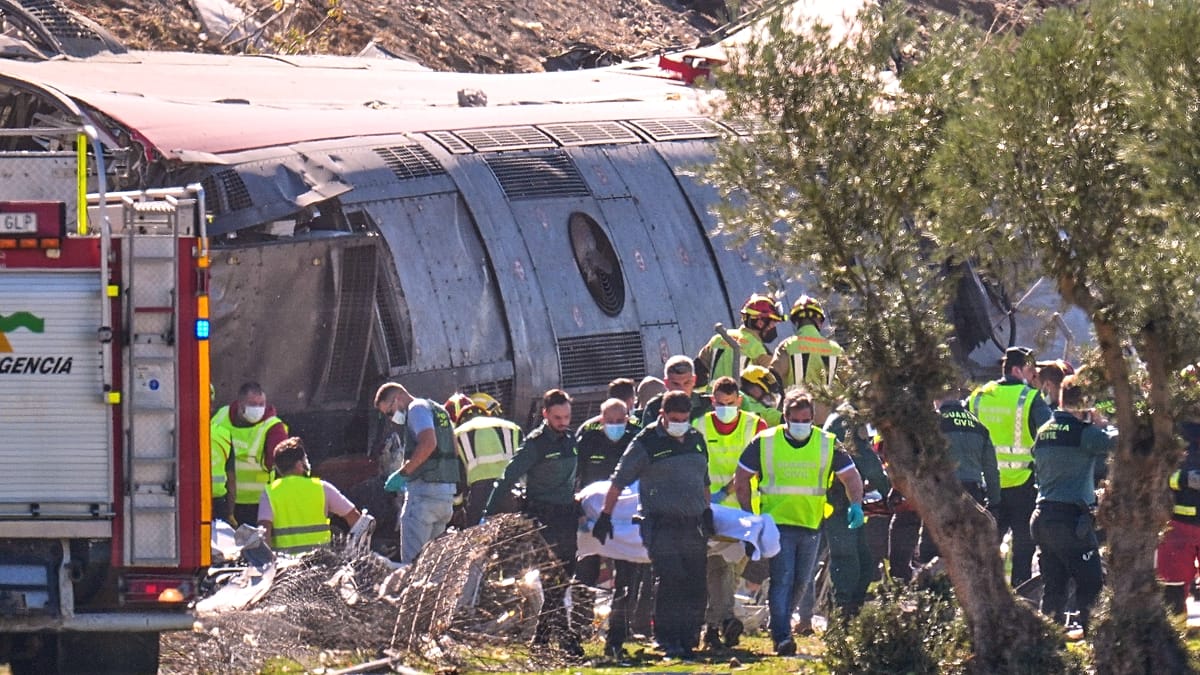
Rescue teams in central Spain are working through the night after two high-speed trains collided near the small town of Urda, in the province of Toledo, on Wednesday afternoon. At least 68 people have been confirmed dead, and dozens more are injured, some critically. Emergency services have warned that the toll could climb as they continue to search the twisted carriages.
A catastrophic collision on a busy corridor
The crash occurred on a stretch of the Madrid–Andalusia high-speed line, one of the busiest in the country, around 120 kilometres south of the capital. Initial reports suggest one train may have derailed and been struck by another travelling in the same direction. The impact left carriages piled on top of each other, with debris scattered across the tracks.
Regional authorities in Castilla-La Mancha have declared three days of official mourning. Spain's prime minister, Pedro Sánchez, is expected to visit the site on Thursday and has pledged a full investigation into the causes of the disaster. The national rail operator Renfe has said it is cooperating with the judicial inquiry.
Rescuers race against time
More than 300 emergency personnel, including firefighters, police and military units from the Spanish Armed Forces' Emergency Response Unit, have been deployed to the scene. Helicopters have been used to airlift the most seriously injured to hospitals in Toledo and Madrid. Local hospitals have activated mass-casualty protocols, and blood donation centres have reported long queues of volunteers.
Witnesses described scenes of chaos and panic. One survivor, speaking to Spanish public television, said the train had been travelling at high speed when they felt a violent jolt, followed by the sound of tearing metal. Another passenger, who was travelling in the rear carriage, said the train had stopped abruptly before the impact, suggesting the driver may have been aware of a problem.
The stretch of track where the collision occurred is known for its complex signalling and high traffic density. Spain's high-speed network, the longest in Europe, has a strong safety record, but this incident is a stark reminder of the risks involved. The last major high-speed accident in the country was in 2013, when a train derailed near Santiago de Compostela, killing 80 people.
As the investigation gets under way, questions are being raised about the adequacy of the European Train Control System (ETCS) on this particular line. While the corridor is equipped with modern signalling, some sections still rely on older systems. The European Union Agency for Railways has offered technical assistance to the Spanish authorities.
The tragedy has also reignited debates about investment in rail infrastructure across the continent. Spain has poured billions into high-speed links, but critics argue that maintenance and safety upgrades have not always kept pace. The European Commission has stressed that rail safety remains a top priority, and that member states must ensure compliance with EU standards.
For the families of the victims, the wait for news has been agonising. A dedicated helpline has been set up, and a crisis centre has been opened in Urda's town hall. The local community, a quiet agricultural area, has been overwhelmed by the scale of the disaster.
As dawn breaks over the wreckage, the focus is on recovery and the painstaking work of identifying the dead. The Spanish government has promised a thorough and transparent investigation, and the whole of Europe will be watching closely. This is a moment of profound sorrow for Spain, but also a test of its resilience and the strength of its institutions.