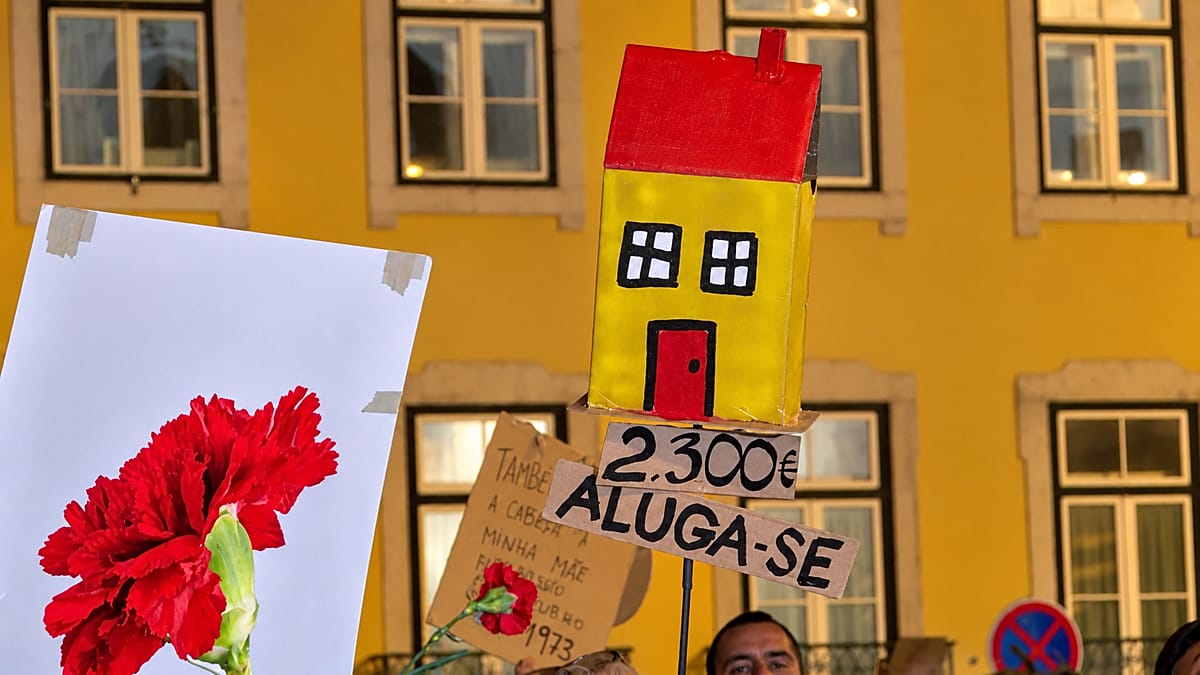
Hundreds of demonstrators converged on Lisbon's Praça de São Bento on Tuesday, bringing Portugal's housing crisis to the doorstep of the Assembleia da República. The protest, organized by housing rights groups and supported by left-wing parties, denounced both the soaring cost of living and the police tactics used in recent evictions of informal settlements.
Chanting “Housing is a right” and holding banners that read “The streets are ours,” the crowd demanded urgent government action. Many carried signs referencing the recent clearance of camps in Lisbon and Porto, where police were filmed using batons and pepper spray. The images, widely shared on social media, have fueled public anger and reignited a national debate about social inequality.
The protest comes amid a broader European reckoning with housing affordability. In Spain, a steady job no longer guarantees a home, and similar demonstrations have erupted in Italy and France. But in Portugal, the crisis is acute: rents in Lisbon have risen by more than 30% in five years, while wages remain among the lowest in Western Europe.
President defends police, calls for dialogue
President Marcelo Rebelo de Sousa, who has often positioned himself as a mediator, responded to the protests by urging all sides to engage in dialogue. In a brief statement from the Palácio de Belém, he acknowledged the “legitimate concerns” of citizens but also defended the police, saying they acted “within the framework of the law” during the camp clearances.
His comments drew sharp criticism from opposition leaders and housing activists, who argue that criminalizing homelessness and informal housing is not a solution. “The president is out of touch,” said Marta Silva, a spokesperson for the Habita association. “He talks about dialogue, but the government has not presented a single concrete measure to address the root causes of this crisis.”
The government, led by Prime Minister Luís Montenegro, has promised to increase the supply of public housing and to regulate short-term rentals, which have reduced the availability of long-term homes in city centers. Critics say these measures are too slow and insufficient, pointing to the thousands of families on waiting lists for social housing.
Police violence allegations
The protest also focused on police violence during the evictions. Videos from the clearance of a camp in Lisbon's Parque das Nações showed officers dragging residents and using pepper spray on journalists. The Interior Ministry has announced an internal investigation, but activists are demanding an independent inquiry.
“This is not about isolated incidents,” said João Ferreira, a sociologist at the University of Lisbon. “It reflects a systemic failure to protect the most vulnerable. The police are being used as instruments of urban policy, and that is dangerous.”
The issue has also resonated beyond Portugal. In Marseille, anti-racism protesters filled the Old Port after a police shooting, and across Europe, protests over pensions, housing, and corruption have become a recurring feature of the political landscape.
What next for Portugal?
As the protest wound down, organizers vowed to continue their campaign. They have called for a national demonstration in October and are pushing for a referendum on housing as a constitutional right. The government, for its part, has announced a “housing summit” for next month, but many remain skeptical.
“We've heard promises before,” said Silva. “What we need is action. The people are tired of waiting.”
The crisis is not just a Lisbon problem. In Porto, similar protests have taken place, and in the Algarve, tourism-driven gentrification has priced out local workers. The issue has become a test for Montenegro's center-right government, which took office earlier this year and has yet to articulate a clear housing strategy.
For now, the streets remain the only forum where many feel their voices are heard. As one protester put it, “We are not asking for charity. We are asking for justice.”