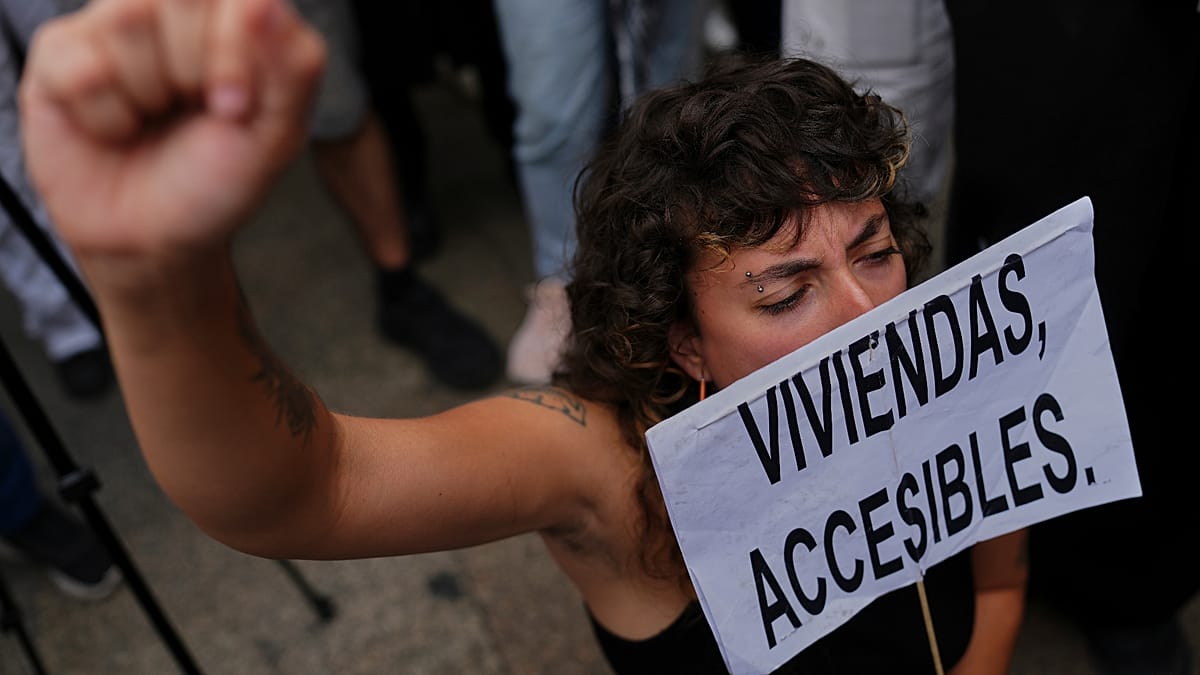
In Spain, a steady job is no longer a ticket to a home. Over the past decade, property prices have climbed far faster than salaries, leaving even employed people unable to afford a mortgage or save for a deposit. The gap is most acute among the young and lower-income households, but it now touches a broad swath of society.
The issue has moved to the centre of political debate, prompting Prime Minister Pedro Sánchez to call an early general election after failing to push urgent housing measures through Congress. For many, the crisis is not just about monthly payments—it is about the very structure of the housing market.
A widening chasm between wages and prices
According to Spain's National Statistics Institute (INE), housing prices rose 84.6% between 2015 and 2025, while average annual gross wages increased just 27.85% over the same period, reaching €29,540. The trend continues: in the second quarter of 2026, prices were up 12.2% year-on-year, while wages grew only 3–4%.
Rafael Pampillón, professor of Applied Economics at San Pablo-CEU University in Madrid, calls the problem “essentially structural.” He notes that “having money for the deposit is not enough”—a phrase that captures the frustration of many would-be buyers.
The impact is visible in poverty statistics. A recent Oxfam Intermón study found that housing costs have pushed the in-work poverty rate to 15.49%, affecting around 770,000 people. Among those renting at market prices, one in three falls into poverty after paying rent—34.08%, compared with 10.22% for mortgage holders and 7.95% for outright owners.
“Evictions are the most extreme face of the housing crisis, but not the only one,” says Alejandro García-Gil, Oxfam Intermón's head of housing, employment and social policies. “There is another, less visible reality: people who are working and just about manage to pay for their home every month, but who, once they have done so, do not have enough income left to sustain a decent standard of living.”
Rent as a barrier to ownership
The problem extends beyond purchase prices. The Bank of Spain's latest annual report shows that four in ten renting households spend more than 40% of their income on rent—an “excessive financial burden.” In tourist-heavy cities like Barcelona and Madrid, the pressure is even greater.
Rent also blocks the path to buying. Even when a mortgage instalment might be cheaper than rent, saving the deposit becomes nearly impossible when a large share of wages goes to the landlord. With an average home price of around €200,000, a buyer needs roughly €60,000 for the deposit and associated costs.
“A pay packet allows you to meet monthly payments, but buying a home requires a large upfront payment,” explains Pampillón. “The longer it takes to save the deposit, the more years you continue paying rent.” For many, family support is the only way out. “Those who do not have it have to travel a much longer road,” he adds, noting that family wealth and generous pensions increasingly shape children's opportunities.
Since 2008, the share of households that do not own their home has risen by 45%, according to INE's Living Conditions Survey. The difficulty of leaving the parental home reflects a growing inequality between those with family resources and those who rely solely on their wages.
Structural reform, not just wage rises
The crisis has deep roots: the financial crisis depressed wages, recovery was slow, and investment funds have poured into the property market. Supply is also woefully short—the Bank of Spain estimates a deficit of around 750,000 homes between 2021 and 2025. In 2025, about 225,000 households were formed, but only 92,000 new homes were completed.
Experts warn that wage increases alone will not solve the problem. “Employment has always been seen as the best tool against poverty, and this analysis shows that having a job is not enough,” says García-Gil.
The European Commission is equally blunt: “The housing sector in Spain faces deeply rooted structural challenges. The Spanish property market shows a severe mismatch between supply and demand, coupled with a lack of a substantial stock of affordable and social housing, including social rental options.”
Unions CC.OO. and UGT have called a 24-hour general strike on 11 November under the slogan “wages, housing, pri…”—a clear sign that the issue is far from resolved. As protests across Europe show, housing is not just a Spanish problem, but Spain's crisis is among the most acute.