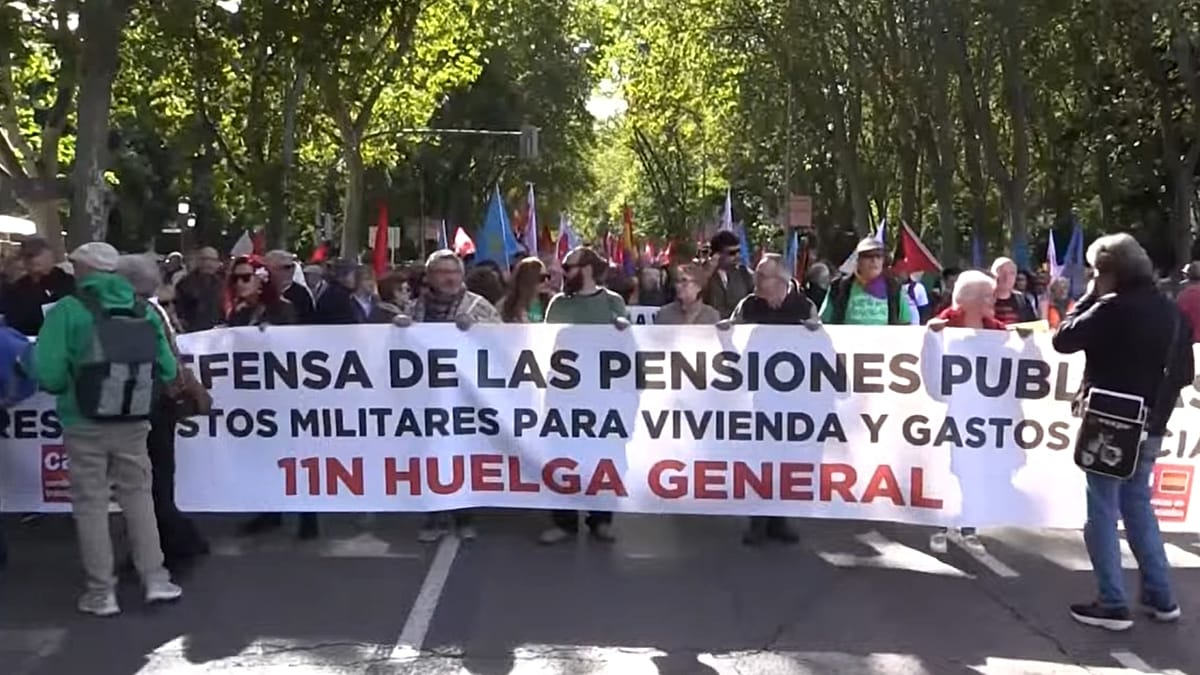
Thousands of demonstrators are marching through Madrid on Saturday, demanding better public pensions, as a wave of protests sweeps across several European countries. The march, organized by Spain's pensioners' movement and backed by trade unions including the General Confederation of Labour (CGT), set off from Atocha station and is heading towards Calle Alcalá, near the Sevilla metro stop.
The protesters are calling for pensions that guarantee a decent standard of living for both current retirees and future generations. Their key demands include linking pension increases to actual inflation, raising the minimum pension to match the minimum wage, closing the gender pension gap, and protecting the public pension system from privatization.
The CGT is also urging easier access to early retirement without financial penalties for workers who have contributed for at least 35 years, and the repeal of several pension reforms introduced since 2011. These reforms, implemented under successive Spanish governments, have been a recurring source of tension between unions and the state.
Europe on alert amid weekend of protests
The Madrid demonstration comes as several European countries face a weekend of protests over a range of political and economic grievances. In France, authorities are deploying 70,000 police officers and gendarmes amid heightened tensions, including demonstrations against Marine Le Pen's National Rally congress in Orléans. Rallies in Orléans have drawn thousands of counter-protesters, reflecting deep political divisions ahead of the party's gathering.
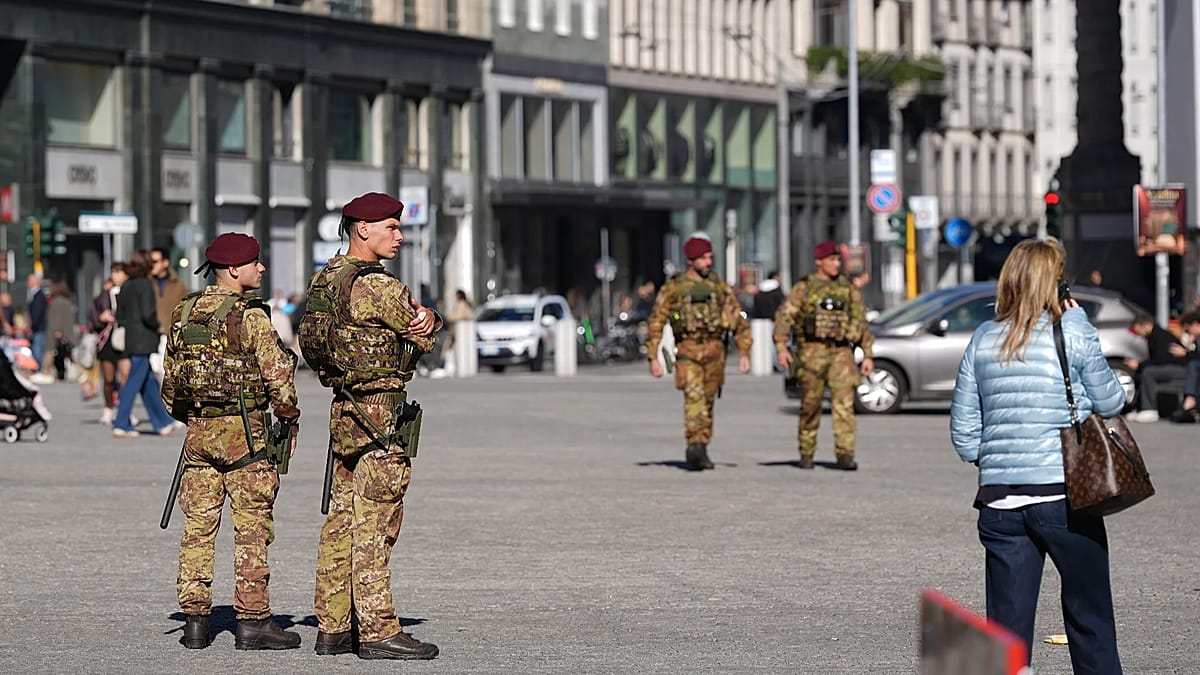
Italy is also stepping up security, with 1,500 officers deployed in Rome and 1,800 in Milan as demonstrators mobilize against the rising cost of living and government policies. Italian authorities fear renewed clashes following violent unrest on 17 and 18 October, which has prompted tighter security measures in several major cities. Elite units and drones have been deployed to monitor the situation.
The protests reflect a broader European concern over the sustainability of pension systems as populations age and inflation erodes purchasing power. In Spain, the pension system faces long-term financial pressures, and the government has struggled to balance fiscal responsibility with social demands. Similar debates are playing out in France, where President Emmanuel Macron's pension reform has sparked widespread opposition, and in Italy, where the cost of living has become a flashpoint.
In Madrid, the atmosphere was initially peaceful, with families and retirees carrying banners and chanting slogans. Many expressed frustration that their pensions have not kept pace with rising prices. "We worked all our lives, and now we can barely make ends meet," said one protester, a 72-year-old former construction worker. "The government must listen to us."
The gender pension gap remains a particular grievance. Women in Spain, on average, receive pensions significantly lower than men's, due to career interruptions and lower wages. Activists argue that without targeted measures, this inequality will persist for generations.
The protests also come amid a wider European context of social unrest. In France, police have fired tear gas in Lyon as cost-of-living protests resumed, and a route dispute in Paris has added to tensions. These events underscore the fragility of social peace in several EU member states.
As the day progresses, authorities across Europe remain on high alert. The Spanish interior ministry has not announced extraordinary measures for Madrid, but police are present along the march route. Organizers have pledged to keep the demonstration peaceful, but the potential for disruption remains.
The weekend's protests are a reminder that pension policy is not just a technical issue but a deeply emotional one, touching on questions of dignity, fairness, and intergenerational solidarity. For many Europeans, the promise of a secure retirement is a cornerstone of the social contract, and they are determined to defend it.