A rare crack in Nordic solidarity surfaced on Tuesday after the leaders of Finland and Norway held a surprise 90-minute phone conversation with Russian President Vladimir Putin. The call, initiated by Finnish President Alexander Stubb and Norwegian Prime Minister Jonas Gahr Støre, drew immediate public rebukes from their Danish and Swedish counterparts, who questioned the wisdom of an uncoordinated diplomatic overture to Moscow.
Stubb and Støre, who recently hosted a round of peace talks in Oslo, used the call to urge Putin to end the full-scale invasion of Ukraine and engage in meaningful negotiations toward a stable settlement. “The discussion was frank and substantive,” Stubb said. “The outcome of this war will have a direct impact on our and the broader European security. Ending the war requires direct discussion.” Støre added: “We stressed the importance of de-escalation.”
The official read-out made clear that the two leaders spoke in their national capacities and “did not speak on behalf of Europe as a whole.” Shortly after the call, Stubb and Støre phoned Ukrainian President Volodymyr Zelenskyy, who thanked them for their “active” support. But the choreography did little to soften the backlash from their neighbours.
Denmark and Sweden push back
Danish Prime Minister Mette Frederiksen was the most outspoken critic. “I am very sceptical about this independent initiative by Norway and Finland. It was not coordinated with any of us,” she said shortly after the call became public. “I don't see any signs that Russia desires peace with Europe, neither in the hybrid warfare taking place every single day, nor in Ukraine.”
Frederiksen questioned what the overture could realistically achieve and drew a parallel with previous solo efforts, such as when former Hungarian Prime Minister Viktor Orbán flew to Moscow to meet Putin. “I honestly don't know what they think can be achieved by this,” she said. “We have previously emphasised, with clear backing from the rest of Europe, that when others have gone solo and, for example, travelled to Moscow, it is crucial that we, Europeans, stand together. That is something many of us have fought for.”
Swedish Prime Minister Ulf Kristersson also expressed doubts, albeit in more measured terms. “My impression is that everyone wants peace except Putin. I have pretty low expectations for this kind of (direct) talk,” he said. “Holding talks that risk splitting the European voice is risky. Now, I'm not saying they have done that at all. I don't yet know what those talks were about. Talks that make Russia more willing to make a decent peace on Ukraine's terms are, of course, good.”
The Kremlin’s post-call statement echoed Putin’s maximalist tone, offering little sign of flexibility. That only reinforced the scepticism voiced in Copenhagen and Stockholm.
A test for Nordic unity
The split is significant because the four countries have consistently seen eye to eye on Russia’s war in Ukraine. They rank among the largest bilateral donors to Kyiv and have been vocal advocates of ever-stronger sanctions on Moscow. The disagreement now threatens to complicate that shared front, just as Trump's embrace of Putin alarms Kyiv and European capitals.
In response to the criticism, Støre defended the initiative, arguing that Europe should speak with Russia to complement messages sent by the US administration, which has a different approach to the war. “We need to keep channels open,” he said, adding that the call was not intended to undermine European unity but to explore any possible path toward peace.
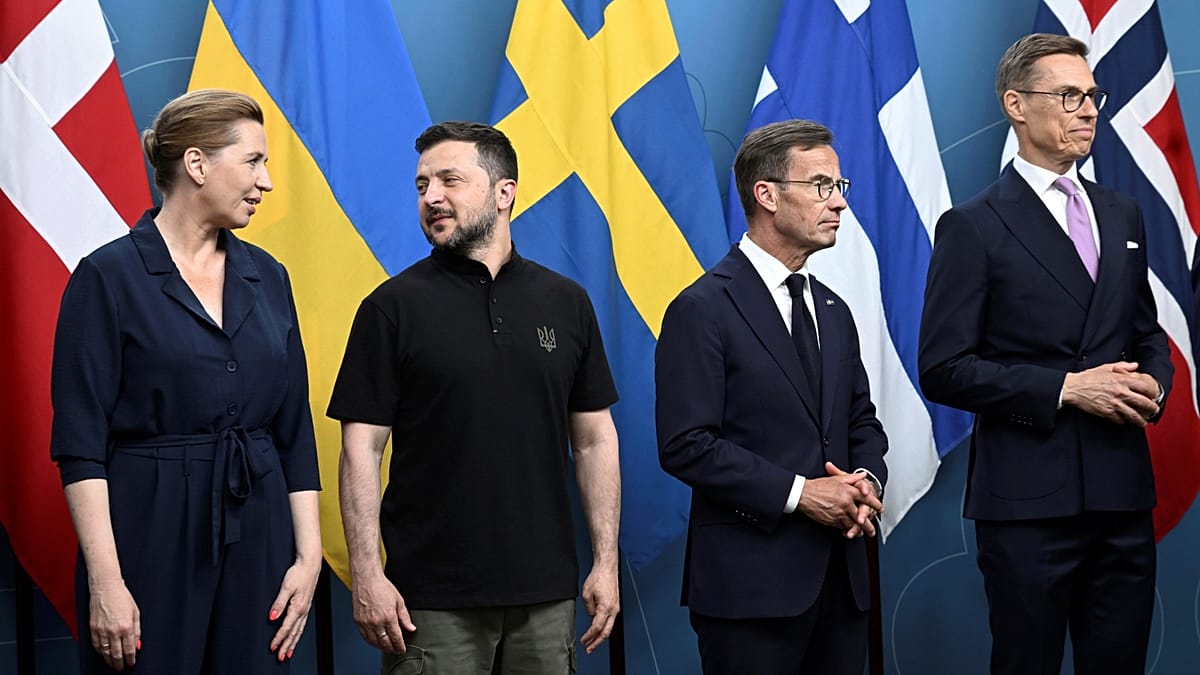
The four leaders were all in Helsinki attending a leaders-level session of the Nordic Council, making the public disagreement all the more awkward. The episode echoes earlier tensions over Nordic leaders pressing Putin to resume Ukraine peace talks, but this time the initiative came from within the Nordic family itself.
Analysts note that the rift could have practical consequences. If Denmark and Sweden withhold support for future Nordic-led diplomatic efforts, the region’s ability to speak with one voice on Russia will be weakened. At the same time, the episode highlights a deeper strategic question: whether direct dialogue with Putin is a useful tool or a dangerous illusion.
For now, the Nordic countries remain united in their support for Ukraine, but the path to that support is no longer as smooth as it once was. As a Finnish MEP warns Putin now targets all of Ukraine, including Kyiv, the stakes of any diplomatic gambit are higher than ever.