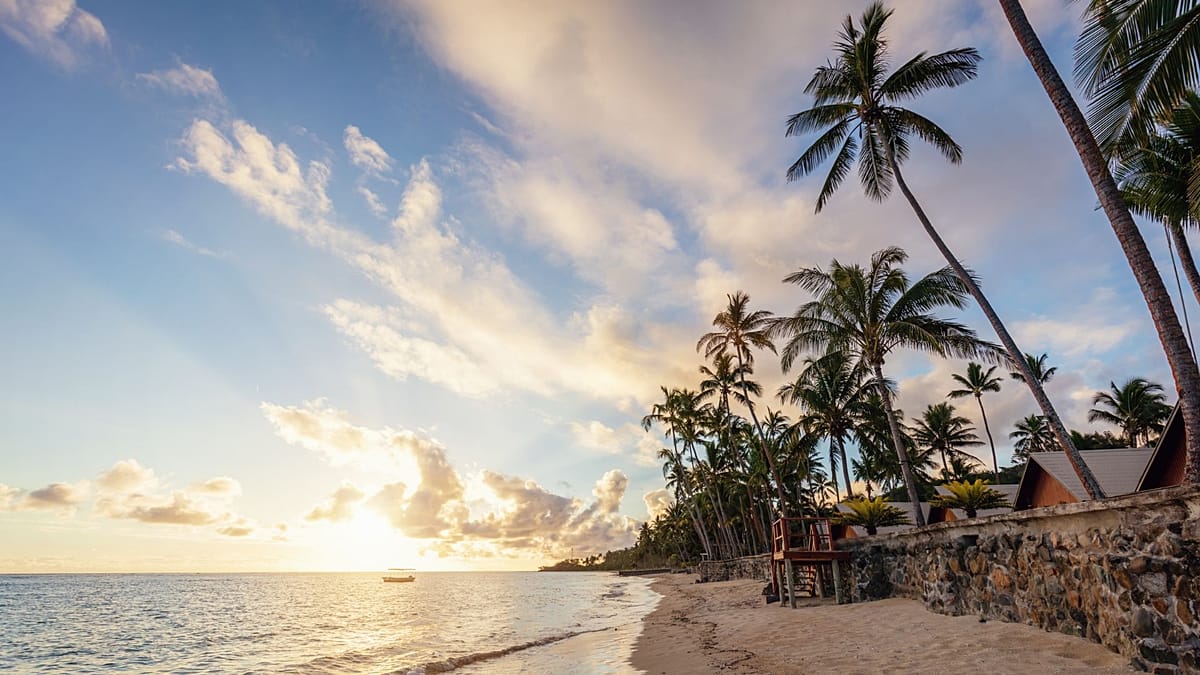
As dusk falls over Fiji's Serua Island, residents point to what they call their "100 million dollar views" — a panorama of palm-covered knolls, coral reefs, and rich fishing grounds. For many, this scenery is reason enough to stay put, even as the Pacific Ocean encroaches on their doorstep.
The island, a short boat ride from the mainland, is a study in contrasts. From a distance, it resembles a tropical idyll; up close, the threats of climate change are stark. A concrete sea wall is the only barrier against waves that already surge through the village during high tides and storms.
"The stronger the air pressure, the higher the waves. So the waves wash through inside the village," says Avenai Ranuku, a lifelong resident. Dozens of homes, vegetable plots, and graves lie in the path of cyclones that regularly batter Fiji.
Despite the dangers, most of Serua's inhabitants have rejected calls to abandon their ancestral land. Instead, they are working to make their community more resilient, a decision that echoes debates across the Pacific and beyond about whether to retreat or adapt.
A community's choice: stay and fortify
Ranuku recalls the terror of Cyclone Winston, a category five storm that struck when he was a child. The entire village climbed to higher ground, following the chief's orders. "All of the villagers, when the chief mention it, we go up. No one left behind. We help everyone, carry everything from the house, food. This is our evacuation plan," he says.
From that refuge, he heard "waves going around, and the roof of the houses being washed away." Yet the memory does not shake his attachment to the island. "We love this island, you know. Fresh air, go out fishing every day, that's why they don't want to leave," he explains. "Many people used to say, they go to that house on the hill to see the sunset, it's a 100 million dollar view."
In 2025, Serua Village partnered with Habitat for Humanity to draft a detailed disaster risk reduction plan. The assessment found that nearly 20 per cent of homes were in critical condition, and only three houses could withstand a cyclone. It also highlighted frequent seawall overtopping, saltwater intrusion damaging soil, and standing water after rainfall, which raises health risks.
The report noted a lack of natural wave breakers and warned that more than half of the houses had unstable foundations, weak roofs, and poor joints, making them highly vulnerable to severe weather.
Rather than relocate, the village acted swiftly. During a recent visit, dozens of workers were renovating homes along the northern coastline, replacing flimsy walls and corrugated iron roofs. Some houses have already been raised to reduce flood risk, and more are scheduled for similar upgrades.
The plan also calls for a more robust path to improve access to the island. At low tide, residents can walk the 750 metres from the mainland, guided by power lines protruding from the sea floor. At high tide, boats are the only option, and the report recommends safer docking facilities.
Serua's approach offers a counterpoint to the narrative of inevitable climate migration. While some communities in the Pacific have chosen to move, others are investing in adaptation. This local resilience effort resonates with broader European discussions about climate preparedness, as the EU's climate chief has urged preparations for a 3°C warmer Europe. The challenges may differ, but the underlying question is the same: how to protect people and places in a changing climate.
For now, Serua's residents are clear about their priority. "Why would we want to leave?" Ranuku asks. The island's beauty, its resources, and its cultural heritage are worth defending. As the sea continues to rise, their determination will be tested — but for now, they are staying.