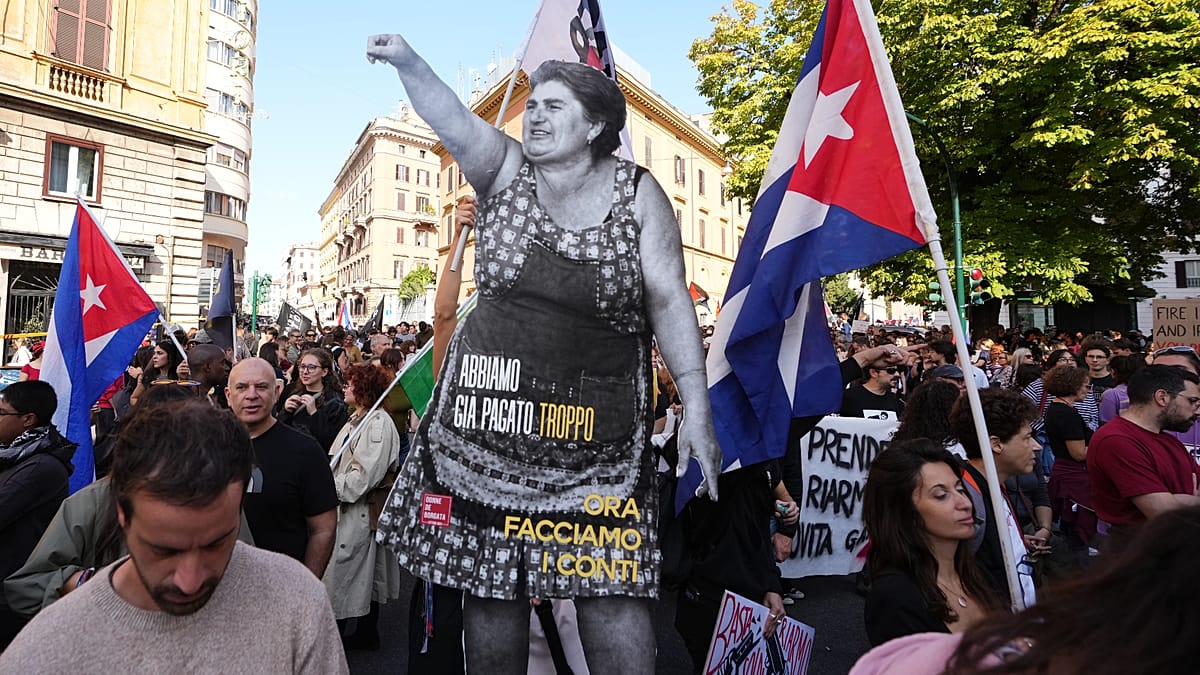
Thousands of demonstrators filled the streets of Rome on Friday, 30 October, responding to a general strike called by the left-wing trade union Unione Sindacale di Base (USB). The protest highlighted growing frustration over the rising cost of living and the Italian government's plans to increase defence spending.
Cost-of-living crisis fuels discontent
Italy, like much of Europe, has been grappling with inflation that has eroded household purchasing power. Energy bills, food prices, and rents have climbed steadily, hitting lower- and middle-income families hardest. The USB union argues that the government's economic policies have failed to protect ordinary citizens, instead prioritising military expenditure.
"We are here because our salaries are not keeping pace with prices," said one protester from Milan, who travelled overnight to join the march. "The government talks about security and defence, but what about the security of having a decent home and a full fridge?"
The strike disrupted public services, schools, and transport across several cities, though the largest turnout was in the capital. Union organisers claimed participation in the hundreds of thousands, while police estimates were lower. The USB has called for a new economic direction, including higher wages, stronger social protections, and a halt to what it calls "militarisation" of the national budget.
Defence spending under scrutiny
Italy's government, under Prime Minister Giorgia Meloni, has committed to increasing defence expenditure to meet NATO targets of 2% of GDP. This comes amid heightened security concerns following Russia's invasion of Ukraine and ongoing instability in the Middle East. The EU has also been pushing member states to bolster their military capabilities, with Brussels recently reopening €21.3bn in defence loans to support such efforts.
However, critics argue that these funds could be better spent on social programmes. "We are being asked to sacrifice our living standards for weapons that will not feed our children," said a USB spokesperson during the rally. "The government must choose between bombs and bread."
The protest comes just days after Italy braced for nationwide strikes over the same issues, indicating a sustained wave of labour unrest. Similar demonstrations have occurred in other European countries, reflecting a broader continental concern about the balance between defence and social welfare.
Political reactions and next steps
Government officials have defended their spending priorities, arguing that a strong defence is essential for national security and that economic growth will eventually benefit all citizens. Deputy Prime Minister Matteo Salvini, however, has expressed some sympathy with the protesters, calling for a "more balanced approach" to public finances.
The USB has announced further actions in the coming weeks, including potential strikes in the transport and healthcare sectors. The union is also planning to hold a national assembly to coordinate its campaign against austerity measures and military expansion.
As Europe faces multiple crises—from the war in Ukraine to energy insecurity—the tension between defence needs and social spending is likely to remain a flashpoint. Italy's protest is a reminder that governments must navigate these pressures carefully, lest they alienate the very citizens they seek to protect.
For now, the streets of Rome have returned to normal, but the anger that brought thousands out is far from dissipated. The coming months will test whether Italy's leaders can address the concerns of those who feel left behind by the country's economic and security policies.