A rare humanitarian corridor has opened in the Russian-occupied Ukrainian town of Oleshky, in the southern Kherson region, as a localised ceasefire between Kyiv and Moscow entered its fourth day on Friday. The operation, negotiated through the two countries' human rights ombudsmen, has seen the first deliveries of aid reach residents who have been trapped since the early weeks of the full-scale invasion.
Ukraine's Human Rights Ombudsman, Dmytro Lubinets, confirmed that the Ukrainian delegation had arrived safely in Oleshky, with the truce still holding after 80 hours. "We are in Oleshky! The Ukrainian delegation has safely reached the city," he said in a statement.
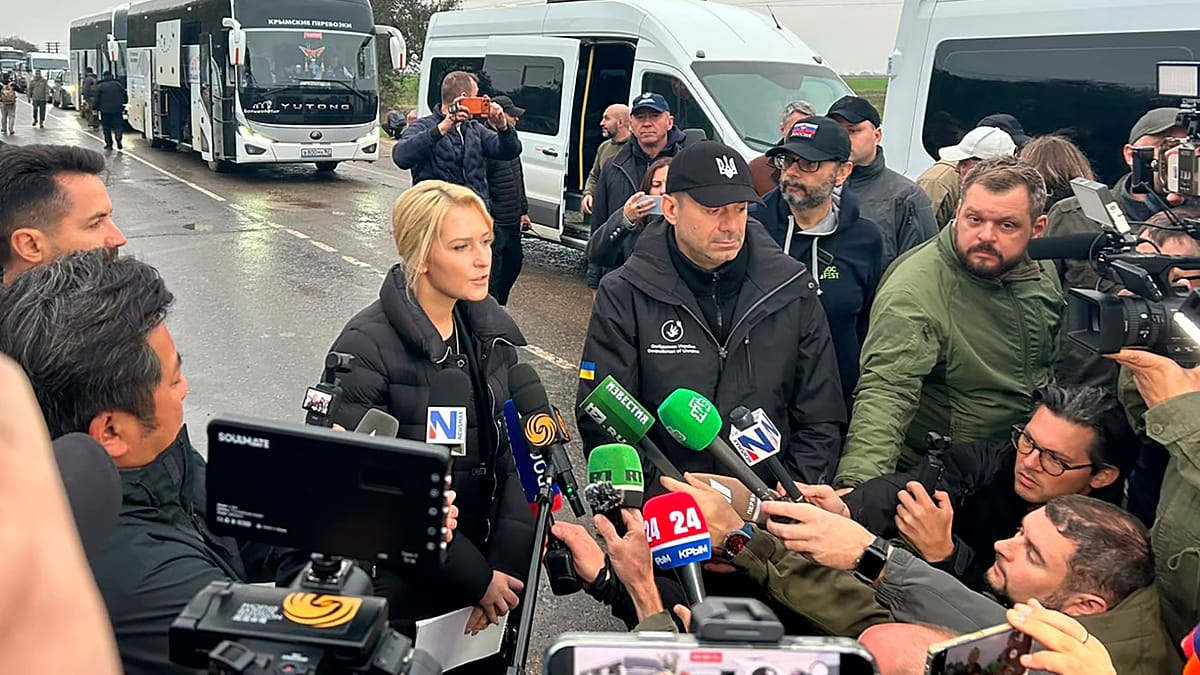
Earlier on Friday, Lubinets said the delegation had passed through Armiansk in Russian-occupied Crimea en route to Oleshky, where it coordinated next steps with Russia's Human Rights Commissioner, Yana Lantratova. Journalists from three countries, including Kremlin-controlled media, were part of the mission, according to footage released by Lubinets. The focus, he said, was on delivering assistance to the most vulnerable residents—older people, those with disabilities, and individuals unable to care for themselves.
"Our main task is to ensure that this assistance reaches every person in need," Lubinets said.
By midday, David Arakhamia, head of President Volodymyr Zelenskyy's parliamentary faction, confirmed that humanitarian aid had reached Oleshky and that technical support was being provided to residents wishing to evacuate. The operation marks a rare instance of direct humanitarian cooperation between the two warring sides, with the ceasefire brokered through their respective human rights representatives and supported by US First Lady Melania Trump.
Evacuation logistics and lingering doubts
The most delicate phase of the mission is ensuring that civilians who want to leave can do so safely and reach Ukrainian-controlled territory. Ukrainian Prime Minister Serhii Koretskyi initially said 527 residents intended to travel to Ukrainian-controlled areas, but later withdrew that figure, noting that the number remained uncertain as the operation continued.
Twenty-five buses with a combined capacity of 750 passengers have been prepared for the evacuation, alongside ambulances for people with limited mobility, Lubinets said. "Everyone who wishes to leave Oleshky will be given the opportunity to leave safely. At the same time, those who have decided to stay can stay and will receive all the necessary humanitarian support," he assured.
However, concerns persist. Reports emerged that Russian forces began evacuating residents before the agreed date, raising questions about whether the operation will proceed according to the arrangements reached by both sides. The town, which sits on the eastern bank of the Dnipro River, has been under Russian occupation since March 2022 and has suffered extensive destruction, with many residents living without basic services.
The humanitarian mission comes amid broader uncertainty over Western support for Ukraine. NATO allies fear delays in Patriot missile deliveries could leave Ukraine more exposed to Russian aerial attacks, while Brussels has reopened €21.3bn in defence loans that could help Kyiv procure much-needed equipment. The situation on the ground remains volatile, as evidenced by a recent Russian drone strike on a Dnipro railway station that killed at least 13 people.
For the residents of Oleshky, the opening of this corridor offers a glimmer of hope after years of isolation. Yet the success of the operation hinges on the willingness of both sides to uphold the ceasefire and allow safe passage for those who choose to leave. As the world watches, Ukraine holds its breath, hoping that this fragile truce will hold long enough to save lives.