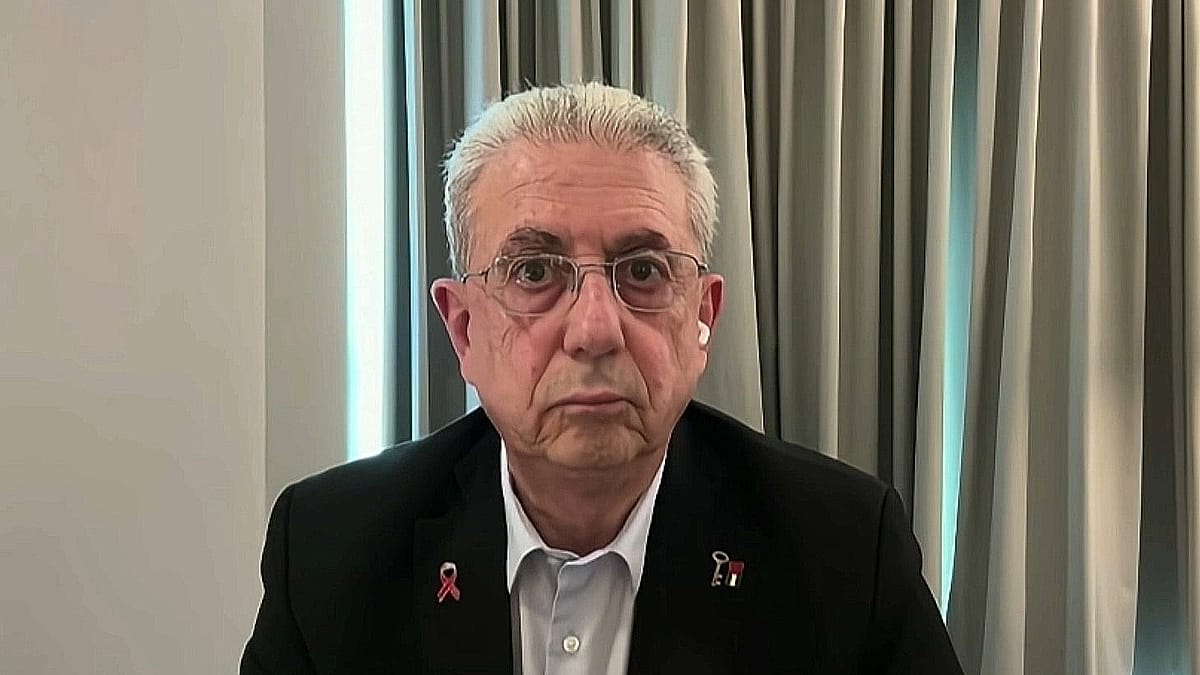
Mustafa Barghouti, a prominent Palestinian political figure and leader of the Palestinian National Initiative, has said that the most urgent goal for Palestinians is the removal of Israeli Prime Minister Benjamin Netanyahu from power. In an interview with Euronews' Europe Today, Barghouti argued that a government led by Gadi Eisenkot would be preferable, and he called on the opposition leader to rely on Arab members of the Knesset to form a coalition.
Barghouti, who is active in the occupied West Bank, described Netanyahu as responsible for "slaughtering Palestinians in Gaza" and for "enhancing ethnic cleansing in the West Bank." He also accused Netanyahu of instigating conflicts with Lebanon and Syria, threatening Jordan, and attempting to impose Israel as an imperial force in the Middle East.
Arab parties as kingmakers
In the recent Israeli election, the Arab parties—the Joint List and the United Arab List (Ra'am)—won a record 19 seats, giving them significant leverage in the 120-seat Knesset. Their support could be decisive for Eisenkot, whose centrist Yashar party and its allies fell short of a majority. Barghouti urged Eisenkot to include these Arab parties in his coalition, sidelining far-right ministers Bezalel Smotrich and Itamar Ben-Gvir, whom he labeled "fascist."
However, Eisenkot has declared his intention to form a "Zionist government," and most opposition parties have ruled out cooperation with Arab parties. Barghouti criticized this stance, saying that all Zionist parties, whether in government or opposition, share a rejection of Palestinian rights, including statehood and self-determination. He added that they all support "continuing the genocidal war on Gaza."
The Arab parties represent the over two million Palestinians who are citizens of Israel, about 21% of the population. They do not include the 5.5 million non-citizen Palestinians in the occupied West Bank and Gaza. Their electorate largely supports ending the war in Gaza, halting Israeli settlements, and favors a two-state solution—positions that are sensitive for many Israeli voters.
Settlements and resistance
Barghouti stressed that removing illegal Israeli settlements from the West Bank is essential for preserving Palestinian statehood. "For these extreme Israeli parties who reject a two-state solution, the only solution is ethnic cleansing of Palestinians. But we are not leaving. We are here. We're going to stay. We will resist," he said.
Settlement activity has surged to unprecedented levels in the past two years, according to a UN report. The UN counts more than 400 settlements and outposts, all considered illegal under international law.
The coming weeks are critical for government formation in Israel. President Isaac Herzog will consult party leaders before nominating a candidate to form a government. That candidate has up to 28 days, with a possible 14-day extension. If they fail, a second candidate gets a similar chance, and if that also fails, the Knesset can request a third attempt.
As Europe watches these developments, the outcome of coalition talks will have significant implications for regional stability and for European Union policies toward Israel and Palestine. The EU has consistently called for a two-state solution and has condemned settlement expansion. The potential inclusion of Arab parties in an Israeli government could shift dynamics, though it remains uncertain whether Eisenkot will break with precedent.
Barghouti's remarks highlight the deep divisions in Israeli politics and the growing frustration among Palestinians. His call for Arab parties to play a pivotal role reflects a strategic shift, but it remains to be seen whether Israeli opposition leaders will embrace such a coalition. For now, the focus is on the negotiations in Jerusalem, where the future of both Israelis and Palestinians hangs in the balance.