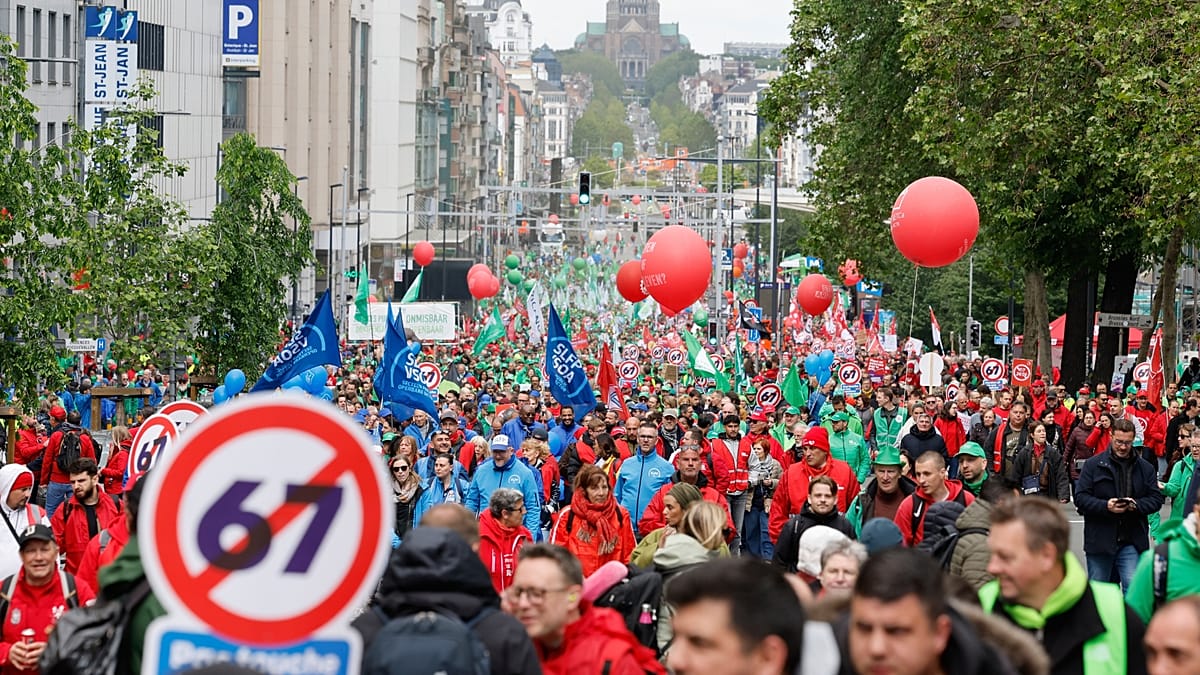
On Tuesday, between 40,000 and 70,000 demonstrators filled the streets of Brussels, responding to a call from Belgium's three main trade unions. The protest targeted the federal government's reforms, which the unions label as "anti-social." The rally, part of a broader campaign spanning the past eighteen months, reflects growing tensions between workers' representatives and the ruling coalition led by Prime Minister Bart De Wever, a Flemish nationalist.
Key Demands: Pensions, Purchasing Power, and Wage Indexation
The unions' grievances center on three core issues. First, they condemn a pension reform that they argue will leave workers worse off, reducing benefits and increasing the retirement age. Second, they protest against what they see as an attack on the automatic indexation of wages—a mechanism that ties salary increases to inflation, protecting purchasing power. Third, the broader concern over purchasing power is amplified by soaring energy prices, a consequence of the ongoing war in the Middle East.
"This is about the very fabric of our social model," said a union spokesperson during the march. "The government is dismantling protections that have been in place for decades."
The demonstration took place against a backdrop of heightened economic uncertainty. Energy costs have risen sharply across Europe, partly due to geopolitical instability, as Iran warns European nations against sending warships to the Strait of Hormuz, a critical chokepoint for global oil supplies. This has exacerbated concerns about inflation and household budgets in Belgium and beyond.
Disruption Across the Country
The strike caused significant disruption to public services. Public transport across Belgium operated on a reduced schedule, with many trains, trams, and buses cancelled. Charleroi Airport, a key hub for low-cost carriers, cancelled all flights scheduled for the day, stranding thousands of passengers. The airport's closure was a direct result of the strike, as Belgium's Charleroi Airport to Halt All Flights on Tuesday as Unions Strike.
In Brussels, the march wound through the city center, past the European Quarter and the headquarters of the European Commission. The choice of route was symbolic, underscoring the unions' view that the government's policies are out of step with broader European social standards.
A Broader European Context
Belgium's labor unrest is not an isolated event. Across Europe, trade unions have mobilized against austerity measures and reforms perceived as eroding workers' rights. In France, similar protests have erupted over pension changes, while in Germany, unions have pushed for higher wages amid inflation. The Belgian government's coalition, led by De Wever's N-VA party, has pursued a fiscal consolidation agenda, aiming to reduce public debt. However, unions argue that the burden falls disproportionately on workers.
The protest also comes as the European Union grapples with internal divisions over social policy. Recent moves, such as EU Imposes Sanctions on Israeli Settlers After Hungary’s New Government Backs Move, show the bloc's ability to act on contentious issues, but domestic reforms remain a national prerogative. The Belgian unions are demanding that the government reconsider its approach, warning of further strikes if their demands are not met.
As the day ended, union leaders declared the protest a success, vowing to continue their campaign. The government, for its part, has defended its reforms as necessary for long-term economic stability. With no immediate resolution in sight, Belgium faces a period of heightened social tension that could resonate across the continent.