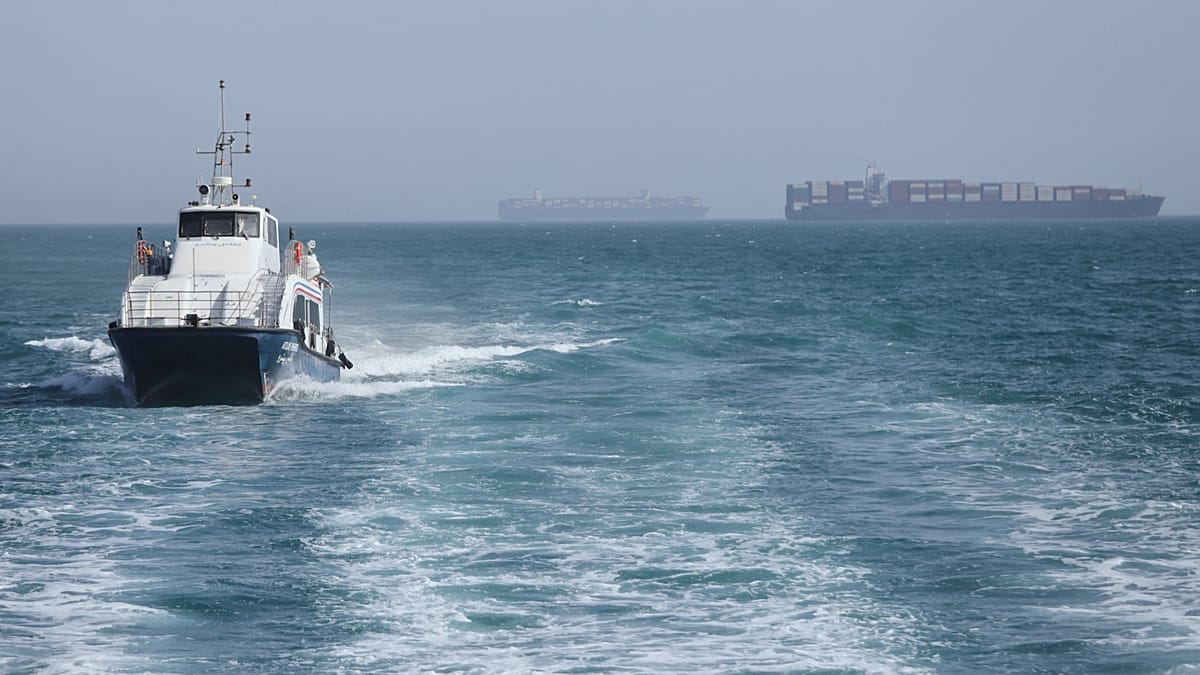
Tehran has issued a direct warning to European capitals against deploying naval vessels to the Strait of Hormuz, as the gap between Iran and the United States over a nuclear deal remains wide. Foreign Ministry spokesperson Esmaeil Baghaei told reporters on Monday that European nations should "refrain from making any move that would undermine their interests," arguing that any military intervention in the Persian Gulf would push energy prices higher and create further complications.
"This war is not only unethical but it is also unlawful. The US and Israel started their aggression against Iran. These European countries shouldn't be fooled in order to get into this matter," Baghaei said.
The warning comes as details of Iran's counterproposal to Washington's latest offer have emerged through official remarks and media reports, revealing significant disagreements. According to Iranian state agency IRNA, Tehran delivered its response via Pakistani mediation. Al Mayadeen and the Wall Street Journal, citing unnamed sources, described a multi-page document outlining Iran's position, though both noted that substantial gaps remain.
What Iran is offering
Iran's proposal reportedly includes an initial halt to hostilities linked to easing maritime restrictions, followed by phased nuclear discussions over a 30-day period. Tehran has offered to dilute part of its highly enriched uranium and transfer remaining stockpiles to a third country, but it rejects full dismantlement of its nuclear infrastructure and seeks guarantees that transferred materials would be returned if talks collapse. Iran has also conditionally accepted a temporary pause in enrichment—shorter than the long-term suspension demanded by the US—alongside calls for sanctions relief and compensation for war-related damages.
An unnamed Iranian source cited by the IRGC-linked Tasnim news agency rejected parts of the Wall Street Journal report as inaccurate. Baghaei confirmed Iran's core demands, describing them as "legitimate and reasonable": the release of frozen assets, an end to what Tehran calls US "maritime piracy" against Iranian vessels, and guarantees of safe navigation through the Strait of Hormuz. He also said any agreement must include a ceasefire in Lebanon, which he described as a red line for Iran.
US President Donald Trump, speaking shortly before rejecting Iran's response as "unacceptable," said Washington would gain access to Iran's enriched uranium stockpiles and warned of possible military action if relevant sites were approached. Israeli Prime Minister Benjamin Netanyahu insisted that Iran's nuclear capabilities and enriched materials must be eliminated, saying "much remains to be done" and refusing to rule out military options.
On a proposal by Russian President Vladimir Putin that Iran's enriched uranium could be transferred to Russia, Baghaei said Iran's focus at this stage was on ending the war. "As for what decisions will be taken later regarding the nuclear issue, Iran's materials, and matters related to enrichment, and what options we may consider, these are issues that we will address when the time comes," he said.
Baghaei also criticised IAEA Director General Rafael Grossi, who had said even the war had failed to destroy Iran's nuclear programme and called for immediate access to nuclear sites. Baghaei questioned whether Iran's facilities had ever been expected to survive a military strike and said Grossi's remarks confirmed that he had abandoned his technical mandate.
The standoff has direct implications for European energy security. The Strait of Hormuz is a chokepoint for about 20% of global oil shipments, and any disruption could send prices soaring. European airlines are already facing potential jet fuel shifts, as EASA has warned of safety risks from alternative fuel sources. Meanwhile, a Malta-flagged tanker recently delivered 1 million barrels of Iranian crude to South Korea, highlighting the complex maritime trade routes that could be affected by any escalation.
European Union foreign ministers are set to discuss the crisis alongside other pressing issues, including sanctions on Russia and Israeli settlers, as reported in EU Foreign Ministers Tackle Sanctions on Russia, Israeli Settlers, and Syria Talks. The bloc's defence chief has also warned that Russia still outpaces Europe in military production, adding another layer of strategic concern for European capitals.