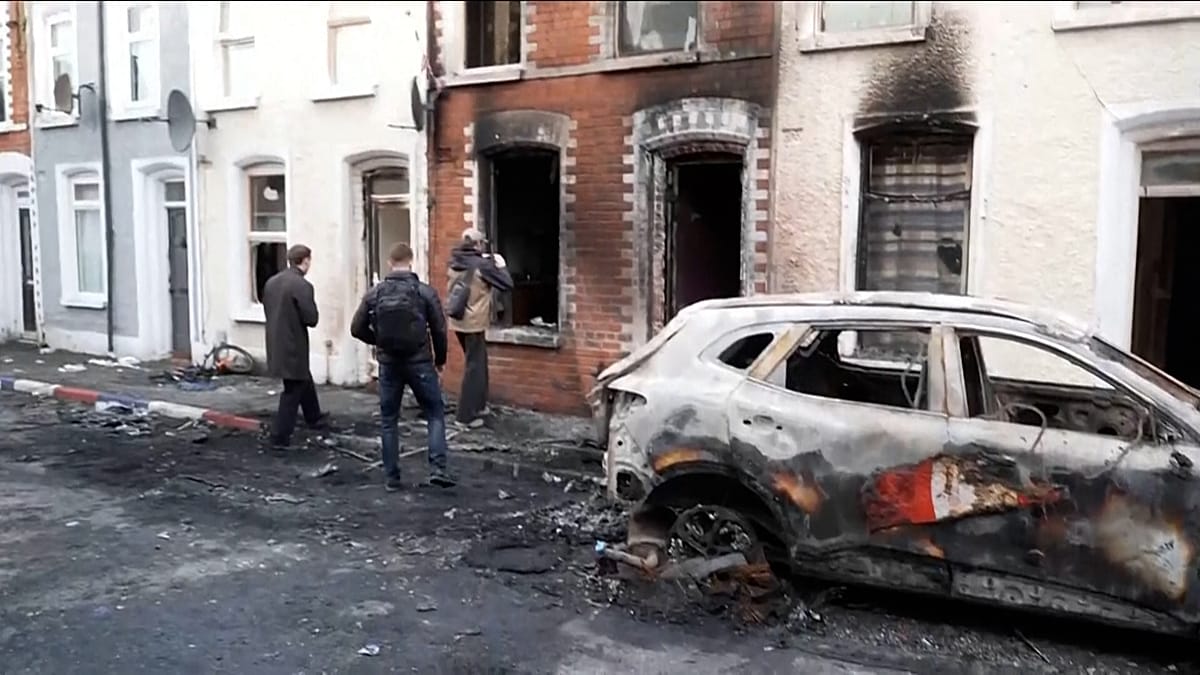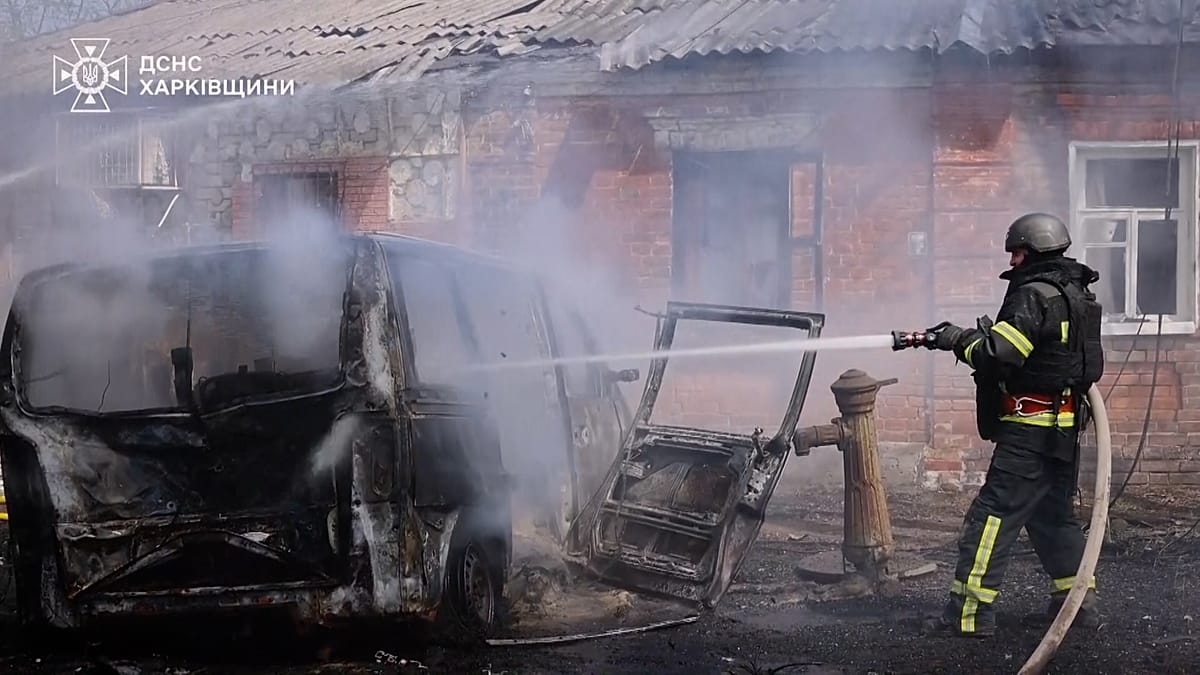
A large-scale Russian drone offensive struck the city of Kharkiv on [date], hitting the Novobavarskyi residential district and causing civilian casualties and property damage. Ukrainian air defense systems intercepted a significant number of the incoming drones, but falling debris and secondary explosions still inflicted harm on the ground.
Local authorities reported that several homes were destroyed or severely damaged in the attack, with emergency services rushing to the scene to rescue residents and extinguish fires. The assault is part of a broader pattern of escalating drone warfare by Moscow, which has increasingly targeted urban centers far from the front lines.
Wider Drone Campaign Across Ukraine
The Kharkiv strike was not an isolated incident. Over the past 24 hours, Russian forces launched dozens of drones against multiple Ukrainian cities, including Kyiv, Dnipro, and Odesa. Ukrainian officials said that air defense units managed to shoot down roughly 70 percent of the incoming drones, but the sheer volume of attacks overwhelmed some sectors.
In Kharkiv, the Novobavarskyi district—a densely populated area in the western part of the city—bore the brunt of the assault. Witnesses described a series of explosions that rattled windows and sent plumes of smoke into the sky. At least three civilians were hospitalized with shrapnel wounds, according to the regional governor.
This escalation comes amid heightened tensions over a proposed ceasefire. Ukrainian President Volodymyr Zelenskyy has accused Russia of using the diplomatic window to regroup and intensify strikes. In a recent statement, he warned of retaliation, echoing earlier concerns that Moscow is not serious about de-escalation. The attack on Kharkiv follows a pattern of ceasefire violations that have killed dozens of civilians in recent weeks.
Drone Incursions Beyond Ukraine's Borders
The drone threat is not confined to Ukraine. In a worrying development for European security, Russian drones have also crashed in NATO member states. Last week, a drone incident in Latvia sparked an oil depot fire near the town of Rezekne, raising concerns about the alliance's airspace integrity. The Latvian fire was quickly contained, but it underscored the risks of spillover from the conflict.
NATO has responded by increasing aerial surveillance along its eastern flank, with additional fighter jets deployed to patrol the Baltic states. However, the alliance has so far avoided direct confrontation, preferring to rely on diplomatic channels to address the incursions.
The Kharkiv attack also highlights the evolving nature of Russian warfare. Drones have become a central tool for Moscow, allowing it to strike deep into Ukrainian territory with relative impunity. Unlike cruise missiles, which are expensive and limited in number, drones are cheaper and can be produced in larger quantities, enabling sustained barrages that test Ukrainian air defenses.
Human Cost and International Reaction
For residents of Kharkiv, the attack is a grim reminder of the war's relentless toll. The city, which lies just 30 kilometers from the Russian border, has been a frequent target since the invasion began in February 2022. Many families have already fled, but those who remain face daily uncertainty.
International condemnation was swift. The European Union's foreign policy chief called the strike a "blatant violation of international humanitarian law," while the United Nations urged both sides to protect civilians. The United States announced an additional package of air defense systems for Ukraine, though delivery timelines remain unclear.
As the drone campaign intensifies, European capitals are grappling with the broader implications. The attacks not only devastate Ukrainian communities but also test the resilience of NATO's eastern defenses. With no end to the conflict in sight, the war continues to reshape the security landscape of the continent.