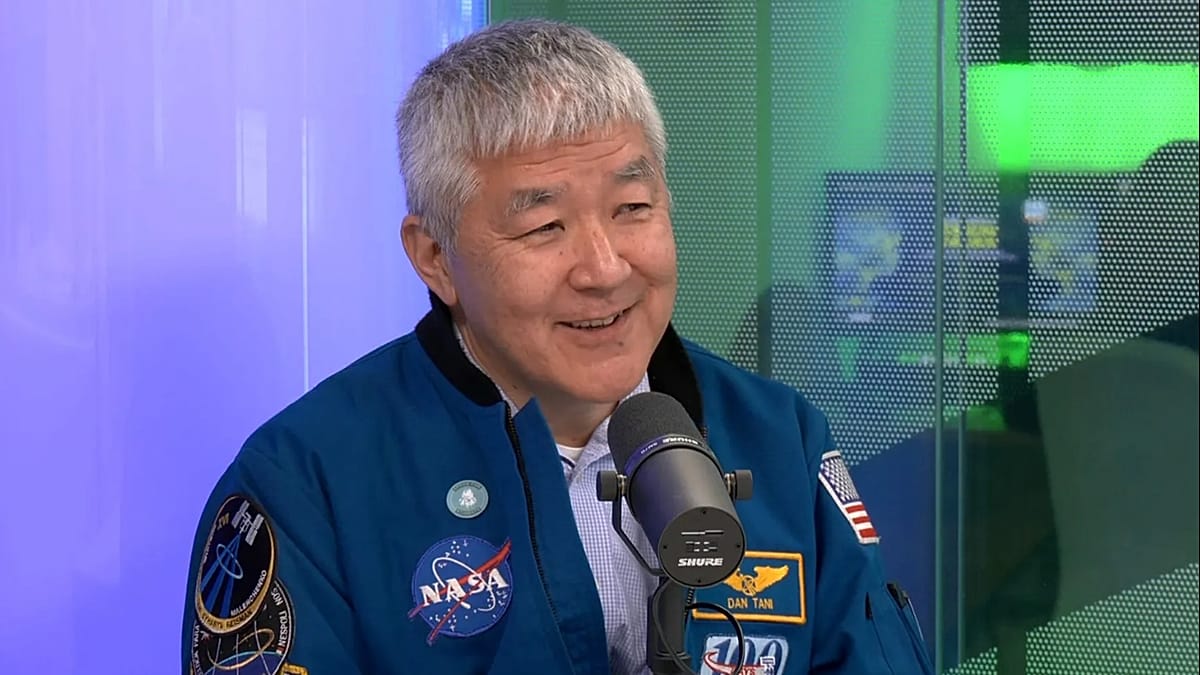
As NASA prepares for the Artemis II mission—the first crewed flight of its lunar program since the Apollo era—the role of international collaboration in space has never been more apparent. In a recent episode of Euronews Tech Talks, former astronaut Daniel Tani sat down to reflect on his own experiences aboard the International Space Station (ISS) and the evolving dynamics of global space exploration.
Tani, who flew on two Space Shuttle missions and spent months aboard the ISS, emphasised that the station itself is a testament to what nations can achieve together. The ISS has involved space agencies from the United States, Russia, Europe, Japan, and Canada, with European astronauts regularly contributing to its operations. For Tani, the station is not just a scientific laboratory but a model for peaceful cooperation.
Life in Orbit and the Human Factor
During the interview, Tani described the physical and psychological challenges of living in microgravity. He noted that the body undergoes significant changes—fluid shifts, muscle atrophy, and bone density loss—but that astronauts adapt through rigorous exercise and careful monitoring. “You learn to appreciate the small things,” he said, “like the sensation of gravity when you return.”
Tani also highlighted the importance of crew cohesion. On the ISS, astronauts from different countries must communicate effectively, often in English, and rely on each other for safety and morale. This cross-cultural teamwork, he argued, is a skill that translates directly to Earth-bound challenges, from climate change to geopolitical tensions.
The conversation touched on the growing role of commercial spaceflight. Companies like SpaceX and Blue Origin are now ferrying astronauts and cargo, reducing costs and increasing access. Tani welcomed this development but cautioned that safety standards must remain paramount. “The private sector brings innovation and speed,” he said, “but we cannot compromise on the rigorous training and testing that have made human spaceflight so successful.”
Europe’s Place in the New Space Race
Europe, through the European Space Agency (ESA), has been a key partner in the ISS and is now looking beyond low Earth orbit. ESA’s Gateway module, part of the Artemis program, will serve as a lunar outpost, and European astronauts are expected to fly on future Artemis missions. Tani praised this commitment, noting that European contributions—such as the Columbus laboratory module and the Automated Transfer Vehicle—have been critical to the ISS’s success.
He also pointed to the European study finding that astronauts' brains retain Earth's gravity memory in space, a discovery that could inform long-duration missions to Mars. Understanding how the brain adapts to microgravity is essential for crew health on journeys lasting months or years.
Tani’s own journey to space began in the 1990s, when he was selected as a NASA astronaut after a career in engineering. He flew on STS-108 in 2001 and STS-120 in 2007, the latter of which involved a critical repair of the ISS’s solar arrays. Reflecting on those missions, he said, “Every launch is a reminder of how much we depend on each other—on the ground and in orbit.”
The interview also addressed the broader context of international cooperation. With tensions on Earth—such as the ongoing stalled nuclear talks with Iran and the EU crisis talks in Cyprus—space remains a rare domain where nations work together despite differences. Tani expressed hope that this spirit could inspire solutions to terrestrial problems.
As Artemis II prepares to send astronauts around the Moon, Tani’s message is clear: space exploration is not a competition but a shared endeavour. For Europe, which has invested heavily in the ISS and lunar programs, the payoff is not just scientific but diplomatic. The continent’s role in the next chapter of human spaceflight is secure, and its astronauts will continue to push boundaries alongside their international colleagues.