In Ukraine, birds are now building nests from drone cables—a poetic but telling sign that unmanned aerial vehicles have become part of the landscape. This transformation is not just environmental; it is a military revolution that Europe cannot afford to ignore.
Ukrainian drone innovation is one of the defining stories of the conflict. Facing a larger, more experienced Russian military with superior numbers in personnel, tanks, artillery, and aircraft, Ukraine has relied on ingenuity—financed by Western support—to hold the line. Drones have been central to halting an invasion that was expected to last days, and four years later, Ukraine is the world leader in UAV development. The rest of Europe should be taking notes.
During a recent visit to Ukraine, Dr Robert Brüll, founder and CEO of German company FibreCoat, observed a process of drone innovation, deployment, data collection, and iteration that he describes as a fine art. Designs are revised almost immediately after use. Engineers and operators exchange feedback directly, adjustments are made within days, and production lines adapt without ceremony.
Speed over perfection
The CEO of Rheinmetall recently criticised Ukrainian drone production as slapdash, much of it relying on 3D printing. But Brüll argues that this misses the point: speed is what matters. Across Europe, a different approach prevails. Procurement culture favours the familiar and the tried, planning cycles are interminably long, and large contractors are structurally unable to innovate quickly.
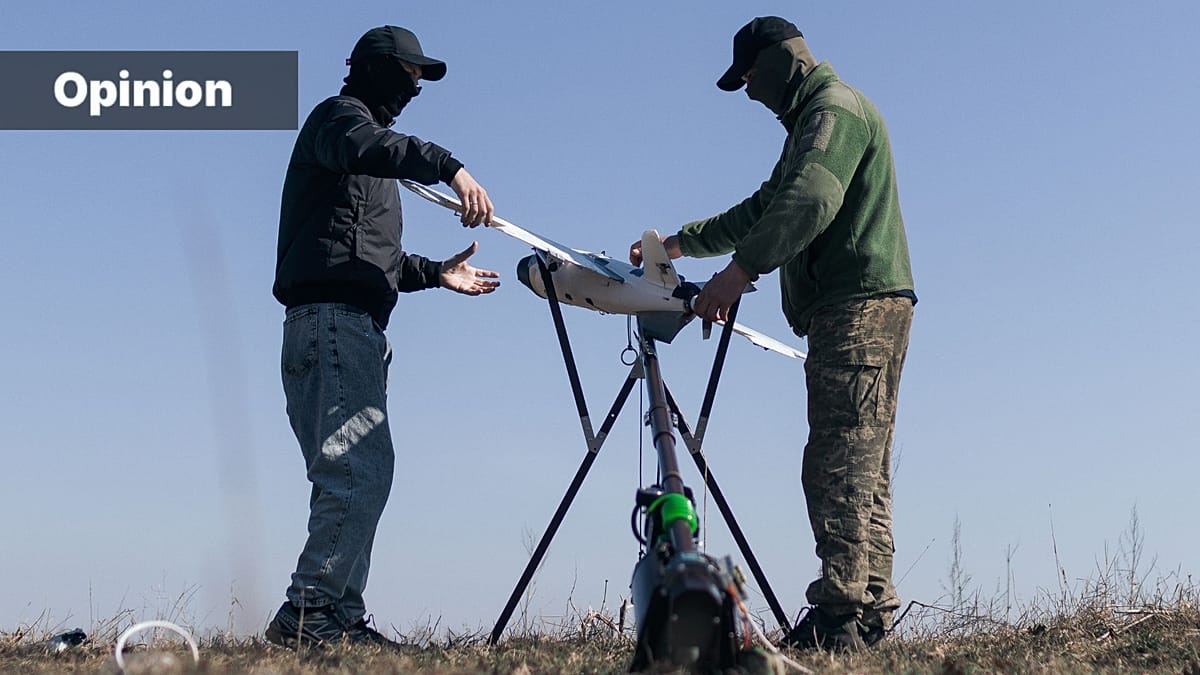
These contractors still have a role, but they stand in stark contrast to the small, fast-moving companies that dominate the battlefield in Ukraine. The tension is between long-term survival and rapid adaptation. In Europe, platforms are built to last, not to evolve. In Ukraine, drones are designed to be lost—the hope is that they fulfil their function before being destroyed. The dominant approach is to build quickly, deploy quickly, and develop future models based on operator feedback.
Countermeasures appear almost as fast as drones themselves. On the frontline, this dynamic plays out rapidly, with each iteration improving either at countering drones or avoiding countermeasures. The side that adapts fastest gains the upper hand. Drone-based defence is relatively cheap, while the existing model is expensive. Many large European platforms lack effective protection against drones, leaving high-value assets exposed to low-cost threats.
At a time of political and economic volatility, European populations are unlikely to forgive governments that misspend their money. To defend itself, Europe must learn from Ukraine. The continent has vast reservoirs of talent, world-class research institutions, and some of the largest economies in the world. Increasingly, there is recognition that Europe must stand on its own feet and reduce reliance on the United States. But these advantages are not being put to use by learning humbly from Ukrainian experience.
This does not mean copying Ukraine exactly. Drones will eventually be replaced by something else—that is the story of defence technology. But the Ukrainian model of innovation is one Europe must replicate. The Ukrainian battlefield should be treated as a live innovation engine, where systems are tested, broken, and improved at speed. Structured exchange and direct support would let Europe absorb this learning in real time.
Government, industry, and frontline units must work together. Feedback loops must be short, and innovation shaped by need. As Sanna Marin has urged, the EU should integrate Ukraine's battlefield lessons into its defence strategy. Meanwhile, Europe's drone procurement lags behind rapid technological obsolescence, and German troops are already building and testing drones in field exercises, redefining the soldier's role. Europe must build an ecosystem that rewards what works now, not what worked in the past.