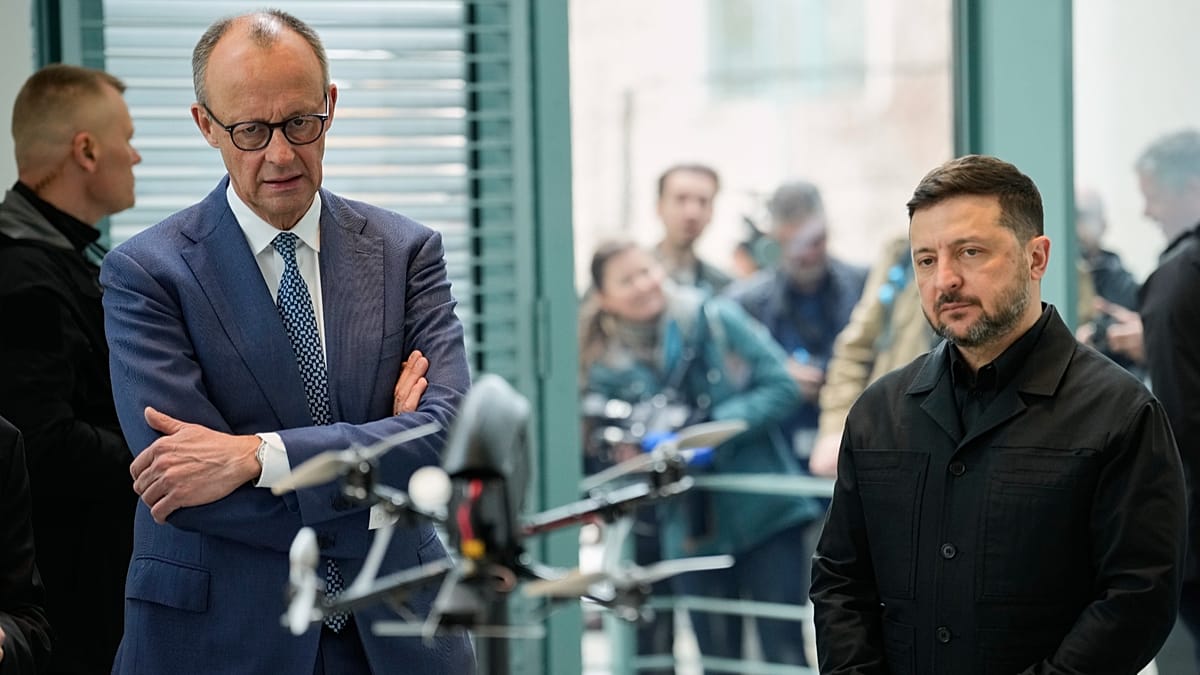
The war in Ukraine has fundamentally altered the calculus of modern warfare, with drones shifting from peripheral tools to central combat assets. Where European militaries previously operated fleets numbering in the low thousands, the conflict now consumes millions of units annually. This surge in demand has exposed a critical vulnerability: Europe's traditional defence procurement systems are structurally incapable of keeping pace with a technological cycle measured in months, not years.
The Procurement Paradox
"Drones evolve technologically every three to six months," states Nikolaus Lang, Managing Director and Senior Partner at BCG. "So, it's also challenging to buy millions of drones that will be obsolete in 12 months from now." This creates a fundamental procurement paradox for ministries of defence from Berlin to Paris. By the time a lengthy tender process concludes and a contract is signed, the very system it covers may already be outdated.
The Ukrainian battlefield serves as the world's most intense proving ground, compressing design and deployment cycles from months to weeks. Ukrainian engineering teams incorporate real-time combat feedback directly into successive generations of drones, accelerating innovation in software, communications, and counter-jamming technologies. This relentless pace has turned the conflict into a cat-and-mouse game of adaptation, where a novel fibre-optic drone model in 2024 can become a mass-produced staple for Russian forces by 2025.
The Exploitation Gap
Europe's core weakness lies not in research, but in application. The continent produces world-class academic papers in fields like AI and quantum technology, but struggles to translate these breakthroughs into deployable battlefield systems. "Europe is in the exploration world, and the US is in the exploitation world," Lang explains. The investment disparity is stark: over the last decade, the United States has channeled roughly $70 billion into defence venture capital, while Europe has managed only about $7 billion—one-tenth of the American total.
This capital gap directly fuels a capability gap. The Pentagon recently showcased American-made drone prototypes developed in an average of 18 months using commercial components, a process that traditionally takes six years. The US benefits from a single, unified procurement market worth over $900 billion annually. In contrast, Europe's combined defence budgets of approximately $450 billion are fragmented across dozens of national systems. "The 900 billion is one market. The 450 billion is all the EU markets together," Lang highlights.
The result is duplication and inefficiency. Today, 80% of European defence procurement and 90% of defence research and development funding remains strictly national. This fragmentation prevents the scale necessary to rapidly industrialise innovation. Furthermore, sovereignty concerns are amplified by dependencies on foreign components, with many European drones relying on Chinese parts—a supply chain vulnerability that worries NATO planners. The geopolitical stakes of defence autonomy are clear, as highlighted by ongoing debates on EU support for Ukraine and sanctions against Russia.
A Long Road to Sovereignty
Analysts agree that Europe possesses the foundational knowledge to build a sovereign defence technology stack, but not at the speed required by the current threat environment. Lang, who co-authored an analysis with General Lavigne, estimates the journey will take "probably five, but more likely ten years." In the interim, NATO is establishing drone innovation hubs and joint programs aimed at standardising swarm tactics, AI integration, and resilient communications.
The strategic goal is to bridge the chasm between Europe's robust research institutions and its sluggish deployment pipelines. This will require a multi-pronged approach: significantly more risk capital for defence startups, a radical overhaul of procurement bureaucracies in capitals like The Hague and Rome, and a cultural shift within defence ministries to accept that in drone warfare, a timely 'good enough' system is vastly superior to a perfect one that arrives too late. The urgency for such integration is a point echoed by former leaders, as Sanna Marin has urged the EU to absorb Ukraine's battlefield lessons.
The challenge extends beyond the battlefield, touching on broader European security and economic stability. Prolonged conflicts can have cascading effects, including energy price volatility as warned by the EU Energy Chief. Closing the drone innovation gap is therefore not merely a military imperative, but a cornerstone for ensuring Europe's strategic resilience in an increasingly unstable geopolitical landscape.



