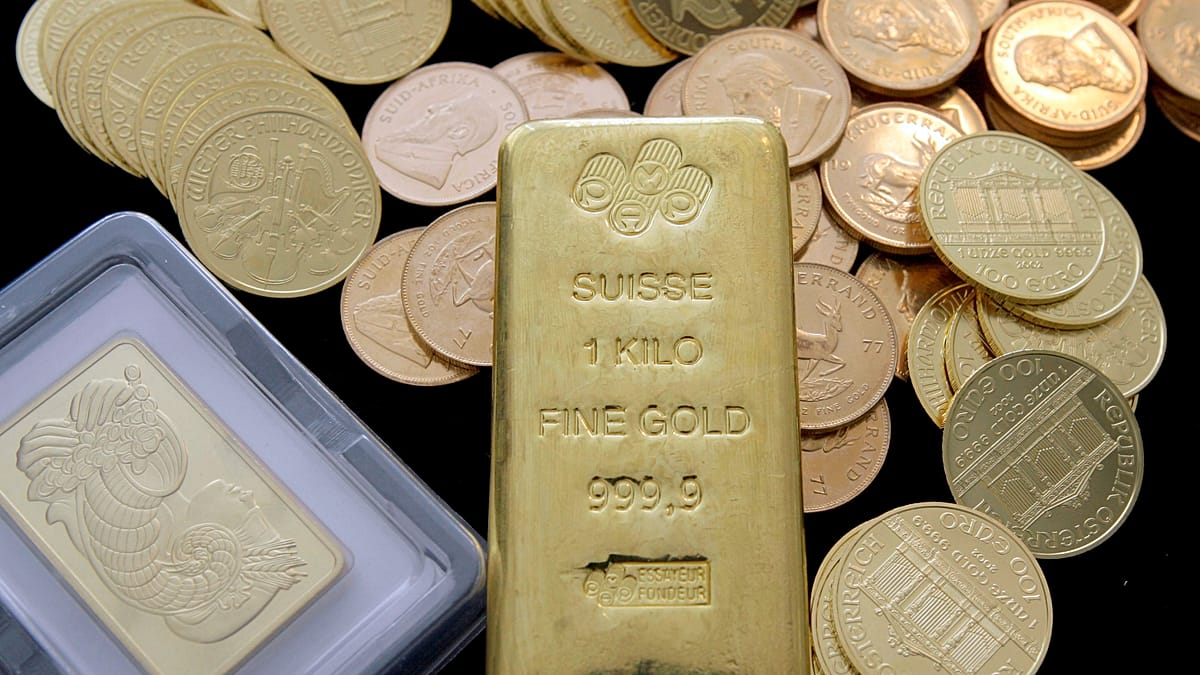
A little-known San Francisco startup, Marathon Fusion, has announced that it successfully converted mercury into stable gold last month, a feat it claims surpasses CERN's previous record by a factor of ten. The Geneva-based particle physics laboratory had produced a minuscule amount of gold in 2025 using its Large Hadron Collider, but Marathon's achievement, if confirmed, would mark a significant leap in the ancient quest to transmute base metals into precious ones.
The claim, which has not been independently verified, has reignited a debate that has long haunted the diamond industry: could laboratory-produced gold eventually undermine the value of mined bullion, much as lab-grown diamonds have disrupted the gemstone market? The question is not merely academic, as gold is a cornerstone of global finance and central bank reserves.
From alchemy to fusion
Marathon Fusion, founded in 2023 by Kyle Schiller and Adam Rutkowski, a former SpaceX engineer, focuses on developing fuel systems for future fusion power plants. The company's approach involves firing neutrons from fusion reactions at mercury, creating an unstable isotope that decays into gold. It also claims to have broken a 40-year-old Soviet record with its plasma centrifuge, a device that spins ionized gas at high speeds to separate isotopes.
The company lists the US Department of Energy as a partner and has received backing from Breakthrough Energy, the climate technology network founded by Bill Gates, and Anglo American, the mining group that owns De Beers. This connection to the diamond industry is particularly notable, as De Beers has experienced firsthand the disruptive impact of lab-grown stones.
The diamond precedent
Lab-grown diamonds, chemically identical to their mined counterparts, have seen wholesale prices plummet by 90% to 95% since 2015, according to industry analyst Paul Zimnisky. De Beers launched its own lab-grown brand, Lightbox, in 2018, but shut it down in 2025 to focus on natural diamonds. The company reported an underlying loss of $511 million in 2025, and Anglo American is reportedly in talks to sell its 85% stake for about $1 billion to a group led by former De Beers boss Gareth Penny.
However, gold presents a different challenge. The gold market is vastly larger, with mines producing 3,672 tonnes in 2025 and an estimated 222,600 tonnes mined throughout history. Central banks, including those of China and Poland, hold gold as a safe store of value and have been buying heavily in recent years. Gold traded at $4,062 an ounce on Thursday, more than 27% below its record high of $5,598 in January.
Scaling up is a distant prospect
Marathon's own 2025 study estimated that a fusion plant could produce about 5 tonnes of gold per gigawatt of electricity annually, roughly the output of a large nuclear reactor. On that basis, 100 such plants could add 500 tonnes a year, about 14% of last year's mine output. Yet no fusion plant currently sells electricity, and commercial fusion is still years away.
Moreover, the gold produced would likely contain radioactive isotopes and might need to be stored for up to 18 years before it could be sold, the company has said. There are no public plans to commercialize the product, and the claim remains unverified. Unlike lab-grown diamonds, which can be distinguished from natural stones, transmuted gold, once its radioactivity fades, would be indistinguishable from mined gold.
For now, the prospect of lab-made gold crashing bullion prices remains a distant possibility, more science fiction than market reality. But as fusion technology advances, the question may become increasingly relevant. For a deeper look at how energy prices are shaping European markets, see our analysis of EU leaders' response to energy price spikes.