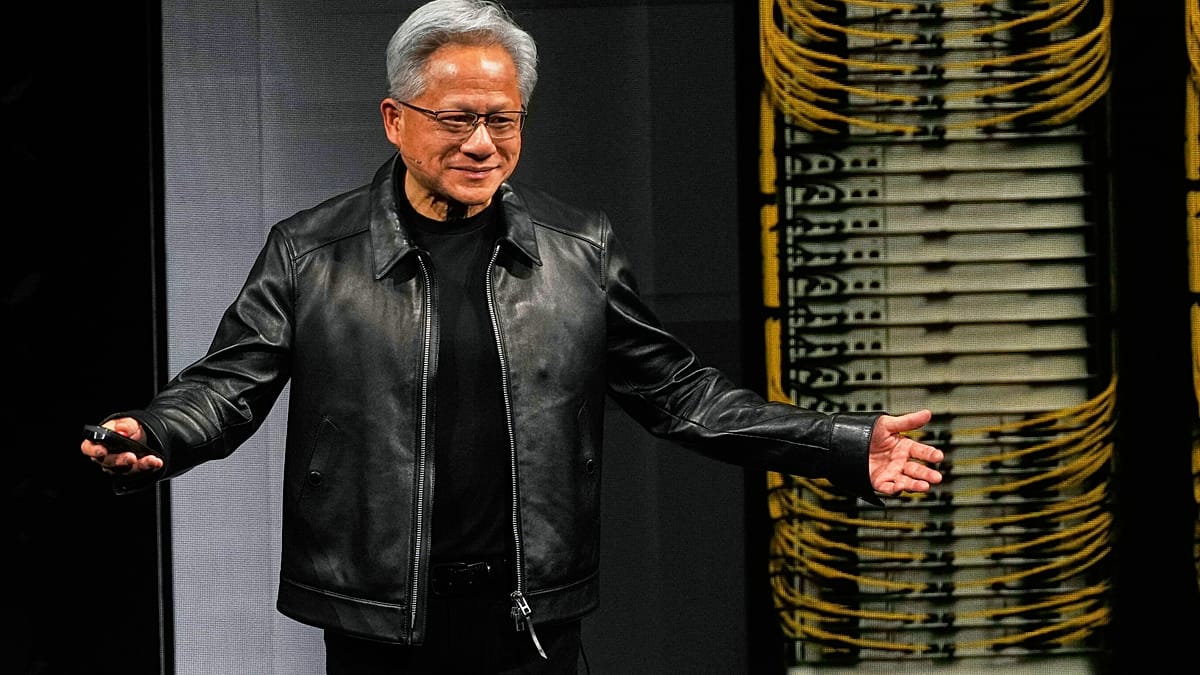
Berlin played host to Nvidia's latest showcase this week, as the US chipmaker brought its vision of an AI-driven future to the German capital. The event, which drew industry leaders and policymakers, featured humanoid robots, intelligent machines, and powerful supercomputers, underscoring the rapid pace of technological change sweeping across Europe.
Nvidia CEO Jensen Huang took the stage to outline his company's ambitions for the continent. "Europe has the talent, the research base, and the industrial strength to become a major AI economy," Huang said, addressing a packed auditorium. He predicted that AI would transform sectors from manufacturing to healthcare, and that Europe was well-positioned to benefit if it moved decisively.
The timing was significant. Germany, Europe's largest economy, has been under pressure to accelerate its digital transformation. A recent report warned that the country lags behind in AI adoption, a concern echoed by Huang himself during his visit. The event came just days after Berlin secured an AI pact with Nvidia and announced a €16 billion investment from Amazon, signalling a renewed push to attract tech investment.
Humanoid robots take the spotlight
Among the most striking exhibits were humanoid robots designed to work alongside humans in factories, warehouses, and even homes. These machines, powered by Nvidia's AI platforms, demonstrated tasks ranging from object manipulation to autonomous navigation. For German manufacturers, such robots could address chronic labour shortages while boosting productivity.
One attendee, a robotics engineer from Munich, told European Pulse that the technology had matured significantly. "Five years ago, these robots were lab experiments. Now they are close to commercial deployment," he said. "German industry, with its strong engineering base, could be an early adopter."
The event also highlighted the growing importance of AI supercomputers. Nvidia showcased its latest systems, designed to train large language models and run complex simulations. These machines are critical for research institutions and startups across Europe, many of which rely on access to high-performance computing.
Germany's AI gap and the road ahead
Despite the optimism, Germany faces significant challenges. A recent analysis suggested that the country's AI ecosystem, while strong in research, lags in commercial application. Huang himself warned that Germany was falling behind in AI, urging policymakers to act quickly. The warning comes as Chancellor-in-waiting Friedrich Merz prepares to sign a joint pact with Nvidia, aiming to boost the country's AI infrastructure.
Berlin's efforts to attract tech giants are part of a broader strategy. The city has become a hub for startups and innovation, but it faces competition from other European capitals. The Amazon investment, announced at a separate summit, is expected to create thousands of jobs and strengthen Germany's cloud infrastructure.
However, the rapid expansion of data centres has also raised concerns. A UN adviser recently urged Europe to rethink AI data centre security, noting that these facilities are becoming critical infrastructure. The advice comes amid growing worries about cyberattacks and espionage, particularly in light of recent incidents such as the hacking of Germany's AfD party.
For now, the mood in Berlin was one of cautious optimism. Huang's prediction of a thriving AI economy in Europe may be ambitious, but the pieces are slowly falling into place. With political will, investment, and a skilled workforce, Germany could yet become a leader in the AI revolution.
As the event drew to a close, attendees were left with a clear message: the future is being built now, and Europe has a choice to be part of it or be left behind. For Germany, the next few years will be decisive.