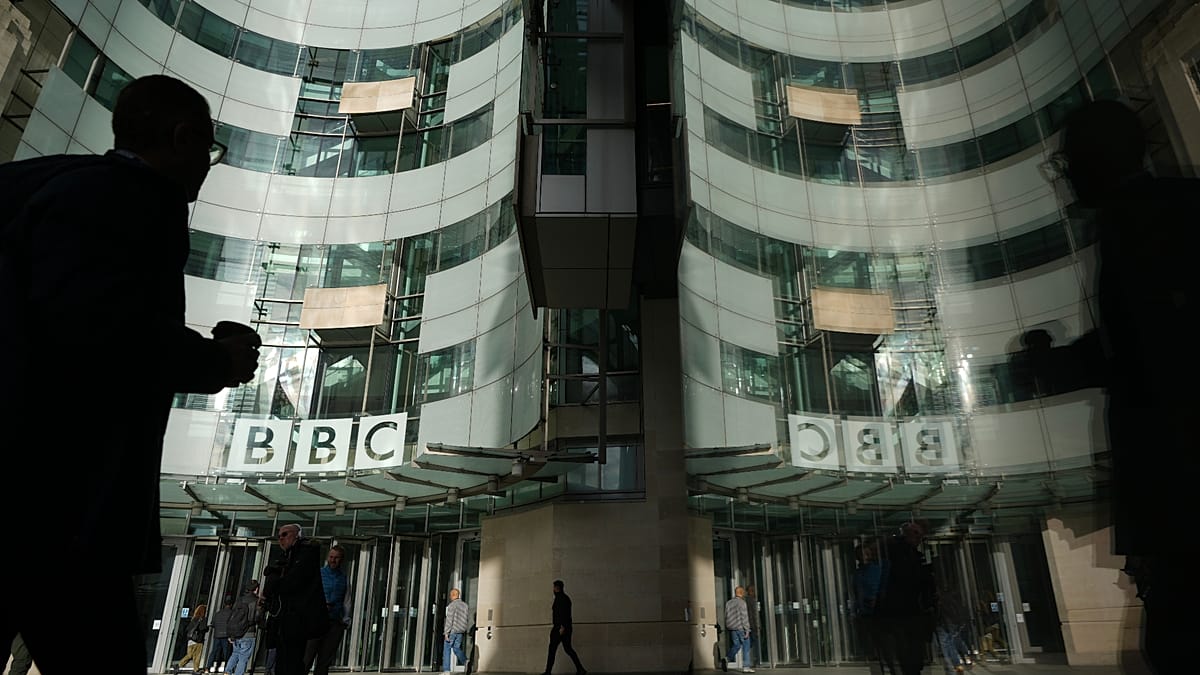
A US federal magistrate judge has ordered President Donald Trump to submit to a deposition by 11 December in his $10 billion (€8.6 billion) defamation action against the BBC, after the broadcaster's legal team accused him of deliberately stalling the discovery process.
Magistrate Judge Enjoliqué Lett issued the order on Thursday, setting a firm deadline that falls well before the close of the discovery period on 18 December. Should Trump fail to appear, he could face sanctions ranging from financial penalties to the outright dismissal of his lawsuit, unless the court agrees to extend the timetable.
A cancelled date and a campaign rally
Charles Tobin, an attorney for the BBC, told the court that with roughly two months remaining in discovery, "we still haven't been able to depose the plaintiff." He said Trump had initially consented to be questioned on 16 October but withdrew at short notice, invoking a "matter of national importance."
According to Tobin, the president spent that day campaigning in Dalton, Georgia, alongside Senate candidate Mike Collins. "He was participating in party politics and prioritized that over sitting for the deposition," the lawyer said.
The BBC has argued that Trump is attempting to push his testimony into January 2027, a manoeuvre that would leave the case in limbo well beyond the current schedule. The judge's order effectively rejects that approach.
The lawsuit and its origins
Trump filed the 33-page complaint in December 2025, alleging defamation and deceptive and unfair trade practices over a documentary titled Trump: A Second Chance. The suit claims the programme presented a "false, defamatory, deceptive, disparaging, inflammatory, and malicious depiction" of the president and characterises it as "a brazen attempt to interfere in and influence" the 2024 US presidential election.
At the heart of the dispute is the editing of Trump's 6 January 2021 speech. The BBC has acknowledged splicing together sections of the address in a way that made it appear he had urged violence at the US Capitol. The corporation apologised and two senior executives resigned, but it denies defamation and is contesting the claim.
The case has unfolded against a backdrop of strained transatlantic relations, with the White House's posture towards Europe drawing scrutiny in Brussels, Berlin and Paris. Trump's legal offensive against a British public broadcaster sits alongside broader tensions that have deepened the transatlantic rift in recent months.
What happens next
The deposition would compel Trump to answer questions under oath from the BBC's legal team, a prospect the president has so far avoided. His attorneys have not yet indicated whether they will comply with the 11 December deadline or seek relief from the court.
If the judge finds that Trump has wilfully obstructed discovery, the sanctions available include adverse inferences, monetary penalties or dismissal of the entire action. For the BBC, securing the deposition is central to building its defence ahead of any trial.
The dispute also carries implications for how European media organisations assess legal risk when reporting on US politics. A ruling that permits a sitting president to delay testimony indefinitely would set a precedent with consequences well beyond this single case, while a firm enforcement of the deadline would reaffirm that even the most powerful litigants remain subject to ordinary procedural rules.
For now, the clock is running. Trump has until 11 December to appear, and the BBC has made clear it intends to hold him to that date.