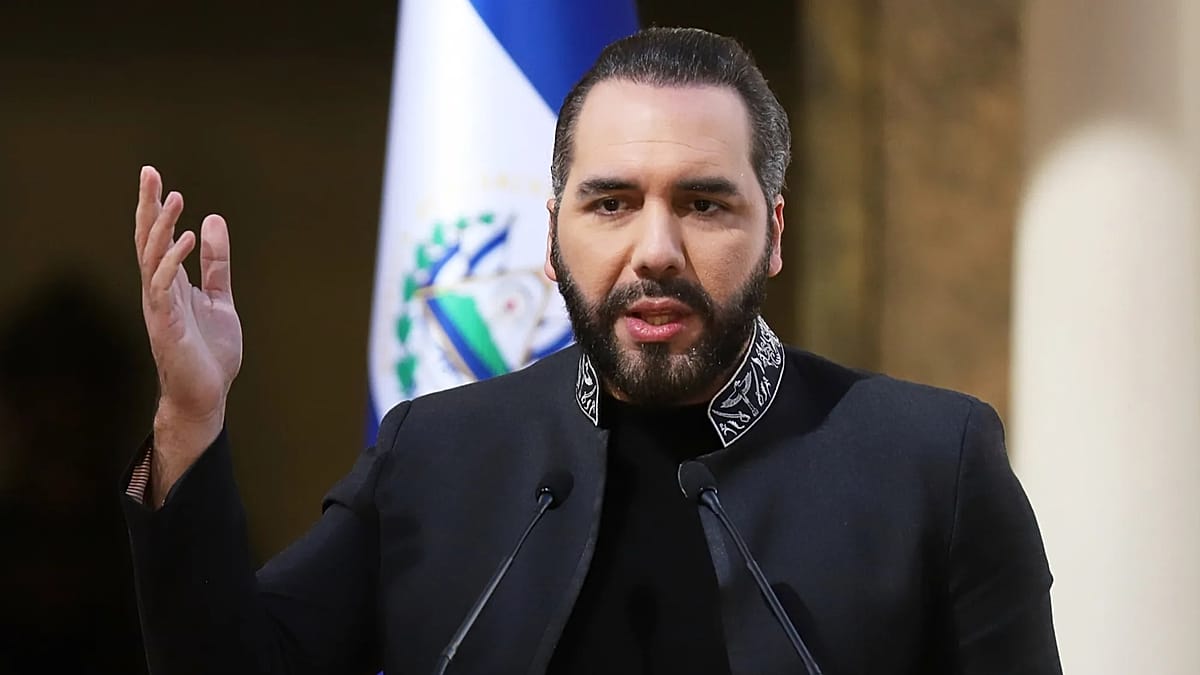
El Salvador's President Nayib Bukele announced on Wednesday that he had ordered a military operation to rescue four Salvadoran aviation technicians kidnapped by gangs in Haiti, warning that failure to return them alive and unharmed would trigger a far more forceful response.
The four men have been missing since Sunday, when gangs opened fire on an armoured vehicle in the Santo area of Croix-des-Bouquets, on the outskirts of Port-au-Prince. The technicians fled the burning vehicle and have not been seen since, marking the first major attack on the international gang suppression force since it began operating in Haiti.
Addressing Haitian gang leaders directly, Bukele issued a stark ultimatum on social media. "Today's attack is nothing compared to what is coming if they do not release the four hostages alive. And do not take our words as empty threats," he wrote on X, sharing a video of armoured vehicles with shattered windows moving through smoke.
He added that if the men were returned safely, "everything will go back to the way it was before the kidnapping," but stopped short of specifying whether any further action would involve Salvadoran, Haitian, or international forces.
Non-combat mission under strain
Bukele stressed that El Salvador's mission in Haiti is strictly non-combat. The four men are aviation technicians whose primary role is to carry out medical evacuations, he said, adding that the Salvadoran contingent "consists only of pilots and technical personnel — not to wage war."
Haiti's government responded Wednesday evening, saying the abduction of the technicians was an "absolute priority." A meeting was held at the prime minister's office to assess ongoing operations and coordinate with the Gang Repression Force, according to a government statement. "All necessary resources are being mobilised to achieve this goal," the statement said. It was not immediately clear whether Haitian authorities had confirmed that the four men are still alive. A spokesperson for the gang suppression force did not respond to requests for comment.
The attack underscores the scale of the challenge facing international forces in Haiti, where gangs are estimated to control around 70 percent of Port-au-Prince. The country is also preparing for its first general election in more than a decade.
El Salvador is one of several countries, including Chad, Jamaica, and Guatemala, contributing to the multinational gang suppression force, which has more than 2,000 troops on the ground. The UN originally approved up to 5,550 security personnel and more than 50 civilian staff for the mission in 2025. The force received at least a six-month extension through March 2027 from the UN Security Council.
In early October, El Salvador passed a law extending its own participation in the force for a year, also broadening its mandate beyond medical evacuations to allow the deployment of civilian and military personnel according to the mission's broader needs.
The kidnapping has raised questions about the safety of international personnel in Haiti and the effectiveness of the suppression force. While the operation is ongoing, Bukele's warning signals that El Salvador is prepared to escalate its involvement, even if that means moving beyond its stated non-combat role.
For European observers, the situation in Haiti is a reminder of the fragility of international peacekeeping missions and the complex security dynamics that can arise in failed states. As the international community watches, the fate of the four technicians will be a test of both Haitian and international resolve.