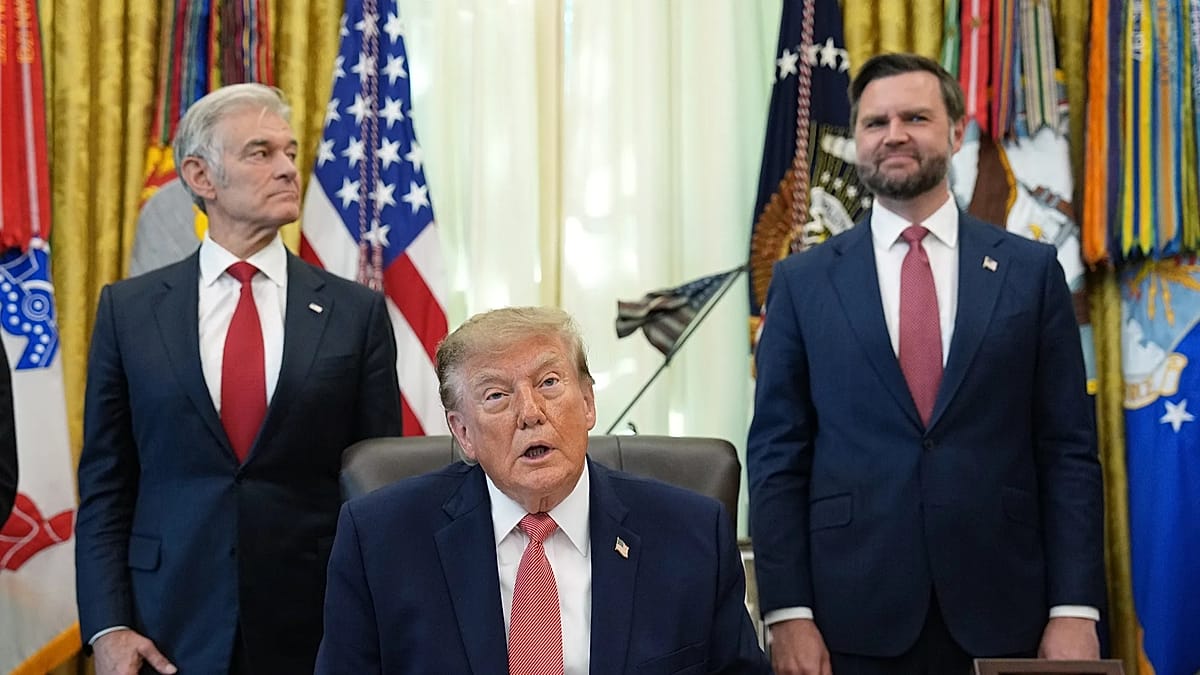
US President Donald Trump on Tuesday publicly pressed his Ukrainian counterpart Volodymyr Zelenskyy to reach a settlement with Russia, complaining that Washington had received “nothing back” for its backing of Kyiv. Speaking to reporters at the White House, Trump said: “We want Zelenskyy to make a deal. He can make a deal.”
He added that Zelenskyy “could have made a deal two years ago when we had our little chat in the Oval Office,” an apparent reference to their tense encounter in early 2025. “He’s going to have to want to make a deal, because I don’t think his people are going to stand for it any longer.”
The relationship between the two leaders has been volatile since Trump began his second term in January last year, and it has deteriorated further in recent weeks after Trump struck a diesel agreement with Russian President Vladimir Putin and criticised the effect of Ukrainian strikes on Russia’s energy infrastructure on global fuel prices.
On Tuesday, Trump — who is preparing for midterm elections that will determine control of Congress for the final two years of his presidency — appeared to place the blame for the continuing war on Zelenskyy. He repeated that the Ukrainian leader had missed his chance to negotiate and that the US had received nothing for its assistance “except grief, death,” and “tremendous monetary loss.”
“We have given tremendous amounts to Ukraine; we’ve got nothing back. Other than high diesel,” Trump said. “The American taxpayers are tired of it.”
“It’s time to make a deal,” he concluded.
Zelenskyy’s Oslo talks
Trump’s remarks came shortly after Zelenskyy met in Oslo with a US delegation led by special envoy Steve Witkoff, who is scheduled to travel to Russia on Wednesday for a meeting with Putin. The Oslo talks also involved Finnish President Alexander Stubb and Norwegian Prime Minister Jonas Gahr Støre.
After the discussions, Zelenskyy appeared relatively upbeat, telling journalists he had recently held a constructive call with US Secretary of State Marco Rubio and calling for a trilateral meeting with Trump and Putin. He also addressed reported restrictions on US intelligence sharing during a press conference with the Nordic leaders, saying he was “thankful” that “intelligence works now.”
“I’m speaking about early warning, what is very important for our people, for children, adults, civilians, because we can hear when ballistic is coming,” he said.
In a social media post later that evening, Zelenskyy added: “It was constructive because all of us want peace – Ukraine, Europe, the United States. And we will see what happens tomorrow.”
The US president’s latest intervention is likely to deepen unease in European capitals, where leaders have grown increasingly concerned about Washington’s commitment to Kyiv’s defence. The EU’s top diplomat, Kaja Kallas, recently accused Washington of pushing Ukraine toward a surrender on Putin’s terms, while Zelenskyy himself has claimed that US deliveries of Patriot missiles have been delayed as relations fray.
As Witkoff prepares for his Moscow talks with Putin, European governments are watching closely for any sign that the White House might force a settlement that undermines Ukraine’s sovereignty. The EU is also grappling with how to fill Ukraine’s €70 billion funding gap if US support continues to waver.
For now, Trump’s message is unambiguous: he wants a deal, and he wants it soon. Whether Zelenskyy — or Europe — can accept the terms that might follow remains an open question.