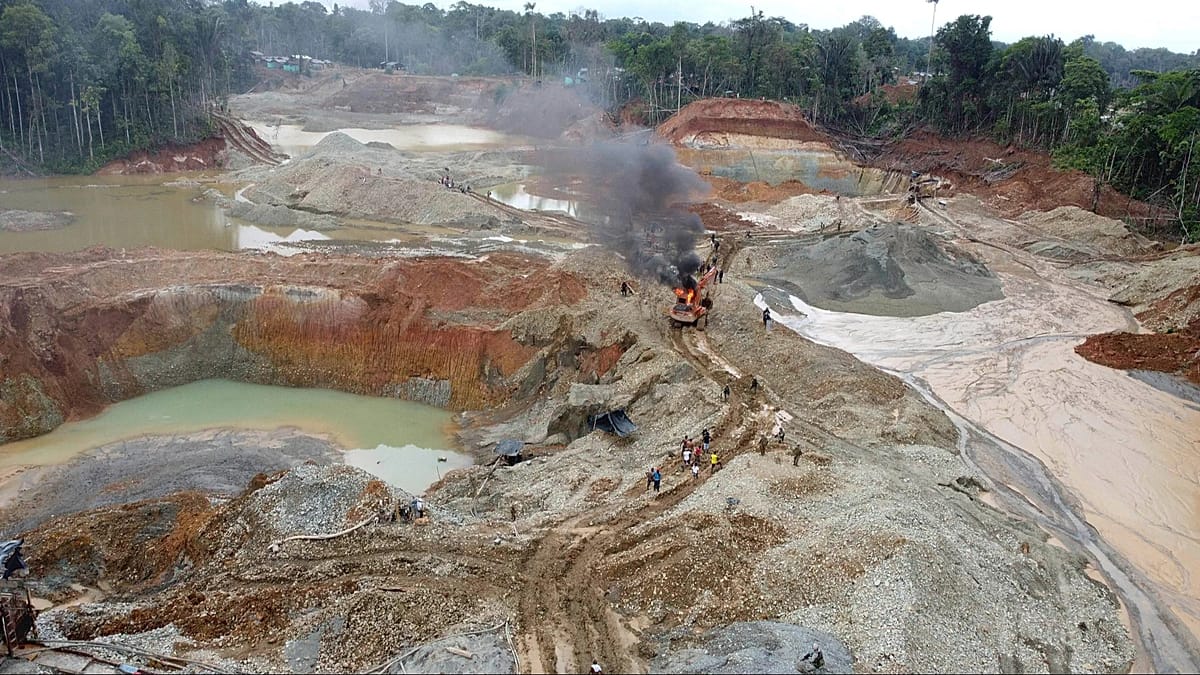
A landslide at an unlicensed gold mine in southwestern Colombia has claimed at least 14 lives and left seven others injured, according to regional officials. The incident occurred in the department of Narino, a region bordering Ecuador that has become a focal point for illegal mining and organized crime.
Alex Gonzalez, Narino's Peace and Security Secretary, confirmed the revised death toll to Caracol television, adding that the search for survivors has concluded. Videos circulating on social media show rescue workers and a backhoe recovering bodies from the mine and transporting them by canoe along a nearby river.
The governor's office reported that rescue teams faced significant challenges reaching the site due to the rugged terrain and the presence of criminal groups. The area is known to be controlled by armed organizations that profit from clandestine gold extraction, as well as drug trafficking and extortion.
A region held hostage by illegal economies
Narino has long been a hotspot for illicit activities, with armed groups exerting control over mining operations and the surrounding communities. These groups not only manage the gold trade but also engage in drug trafficking and extortion, creating a volatile environment for residents.
A source from the governor's office told AFP that communities in the region have few economic alternatives beyond these highly dangerous activities. “Traditional small-scale mining has practically disappeared,” the source said, underscoring the desperation that drives people to work in unregulated and hazardous conditions.
Mine accidents are a recurring problem in Colombia, particularly at sites that operate outside legal oversight. The lack of safety measures and enforcement makes such disasters tragically common.
Local residents in the municipality where the collapse occurred have reported selective killings by armed groups, often targeting individuals suspected of collaborating with security forces or rival organizations, or of stealing gold. This climate of violence and fear further complicates any efforts to regulate or improve mining practices.
The latest tragedy highlights the broader challenges facing Colombia as it grapples with the intersection of illegal mining, organized crime, and rural poverty. While the government has pledged to address these issues, the situation on the ground remains dire for many communities.
As the region mourns the victims, questions are being raised about the effectiveness of current policies and the need for sustainable economic alternatives that can wean communities away from such perilous livelihoods.