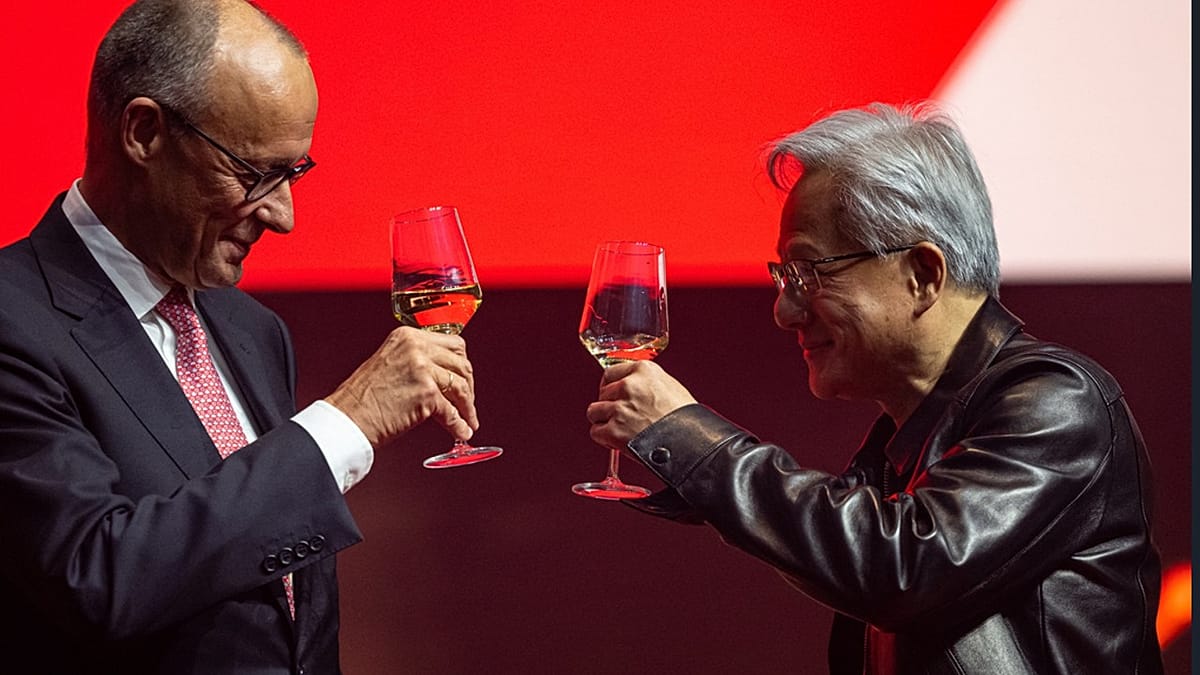
At the "Invest in Germany" summit in Berlin, the federal government announced two major deals with US tech giants. Nvidia, the world's most valuable chipmaker, and Amazon have both committed to significant investments in Germany, signalling a vote of confidence in Europe's largest economy despite recent criticism from Nvidia's CEO.
Jensen Huang, Nvidia's chief executive, had earlier chastised Germany for falling behind in artificial intelligence, urging the country to "just get to work." Yet during a fireside chat with Chancellor Friedrich Merz, Huang agreed to a partnership that will see the German government contribute a nine-figure sum, according to Handelsblatt. The collaboration aims to combine German engineering with cutting-edge AI technology to strengthen the country's industrial base.
Amazon's €16 billion pledge
Amazon announced plans to invest around €16 billion in Germany by 2027, with roughly one-third earmarked for expanding data centres for its cloud subsidiary AWS. The investment will focus on the Frankfurt am Main region, where AWS already employs about 3,000 people. This move is expected to bolster Germany's digital infrastructure and support the growth of cloud services across Europe.
Nvidia says it invested nearly one billion dollars in Germany in 2025, holding stakes in numerous startups and established firms. Huang has repeatedly stressed that data should be treated as a national resource, advocating for the development of "national intelligence" rather than exporting data abroad. Around a dozen German companies, including Siemens, Audi, and the Freiburg-based AI startup Black Forest Labs, are expected to join the government-backed project.
Chancellor Merz called on German companies to open up their industrial data for AI, arguing that preserving the country's industrial base is a crucial advantage over other economies. "Germans are considered hard-working, they go to bed early and get up before sunrise," Merz said, praising traditional virtues. "On holiday we are the first on the beach and spread out our towels before breakfast. And when we agree delivery dates, we keep to them."
The announcements come as the outlook for the German economy has brightened slightly. The International Monetary Fund now expects growth of 1.3 percent in 2026, up from a previous forecast of 0.7 percent. Whether these investments will translate into sustained momentum remains to be seen, but the deals signal a renewed transatlantic tech partnership.
Germany's push to attract AI investment is part of a broader European effort to catch up in the technology race. The country's industrial strength, particularly in automotive and manufacturing, offers a unique foundation for AI applications. However, challenges remain, including regulatory hurdles and a cautious corporate culture. The success of these initiatives will depend on how effectively German companies embrace data sharing and innovation.
For more on Germany's economic challenges, see rising mortgage rates and Roche's freeze on expansion plans. The government's ability to foster a stable investment climate will be key to attracting further foreign capital.