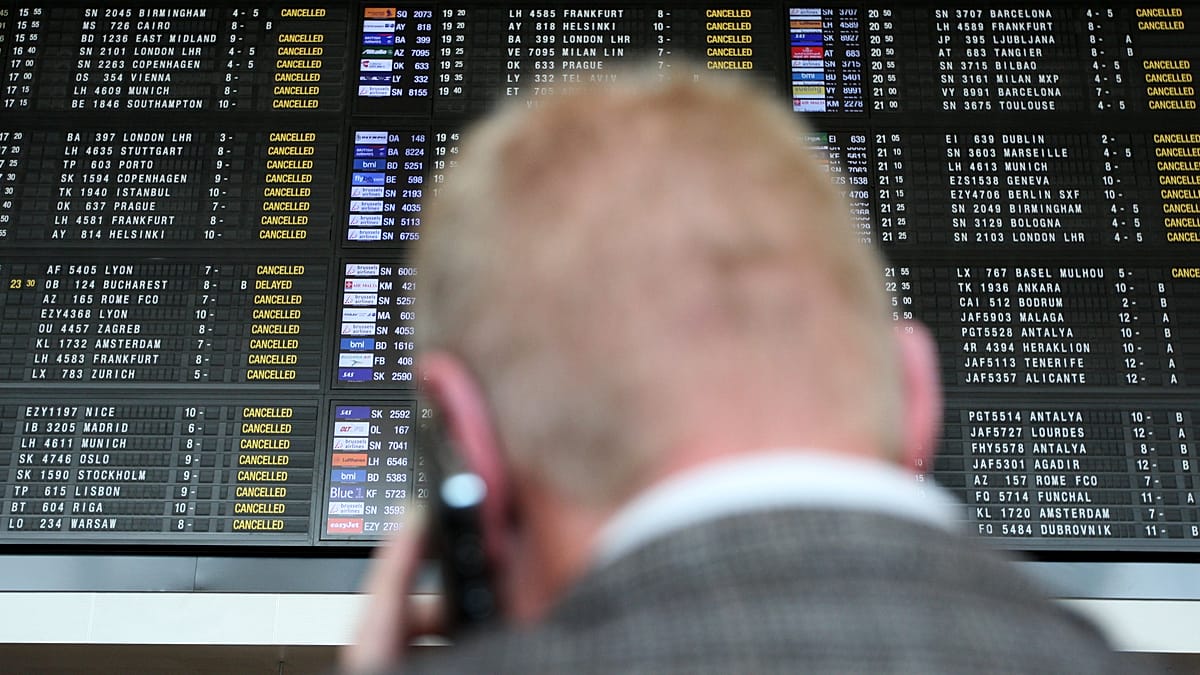
The European Parliament has given its overwhelming backing to new rules that will make it easier for passengers across the European Union to claim refunds when their travel plans are disrupted. The regulation, passed with 652 votes in favour, two against and eight abstentions, introduces a standardised claim form that will be available on the European Commission's website in all official EU languages.
The form will cover all modes of transport—air, rail, bus, and sea—meaning that a traveller whose train from Paris to Berlin is cancelled, or whose ferry from Piraeus to the Cyclades is delayed, will no longer need to navigate a patchwork of national procedures. Instead, a single, uniform document will serve as the basis for a refund claim across the bloc.
Intermediaries now explicitly liable
A key change is the clarification of the obligations of travel intermediaries. Under the previous legislation, it was often unclear whether a travel agent or an online booking platform—such as those used by many Europeans to book package holidays—was responsible for issuing refunds. The new rules make it explicit: if you booked through an intermediary, that intermediary must reimburse you within 14 days. If they fail to do so, the underlying carrier, such as the airline, is obliged to step in and pay the passenger directly.
Italian Socialist MEP Matteo Ricci, who steered the regulation through Parliament, framed the move as a victory for citizens over corporate interests. “We are prioritising the rights of our citizens over the profits of airlines,” he said.
The regulation builds on a broader overhaul of air passenger rights adopted in July, which already made it easier to obtain refunds and required airlines to include one free item of hand luggage in the fares they display online. That earlier reform was itself a response to the chaos of the pandemic, when many passengers struggled for months to get their money back for cancelled flights.
Stronger rights for passengers with disabilities
The new rules also strengthen protections for people with disabilities. Where necessary, a companion will be able to travel with them on a flight free of charge, bringing air travel in line with the existing practice on buses, trains, and ships. This is a significant step for accessibility, as the cost of an extra ticket has often been a barrier for disabled travellers who require assistance.
The Parliament's vote is a clear signal that passenger rights remain a priority for the EU, even as the travel sector recovers from the pandemic and faces new challenges such as rising fuel costs and labour shortages. The standard form is expected to be operational within the next two years, giving member states time to adapt their national enforcement mechanisms.
For travellers, the practical impact will be considerable. Instead of filling out lengthy claim forms in a foreign language or relying on the goodwill of a customer service hotline, a simple online form will suffice. The Commission will also provide guidance on how to use the form, and national enforcement bodies will be responsible for ensuring compliance.
The move has been welcomed by consumer groups, who have long argued that the previous system was too fragmented and placed an unfair burden on passengers. It also aligns with broader EU efforts to create a more seamless travel experience across the continent, as seen in initiatives like the slow travel movement and the growing popularity of budget-conscious holidays.
While the regulation is a major step forward, some details still need to be ironed out. The European Commission will now work on the technical specifications of the form, and the regulation will be formally adopted by the Council of the EU before it enters into force. Once in place, it will apply to all journeys that begin or end in the EU, as well as those that involve an EU carrier.
For the millions of Europeans who travel by air, rail, or sea each year, the new rules offer a clearer, more predictable path to compensation when things go wrong. As the EU continues to navigate its political landscape, this is one issue on which the Parliament has spoken with near unanimity.