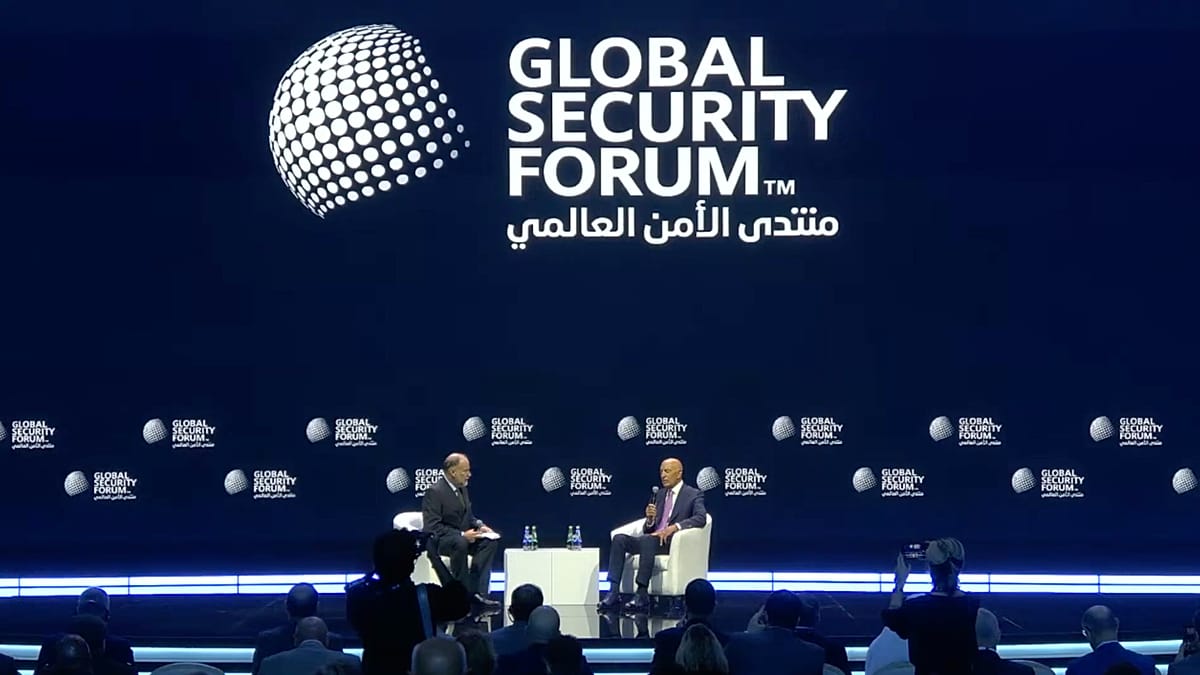
In a rare public appearance, Qatar's head of the Intelligence and Security Authority, Brigadier General Khalid Mohammed Al-Nuaimi, disclosed that Doha redeployed its entire defensive systems in just six hours to counter threats during the recent war with Iran. Speaking at the Global Security Forum in Doha on Tuesday, Al-Nuaimi described the move as "unprecedented and successful," noting that it followed eight months of adapting Qatar's forces, capabilities, and military doctrine—which had originally been designed for a completely different threat landscape.
When asked about Qatar's response to drone attacks during the conflict, Al-Nuaimi explained that the six-hour overhaul involved rapid changes both at the conceptual level and in the allocation of defence assets. "We adapted. We redeployed and we did it within six hours," he said, adding that "we were caught off guard, yet we adapted rapidly, out of sheer necessity."
Qatar's mediation role and US-Iran talks
Also at the forum, Qatar's Foreign Ministry spokesperson, Dr Majed al-Ansari, said that the Qatar-mediated US-Iran negotiations "are ongoing and we are seeing engagement from both parties." He added that "the fact that we are not hearing about it is a good sign that we are doing our job properly," amid concerns that the conflict could reignite.
The US ambassador to Turkey and Special Presidential Envoy for Syria and Iraq, Tom Barrack, told the forum that "America wants a peace deal" based on a "ceasefire in the straits" and a focus on "easing the pain on the Iranian people." He stressed that "prosperity is the only answer" and that "we don't need a reboot" of the previous US-Iran peace memorandum. Barrack identified the main obstacle as a "lack of trust," noting that "the IRGC does not trust the US. And the US does not trust IRGC."
Barrack acknowledged that the Iran war had "unintended consequences" and described President Donald Trump as a "no forever wars president." He insisted that the US will not leave the Middle East, even if regional leaders feel they "cannot rely on America to solve all my problems." He explained that "the bargain is not to control, but to not leave. We are not leaving." He framed the current shift as "a message for realignment" rather than abandonment.
In a notable departure from earlier stated goals, Barrack suggested that regime change had been a mistake. "Every time we try and intervene, change the person or the regime, it seems to have been a mistake," he said, referring to 23 US attempts at regime change across the region. Instead, he advocated for a more diplomatic approach: "bring everybody, put them in a tent, give them coffee, put the guns and daggers on the table, and let's figure something else out."
On the rising tensions between Israel and Turkey, Barrack said, "my belief is Israel is way too smart to actually pick a real fight with Turkey. I don't think Israel wants that, I know Turkey does not want that."
Yemen and the Houthis' staying power
Dr al-Ansari also reiterated Qatar's stance on Yemen, saying that alongside other Gulf nations, "Qatar is supporting our brothers in Saudi Arabia in defending their sovereignty against this attack."
Former head of the UK's foreign intelligence service MI6, Sir John Sawers, offered a blunt assessment of the conflict in Yemen. "The Houthis are here to stay," he told the forum. "They are not going to be defeated, and they are going to remain in control of a large part of Yemen for the foreseeable future." Sawers noted that the Houthis have "their own national Yemen agenda" and have "exposed the limited options that Saudi Arabia has" over the past decade, as efforts to sustain an alternative government have not succeeded.
The revelations come as Qatar unveils defence pact plans and warns of energy turmoil ahead, highlighting the Gulf state's growing role in regional security. Meanwhile, the broader implications for Europe are significant, as Kyiv seeks European air defence and satellite alternatives amid shifting US commitments, and a Switzerland-plus model is floated for the UK as the EU signals openness on trade. These developments underscore a changing transatlantic dynamic that European policymakers are watching closely.