Paris — France is preparing a "massive" security operation for Saturday, with military personnel set to be deployed to reinforce police and gendarmes ahead of further cost-of-living protests. The announcement comes after weekend demonstrations turned violent in several cities, leaving shops looted and public buildings damaged.
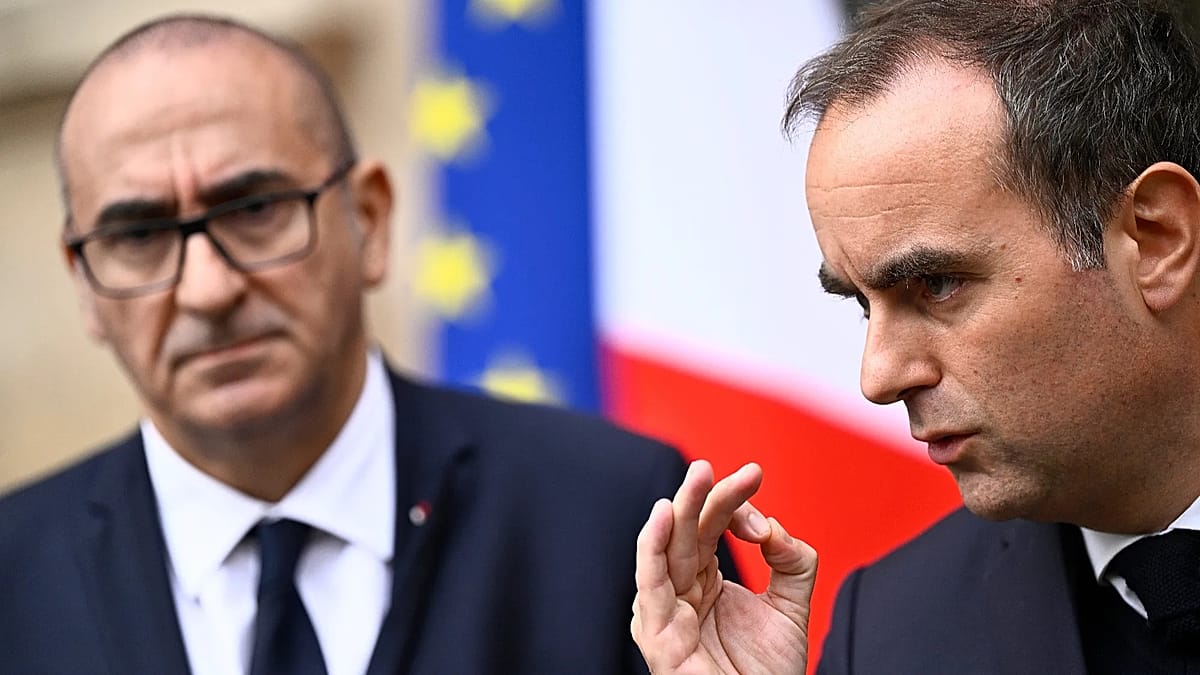
Speaking to parliament on Tuesday, Prime Minister Sébastien Lecornu said the government would not tolerate a repeat of the unrest. Interior Minister Laurent Nuñez detailed the plan, confirming that troops from Operation Sentinelle — the domestic counter-terrorism mission launched in January 2015 — would be reassigned to static guard duties at sensitive sites such as places of worship, schools, railway stations and airports.
"Their mission will be to replace internal security forces mainly on static guarding duties," Nuñez said, "in order to free up police officers and gendarmes to carry out public-order missions." The 10,000-strong Sentinelle force has previously been used to secure major events, including the Paris 2024 Olympics and the Paralympic Games.
Mobile groups and intelligence gathering
Nuñez stressed that the aim on Saturday would be for security forces to operate with increased "responsiveness and mobility" to deal with what he described as "scattered" and "extremely mobile" groups. He also said he was "considering the possibility of banning demonstrations that have not been declared and that could lead to public disorder."
Even declared protests could be affected, but only where "the organiser or the security team do not give us reason to believe that the demonstration will not get out of hand." For those deemed safe, Nuñez said it was "essential to prioritise routes away from public buildings and high streets," as well as to "step up intelligence-gathering efforts in order to identify as accurately as possible the number of participants, particularly the most radical ones, so that security measures can be adapted accordingly."
The weekend violence has already had significant economic consequences. Insurers are bracing for a surge in claims as the damage bill doubles, and the government has demanded that online resale platforms purge looted goods. The unrest has also deepened political pressure on President Emmanuel Macron, whose authority is increasingly questioned as France reels from the riots. The political fallout is likely to dominate the coming days.
Beyond the immediate security response, the crisis raises broader questions about social cohesion and the limits of protest in France. The country has a long tradition of street demonstrations, but the recent violence has prompted a debate over how to balance public order with the right to protest. Some local officials have called for a more nuanced approach, warning that heavy-handed tactics could inflame tensions further.
Meanwhile, the government is also considering extending curfews in the worst-affected areas, a measure that has been used in previous crises. The curfew proposal has drawn criticism from civil liberties groups, who argue that it would disproportionately affect young people and marginalised communities.
As France prepares for another weekend of potential unrest, the eyes of Europe are on Paris. The deployment of military forces on home soil is a rare and significant step, underscoring the severity of the situation. It also raises questions about the long-term role of the armed forces in domestic security, a trend that has been growing across the continent in response to terrorism and now civil unrest.
The coming days will test whether the government's strategy can prevent a repeat of the violence while preserving the right to peaceful protest. For now, the message from the interior ministry is clear: order will be maintained, even if it requires the army to step in.