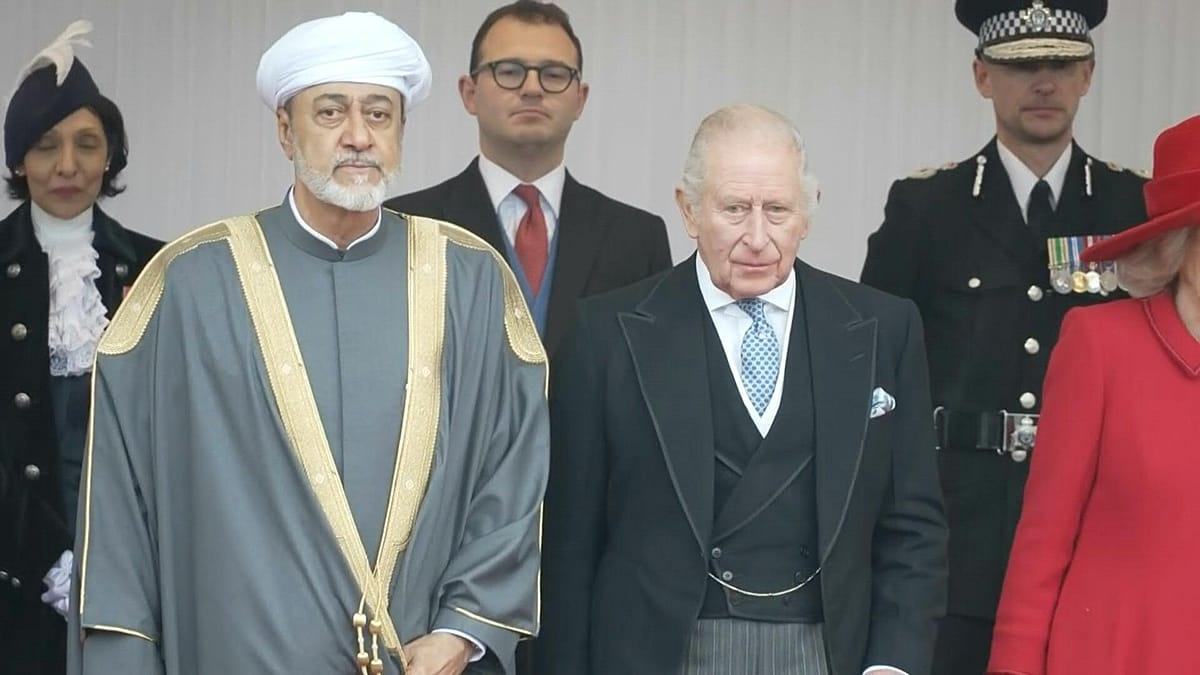
King Charles III and Queen Camilla, accompanied by the Prince and Princess of Wales, formally received Sultan Haitham bin Tarik of Oman at Windsor Castle on Monday, opening a three-day state visit that underscores the enduring partnership between the United Kingdom and the Gulf sultanate.
The ceremonial welcome, complete with a guard of honour and the playing of both national anthems, marked the first state visit hosted by the British monarch since his own coronation. Sultan Haitham, who has ruled Oman since 2020, is being accompanied by a high-level delegation of ministers and business leaders, reflecting the depth of the bilateral relationship.
A relationship with deep roots
The UK and Oman have maintained close diplomatic and military ties for centuries, with the two countries cooperating on security, trade, and education. Oman's strategic location on the Arabian Peninsula has made it a key partner for British interests in the Gulf, and the visit is expected to reinforce those links.
During the visit, the Sultan is scheduled to meet with Prime Minister Sir Keir Starmer at Downing Street, where discussions are likely to focus on economic cooperation, regional stability, and climate change. The UK has been seeking to expand its post-Brexit trade relationships, and Oman, with its growing economy and ambitious Vision 2040 plan, offers opportunities for British businesses.
Cultural exchanges are also on the agenda, with the Sultan expected to visit the Royal Opera House in London and attend a banquet hosted by the King at Buckingham Palace. The visit is a chance to showcase the shared heritage and people-to-people ties that bind the two nations.
Royal family involvement
The presence of Prince William and Princess Catherine at the welcome ceremony highlights the importance the royal family places on this visit. The Prince of Wales has previously visited Oman, and his engagement underscores the continuity of the relationship across generations.
The visit also comes at a time when the royal family is navigating its own transitions, with King Charles continuing to adapt to his role after the passing of Queen Elizabeth II. The successful hosting of a state visit is seen as a key test of the monarchy's diplomatic function.
Observers note that the UK's relationship with Gulf states has become more prominent as London seeks to diversify its international partnerships. The visit is part of a broader pattern of engagement, similar to Gulf states' growing role in regional stability.
While the visit is largely ceremonial, it carries substantive weight. Trade between the UK and Oman was worth over £1 billion in the last year, and both sides are keen to build on that. The Sultan's delegation includes key figures from Oman's energy and finance sectors, suggesting that economic agreements may be signed during the trip.
The state visit also offers a moment for reflection on the broader European-Gulf relationship. As European countries, including the UK, seek to balance their energy needs with climate commitments, Oman's investments in renewable energy and green hydrogen are of particular interest. The visit could pave the way for closer cooperation in these areas.
For the British public, the state visit provides a spectacle of tradition and pageantry, but for policymakers, it is a reminder of the strategic importance of the Gulf region. The UK's ability to maintain strong ties with Oman, while also navigating its own post-Brexit identity, will be closely watched by other European nations.
As the Sultan's visit unfolds, the focus will be on the tangible outcomes. Whether it is new trade deals, enhanced security cooperation, or cultural exchanges, the visit is expected to strengthen a relationship that has proven resilient over decades. The royal welcome at Windsor sets a tone of mutual respect and friendship, which both sides will hope to translate into lasting benefits.