French security forces on Tuesday arrested a man believed to be connected to the burning of the historic town hall in Limoges, a fire that has become a symbol of the violent unrest that accompanied weekend protests across the country. The suspect, aged around 40, was detained by officers from the elite RAID police unit in the nearby town of Val d'Issoire, according to the Limoges prosecutor's office.
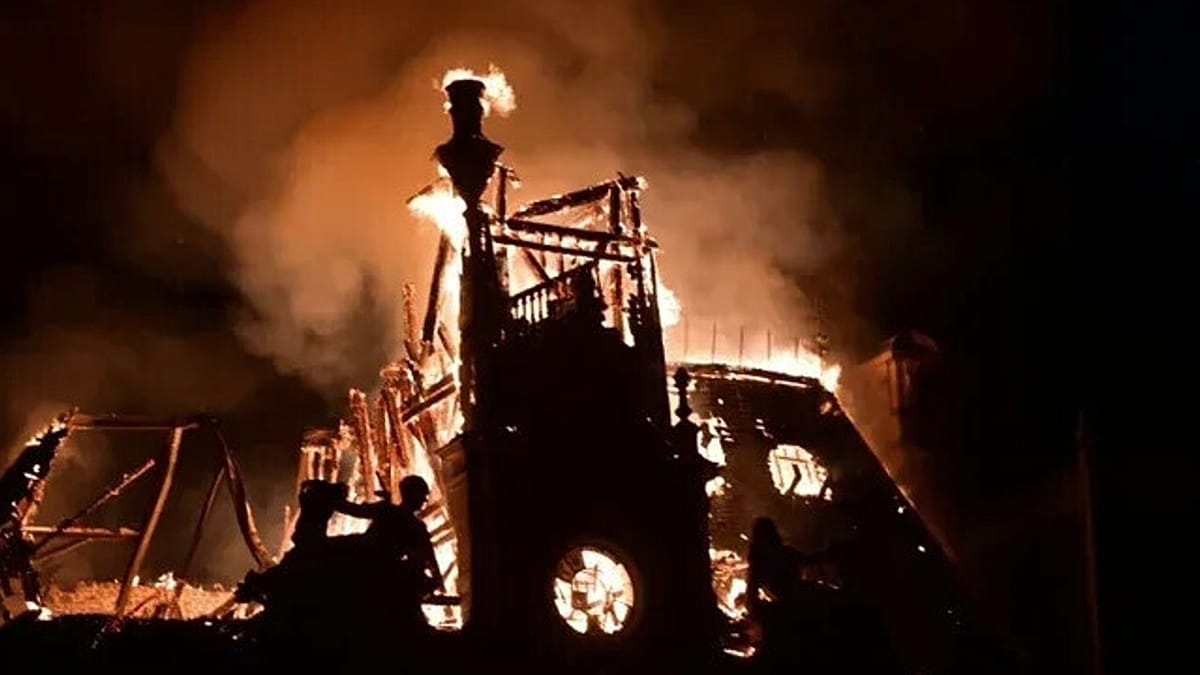
The arrest comes as France's anti-terror police, the Sub-Directorate for Counter-Terrorism (SDAT), have been called in to investigate the suspected arson. The blaze on Saturday destroyed the roof and belfry of the 19th-century building, which had stood since 1883. The images of the structure collapsing in flames evoked painful memories of the April 2019 fire that ravaged Notre-Dame cathedral in Paris, though investigators believe that blaze was accidental.
The man, who had previously been flagged for surveillance as a potential threat, is linked to ultra-left movements, a source close to the case told reporters. Justice Minister Gérald Darmanin said late Monday that anti-terror prosecutors would soon decide whether to treat the incident as a terrorist act. "If they take up the case, it means it is a terrorist act, implying that certain individuals, notably from the far left, clearly organised this destruction of the town hall," Darmanin told TF1 television.
Riots erupt amid cost-of-living and school protests
The fire broke out on the sidelines of a day of nationwide demonstrations called to express anger over rising living costs and deteriorating conditions in schools. In Limoges, around 5,000 people took part in the protest, including about 700 individuals described by authorities as "radicalised and extremely violent." The violence that followed left shops looted and public property damaged, adding to a growing insurance bill that has doubled as insurers brace for claims.
The right-wing mayor of Limoges, Guillaume Guerin, has sharply criticised the police response, saying officers "lacked the necessary resources" and "backed down" in the face of rioters. He called on the government to "inject millions" to rebuild the town hall, adding that "the state has failed." Prime Minister Sébastien Lecornu is scheduled to visit Limoges on Friday, his office confirmed.
The unrest has put President Emmanuel Macron under intense pressure, with critics questioning his authority and the government's ability to maintain order. The government has already announced local curfews in several cities, and Lecornu has vowed to restore order. The violence has also sparked a blame game, with politicians trading accusations over who is responsible for the escalation.
In a separate development, the government has demanded that online resale platforms remove looted goods, as authorities try to stem the flow of stolen merchandise. The crackdown on resale sites is part of a broader effort to deter further looting.
Meanwhile, the memory of the Notre-Dame fire has resurfaced in public discourse, with many drawing parallels between the two blazes. The Limoges town hall was a beloved landmark in the central city, and its destruction has shocked residents. On Sunday evening, some 7,000 people gathered to denounce the violence, a sign of the community's desire for calm.
The arrest of the suspect is a significant step, but the investigation is far from over. Anti-terror prosecutors will decide whether to formally take over the case, which would elevate it to the level of a terrorist inquiry. If they do, it would mark a new phase in France's response to the unrest, which has already led to extended curfews and a heightened security presence in several cities.
For now, the people of Limoges are left to mourn the loss of a historic building and to wonder what the coming days will bring. The government's promise of reconstruction offers some hope, but the deeper questions about the causes of the violence—and how to address them—remain unresolved.