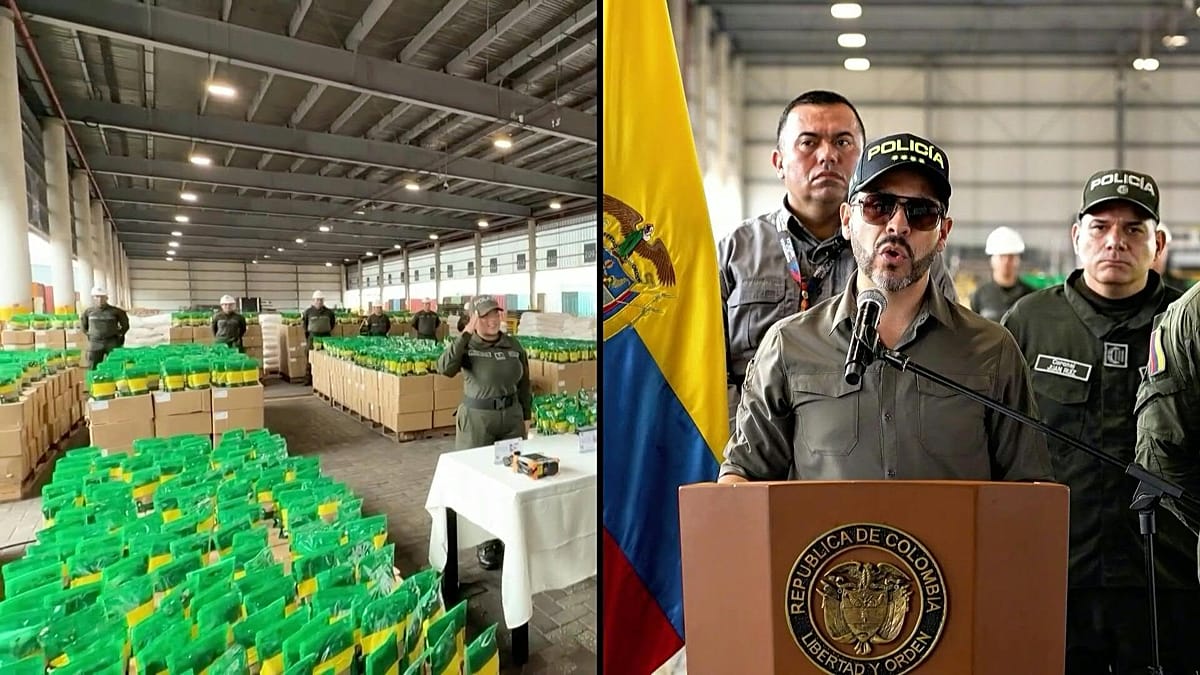
Colombian authorities have intercepted 7.6 tonnes of cocaine at the port of Cartagena, a shipment destined for the Netherlands. President Abelardo de la Espriella announced the operation on 20 October, describing it as the country's largest drug seizure in the past ten years.
The joint operation, carried out with the US Drug Enforcement Administration (DEA), uncovered the drugs hidden among legal cargo. Speaking in Cartagena, de la Espriella said the shipment was worth 43 billion Colombian pesos domestically and would have fetched more than $200 million once it reached European markets.
A significant blow to trafficking networks
This seizure underscores the scale of cocaine trafficking from South America to Europe, a route that has grown in importance as US interdiction efforts have tightened. The Netherlands, with its major ports like Rotterdam, remains a key entry point for narcotics into the continent.
European authorities have been increasingly concerned about the flow of cocaine through Atlantic routes. Earlier this year, Portuguese authorities seized 37 tonnes of cocaine off Faro, highlighting the region's vulnerability to large-scale trafficking.
The Cartagena operation is a reminder of the collaborative efforts between Latin American and European law enforcement agencies. The DEA's involvement reflects the international dimension of the drug trade, which often involves European criminal networks as buyers and distributors.
President de la Espriella praised the work of Colombian police and prosecutors, noting that the seizure would disrupt supply chains and deal a significant financial blow to criminal organisations. He also emphasised the importance of continued cooperation with international partners.
The drugs were likely destined for the Netherlands, where they would have been distributed across Europe. The street value in Europe is significantly higher than in Colombia, making the European market a prime target for traffickers.
This bust follows a pattern of increasing cocaine seizures in Europe, as demand remains high. According to the European Monitoring Centre for Drugs and Drug Addiction, cocaine purity has risen while prices have remained stable, indicating a robust market.
The operation in Cartagena is a testament to the effectiveness of intelligence-sharing between countries. It also highlights the challenges that remain, as traffickers continually adapt their methods.
For Europe, the seizure is a positive development, but it also serves as a warning. The scale of the shipment suggests that trafficking networks are operating with confidence, and European ports must remain vigilant.
As authorities on both sides of the Atlantic continue to cooperate, operations like this one are crucial in the fight against drug trafficking. The impact on the streets of European cities may not be immediate, but each seizure helps to disrupt the flow of illegal substances.