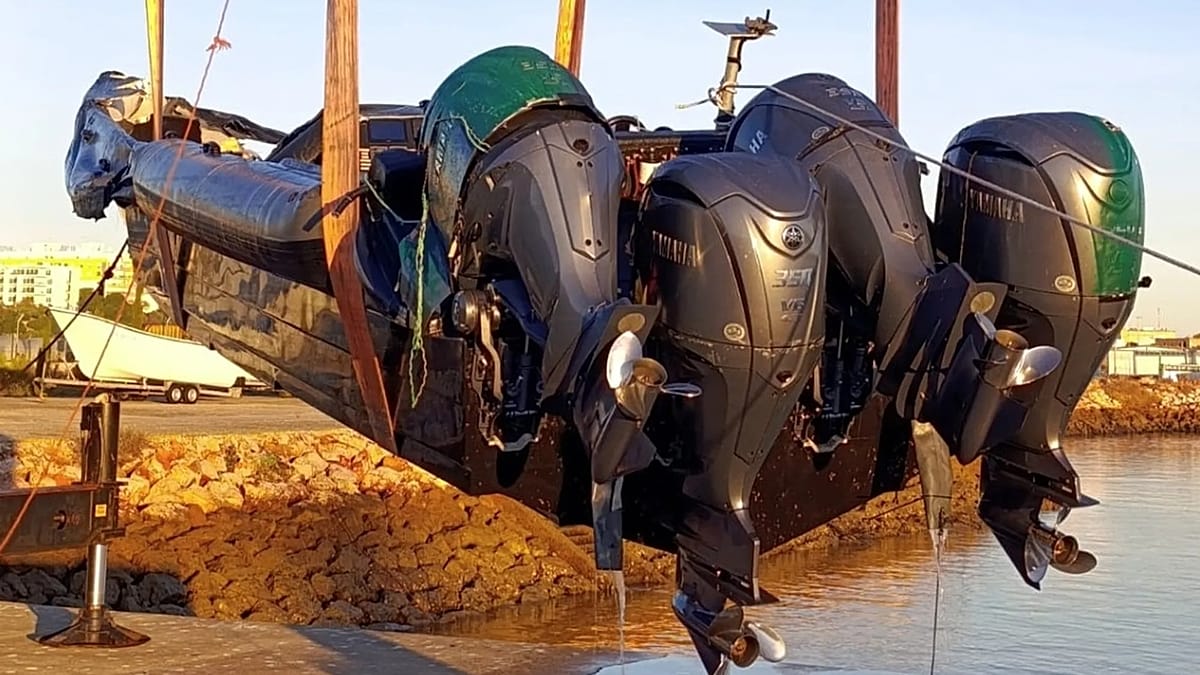
Portuguese law enforcement has dealt a significant blow to transatlantic drug trafficking with the seizure of 37 tonnes of cocaine from a high-speed vessel intercepted about 80 nautical miles south of Faro, in the Algarve. The operation, carried out on Sunday, was the culmination of a months-long investigation into a network that authorities say was intent on flooding European markets with large quantities of the drug.
The Judicial Police (PJ) said in a statement that the seizure followed an investigation that led to the dismantling of a criminal group dedicated to introducing large quantities of drugs into the European continent through the use of high-speed vessels. The vessel was detected and intercepted in international waters, and investigators also recovered various objects used in navigation and transport of the cargo.
A deadly interception
According to João Oliveira, head of the PJ in Lisbon, the vessel had been on the authorities' radar as suspicious. When officers approached on the high seas, the three-man crew ignored orders to stop, and a collision occurred during the chase. One suspect was seriously injured and later died; the other two, both foreign nationals, were arrested and will be brought before a judge at the Justice Campus in Lisbon, where charges and pre-trial detention will be decided.
Oliveira described the group as “yet another international criminal organisation” aiming to bring large quantities of cocaine into Europe. He pointed to their reliance on the narcolancha, a type of speedboat widely used in recent years for drug trafficking, underscoring the evolving tactics of smuggling networks.
The operation, code-named “Mare Nostrum”, was coordinated under the Maritime Analysis and Operations Centre – Narcotics (MAOC-N), with the participation of the Portuguese Navy, the Maritime Police, Spain’s Guardia Civil, and Italy’s Guardia di Finanza. This multinational effort highlights the growing cooperation among European agencies to counter the flow of narcotics into the continent.
The seizure comes as Portugal grapples with broader challenges, including housing protests that have spread from Lisbon to Porto, reflecting social tensions that sometimes intersect with crime and security issues. Meanwhile, the country is also investing in major infrastructure, such as the Lisbon–Porto high-speed rail link, which could improve connectivity but also raise concerns about new smuggling routes.
The 37-tonne haul is one of the largest ever recorded in Portugal, underscoring the scale of the cocaine trade that transits the Atlantic. The Algarve coast, with its long shoreline and proximity to major shipping lanes, has become a key entry point for traffickers using fast boats to ferry drugs from larger mother ships.
Experts note that the use of narcolanchas has increased in recent years, as traffickers adapt to tighter port controls and surveillance. These vessels, often built for speed and maneuverability, can carry several tonnes of cargo and are difficult to track once they enter coastal waters.
The arrested suspects are expected to face charges related to drug trafficking and resisting authority. The PJ has not released their nationalities, but confirmed they are foreign nationals. The investigation is ongoing, and authorities are working to identify the broader network behind the shipment.
This operation is part of a wider European effort to combat drug trafficking, which has seen similar seizures in Spain, France, and the Netherlands. The MAOC-N, based in Lisbon, plays a central role in coordinating intelligence and operations among member states, reflecting the continent's collective approach to a problem that respects no borders.