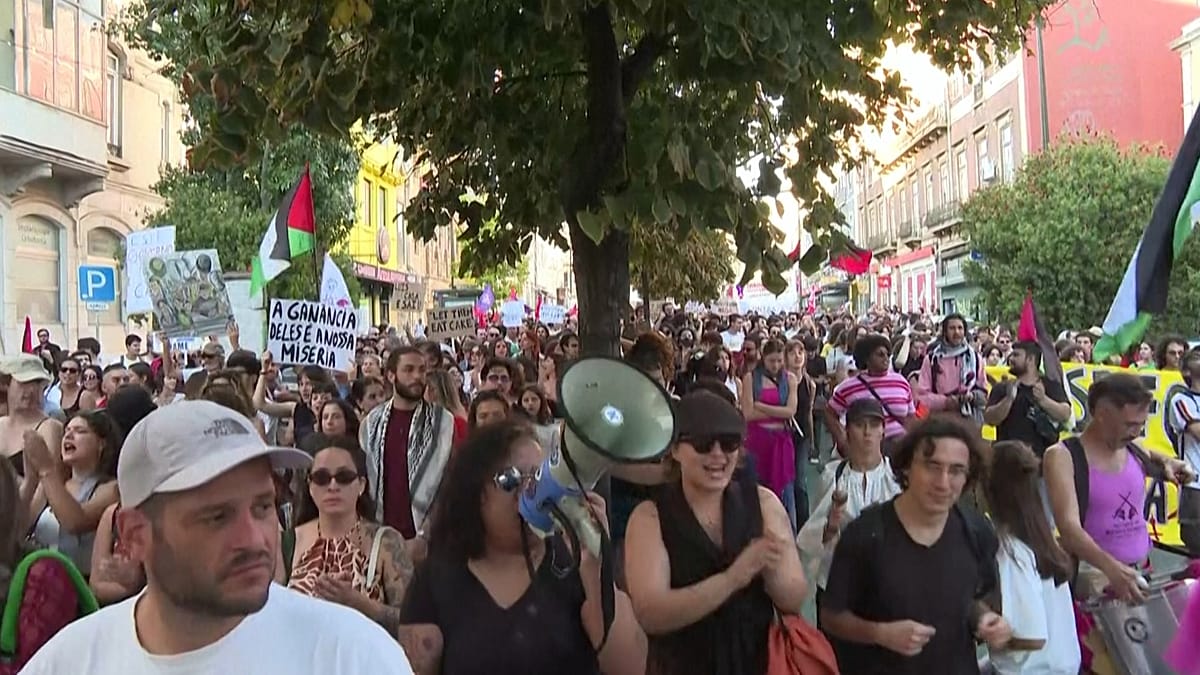
Thousands of demonstrators took to the streets in Lisbon and Porto on Saturday, venting frustration over Portugal's escalating housing costs and the squeeze on household budgets. The protests, organized under the banner "You can't live like this anymore," also drew crowds in Aveiro, Braga, and Funchal, with chants about wages and placards reading "This salary isn't enough to live on" and "I want to move out of my parents' house before I'm 50."
The movement reflects a broader European discontent over housing affordability, a theme that has already ignited protests in Spain and prompted political debates in several EU capitals. In Portugal, the issue has become particularly acute as a tourism boom and foreign investment have driven property prices beyond the reach of many locals, especially younger workers.
Teresa Fonseca, a participant at the Lisbon march, told the Lusa news agency that she had been inspired by recent protests in Spain. "I saw on Instagram that this protest was going to take place, so I came. Enough is enough. This country is getting worse and worse, and now we need to leave our homes and take to the streets to make our voices heard, just as the Spanish did," she said.
An Instagram account linked to the protests had promoted the demonstrations, stating that people have "been squeezed by rising house prices and the cost of living" for years. The post added: "We spend our lives working and exhausting ourselves just to make our wages last until the end of the month, to cope with rising fuel prices and basic living costs, and to avoid losing our homes. We can't go on living like this!"
Echoes of Spain's housing movement
The Portuguese protests come on the heels of a wave of housing demonstrations in Spain, where the eviction and subsequent death of 87-year-old Maricarmen Abascal in Madrid galvanized public anger. Her case became a catalyst for continued housing protests and added pressure on Prime Minister Pedro Sánchez's government, which has made housing a central issue in its election campaign.
In Porto, where around 1,500 people reportedly gathered, a group stood beside a sign reading "let's do it like they do in Spain." The cross-border solidarity underscores how housing affordability has become a shared challenge across southern Europe, where wages have lagged behind property price growth for years.
Portugal's government has taken some steps to address the crisis, including a youth housing guarantee in its 2027 budget, but protesters argue that more urgent action is needed. The country's reliance on tourism and foreign buyers has pushed up prices in city centers, while many young people remain dependent on their parents well into adulthood.
The demonstrations also highlight a broader European trend: in Belgium, tens of thousands recently protested against austerity plans, and in Germany, teacher pay has become a point of contention after cost-of-living adjustments. The housing question is now firmly on the agenda in Brussels, where policymakers are debating how to balance market forces with the need for affordable housing.
For many in Portugal, the protests are a last resort. "We are not asking for the moon," said one demonstrator in Lisbon, who preferred to remain anonymous. "We just want to be able to live with dignity, to pay our rent and still have something left at the end of the month."
The organizers have vowed to continue their campaign, with more actions planned if the government does not respond to their demands. As the movement grows, it is likely to put housing at the center of Portugal's political debate, much as it has in Spain.



