The European Commission has pushed back against Moscow's assertion that the European Union spent €302 billion ($320.7 billion) on Russian energy since 2022, offering a significantly lower estimate based on its own trade data. The dispute highlights the ongoing tension between the bloc's efforts to wean itself off Russian fossil fuels and the reality of continued imports through legal loopholes.
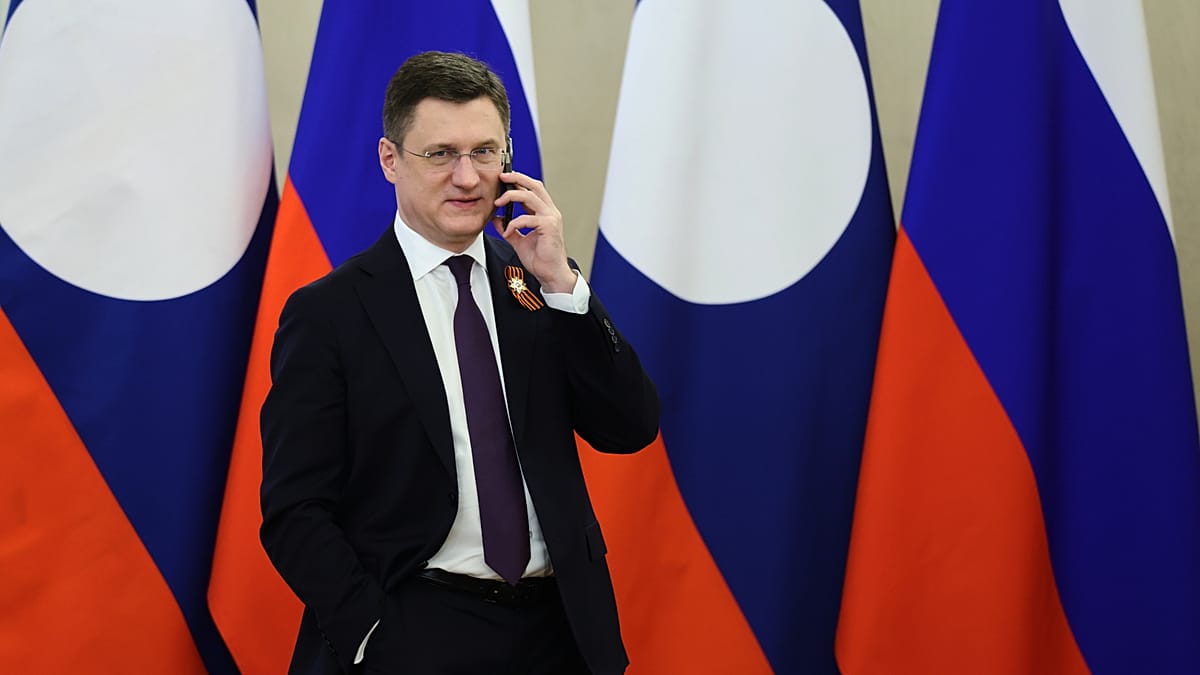
According to a Commission spokesperson, EU purchases of Russian energy between March 2022 and July 2026 totalled €197 billion ($209 billion), citing COMEXT, the official trade database managed by Eurostat. The figure is roughly €105 billion less than the one floated by Russian Deputy Prime Minister Alexander Novak, who told state broadcaster Vesti that supplies to EU countries had reached $320.7 billion over the same period.
Novak's remarks, made late Monday, were designed to portray Western sanctions as ineffective and to underline Russia's continued role as a supplier to Europe. He noted that deliveries worth $21.3 billion had already reached the bloc in the first nine months of 2026, despite restrictions. He also highlighted the Arctic LNG route, which alone generated €9.7 billion for Moscow in that period.
The Commission, however, insists that the bloc's strategy to reduce dependence on Russian energy has been effective. "The EU would have spent €475bn — an additional €278bn on Russian fossil fuels if REPowerEU hadn’t been launched," the spokesperson said, referring to the plan adopted shortly after Russia's full-scale invasion of Ukraine. By 2023, only 6% of the EU's total fossil fuel expenditure went to Russia, down from 42-45% in 2022, according to Commission data.
Divergent numbers, competing narratives
The discrepancy between Brussels and Moscow is not the only one. US President Donald Trump has claimed that the EU paid Russia $250 billion (€223 billion) for energy, a figure he used to justify his "America First" approach. Trump's estimate is about $41 billion higher than the Commission's, while Moscow's is roughly $112 billion higher. The competing figures reflect the difficulty of tracking energy trade amid sanctions, exemptions, and opaque pricing.
Commission spokesperson Anna-Kaisa Itkonen told reporters on Tuesday: "I'm not in the position to confirm other people's numbers. What I can confirm is that we have a clear declining trend of our dependency on Russia from 42%-45% in 2022 to 12% now." She added that imports of some Russian energy remain legal until next year, a concession to landlocked member states like Hungary and Slovakia, as well as to holders of long-term contracts.
The EU's continued purchases, even at reduced levels, have become a political flashpoint. Trump's social media post on 12 October framed the $250 billion figure as evidence that Europe has been financing Russia while relying on US security guarantees. That narrative has gained traction in Washington, but the Commission's data suggests a more nuanced picture: the bloc has cut its reliance sharply, yet not entirely.
Novak, for his part, argued that Russian diesel exports, including to the United States, could help stabilise global markets disrupted by tensions in the Strait of Hormuz and reduced refining capacity. His comments underscore Moscow's attempt to position itself as a reliable energy partner even as it continues its war in Ukraine, which has included strikes on Ukraine's energy grid despite ceasefire claims.
The EU's energy relationship with Russia remains a delicate balancing act. While the bloc has made significant strides in diversification, the exemptions for certain countries and contracts mean that some revenue still flows to Moscow. The Commission's figures, however, suggest that the financial impact is far smaller than either Moscow or Washington claims.
As the EU heads into winter, the debate over Russian energy is likely to intensify. The bloc's success in reducing dependence is clear, but the lingering imports remain a sore point for critics who argue that any payment to Russia helps fund its war effort. The Commission's response is that the trend is in the right direction, and that the REPowerEU plan has saved the bloc hundreds of billions of euros.
For now, the numbers remain contested, but the underlying reality is that Europe has significantly reduced its reliance on Russian energy. Whether that is enough to satisfy both domestic critics and transatlantic allies is another question.