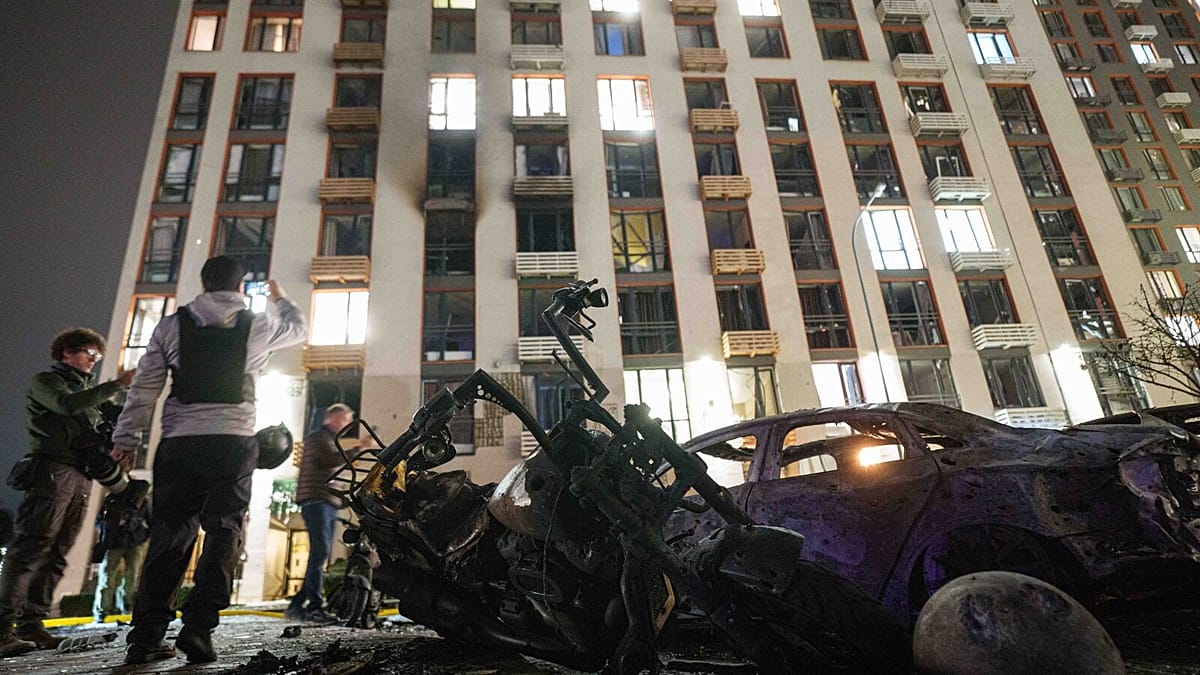
Good morning from Brussels. The promised respite for Ukraine has not materialised. Despite President Donald Trump's announcement on Sunday of an energy truce between Russia and Ukraine, Moscow's forces continued to pound Ukrainian energy infrastructure and residential areas on Monday, according to reports from the ground.
Ukraine's President Volodymyr Zelenskyy said on Monday that Russian attacks had hit six energy facilities across the country that day alone. Kyiv has stated it was not consulted about the truce and only learned of it through the media. Moscow has not confirmed any agreement to halt strikes on energy sites.
Speaking in his evening address, Zelenskyy reiterated Ukraine's readiness for an energy ceasefire but stressed that Russia must take concrete steps towards de-escalation. "America certainly has the strength and the means to ensure 'silence' – a genuine, reliable de-escalation and a genuine, reliable halt to Russia's actions," he said.
Europe closes ranks behind Ukraine
In response to the mounting pressure on Kyiv, European leaders have reaffirmed their support. French President Emmanuel Macron said, "I think we need to be collectively serious. Today, I believe, we have no factual reason to change our position." German Chancellor Friedrich Merz dismissed any suggestion of emulating the energy deal, stating that "Russia will only negotiate seriously under pressure, and that is why we are sticking to our sanctions against Russia."
EU foreign ministers meeting in Luxembourg echoed this resolve, insisting that the pressure campaign on Moscow would continue unabated. Their decision to add 1,600 individuals and entities to the sanctions list underscored the growing transatlantic divide over how to handle the conflict.
In Brussels, the European Commission was pressed on where it draws the line with Trump's unilateral decisions. "We will continue to engage with our partners and also with the US in bringing this war to a close," the Commission's chief spokesperson replied.
For now, Europeans appear to believe they have more to lose than to gain from breaking with Washington. Retaining a seat at the table where Ukraine's future and Europe's security architecture will be decided takes precedence over any diplomatic slight, however pointed.
Meanwhile, US media reports suggest that American officials floated the possibility of cutting off Kyiv's access to US intelligence – critical for locating Russian missile launchers – and suspending weapons deliveries through the NATO procurement scheme known as PURL during weekend talks in Miami. Such moves would further unsettle Kyiv and European capitals.
France braces for fresh protests
France is set to face another day of student- and trade union-backed protests, following tense clashes between demonstrators and police last week. The education ministry said that although the number of school closures is falling, the "violence is intensifying," as initially peaceful protests give way to more unrest. President Macron has urged "restraint," saying the issues require "time, consultations, discussion, and respect."
What began as student-led protests now appears to have tapped into wider social discontent, with another demonstration against the rising cost of living planned for Saturday.
UK-EU summit set for November
In other news, the much-anticipated UK-EU summit will take place in Brussels on November 20, both sides confirmed on Monday, four months after it was postponed amid political turmoil in London. Prime Minister Andy Burnham listed several areas where he hopes to make progress, adding that he would again raise his concerns about the EU's Made in Europe industrial policy, which risks shutting out UK firms from European value chains.
Burnham also signalled a willingness to discuss the longer-term relationship, saying, "Sticking with the status quo is not good enough for Britain. It would be a major dereliction of duty to turn away." He aims to "set up a serious dialogue" with Brussels to draw a line under "a decade of drift and division."
NATO unveils new defence strategy
At the Warsaw Security Conference on Monday, NATO's Supreme Allied Commander Europe (SACEUR) Alexus Grynkewich unveiled a new defence strategy named the Theory of Victory, designed to "block, blunt, and break" any attempted attack on the alliance. "If attacked, we are ready to fight tonight," Grynkewich told the audience, which broke into applause. "We will continue to prepare and rehearse each and every day, so we will be more ready tomorrow, and even more ready the day after that."
The plan involves the use of capabilities from across the alliance, including traditional fighting methods such as frontline ground forces and military aircraft, as well as cost-effective responses to modern warfare techniques like drones, which are frequently used by Russia.