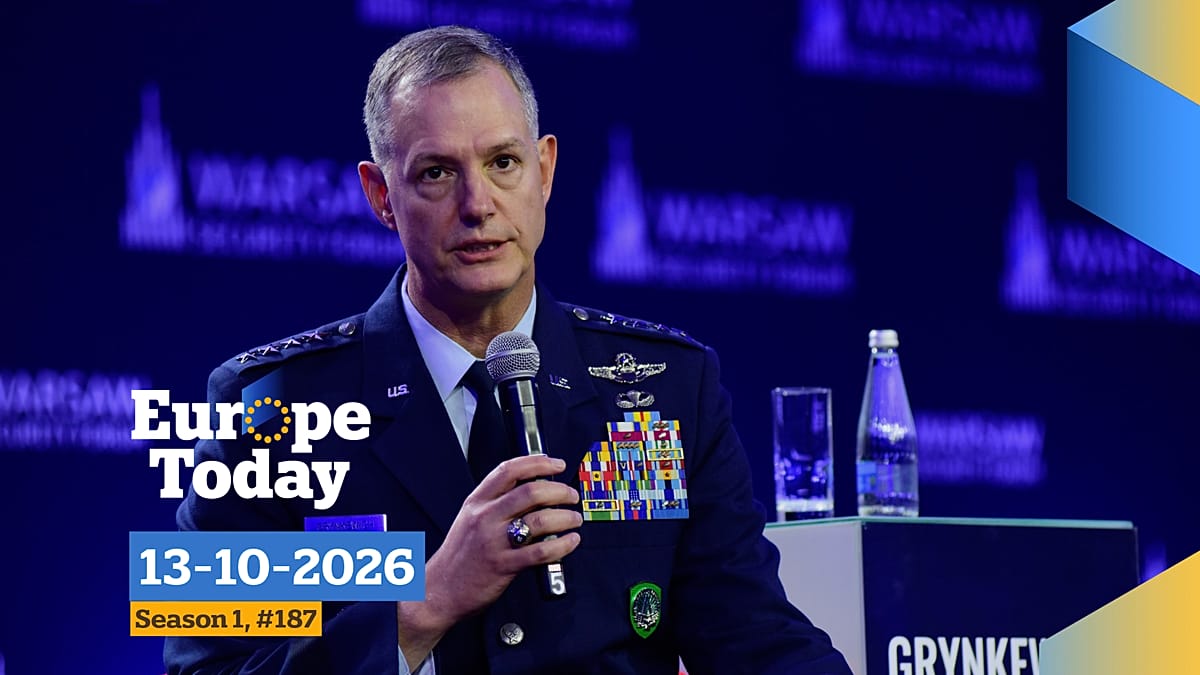
WARSAW — NATO's top military officer delivered a blunt warning to Moscow on Tuesday, saying the alliance is ready to counter any aggression. Speaking at the Warsaw Security Forum, General Alexus Grynkewich, Supreme Allied Commander Europe, said that any attack on NATO territory would be "blocked, blunted and broken." His remarks come amid a surge in hybrid attacks across Europe, from cyber intrusions to sabotage and disinformation campaigns.
Grynkewich's statement reflects growing concern among European allies that Russia is testing the alliance's resolve below the threshold of conventional war. In recent months, European intelligence services have reported a rise in incidents, including GPS jamming in the Baltic region, arson attacks on infrastructure in Germany and the Czech Republic, and a coordinated campaign of online influence operations targeting elections.
At the same forum, Ukrainian President Volodymyr Zelenskyy accused Moscow of violating the energy ceasefire announced by former US President Donald Trump. "Russia has already broken the ceasefire," Zelenskyy said, pointing to continued strikes on Ukraine's power grid. His comments echo a report from Kyiv that Russian forces have kept targeting energy infrastructure despite the truce.
The ceasefire, which was announced without prior consultation with Kyiv, has been met with skepticism in European capitals. Many officials see it as a tactical move by Moscow to gain breathing room while it repositions forces. The European Union is now pushing for a new security body to coordinate responses to hybrid threats, a proposal that has gained urgency in light of recent incidents.
Russia's demands and the human cost
As Washington renews pressure on Ukraine to make concessions, Russia's demands remain maximalist. According to Sasha Vakulina, a journalist covering the conflict, Moscow is insisting on recognition of its annexation of Crimea and the Donbas, as well as guarantees that Ukraine will never join NATO. "The Kremlin's position has not fundamentally changed," Vakulina noted, "but the rhetoric has become more aggressive as the war drags on."
Vakulina also highlighted the dire conditions for civilians in occupied territories, particularly in the town of Oleshky, which has been under Russian control since early in the invasion. Residents face severe shortages of food, medicine, and electricity, and many are unable to flee due to ongoing fighting. "The situation is desperate," she said, "and international attention has largely shifted elsewhere."
The human toll of the war remains a central concern for European leaders, who are grappling with how to sustain support for Ukraine while managing domestic pressures. The influx of Russians fleeing mobilisation has also created new challenges in countries like Georgia and Armenia, where rents have surged and local populations are feeling the strain.
France: student protests and budget battles
In Paris, the student movement against government reforms entered a new phase on Tuesday as trade unions joined the protests. The 2027 budget bill is now before the National Assembly, and Prime Minister Sébastien Lecornu is under pressure to find compromises. Students are demanding increased funding for higher education and better job prospects, while unions are pushing back against proposed cuts to public services.
The protests have drawn parallels to the gilets jaunes movement, though the current unrest is more focused on generational inequality. "Students feel they are bearing the brunt of austerity," said Estelle Nilsson-Julien, a reporter in Paris. "The government is trying to project stability, but the streets tell a different story."
Lecornu, who has been in office for less than a year, faces a delicate balancing act. He must appease fiscal hawks within his own party while addressing the concerns of a restless electorate. The outcome of the budget debate could shape the political landscape ahead of the 2027 presidential election.
Europe's space ambitions
Beyond security and domestic politics, Europe is also looking to assert its technological independence. In an interview with European Pulse, Jaume Sanpera, CEO of Spanish satellite company Sateliot, discussed the continent's quest for space sovereignty. "Europe cannot rely on foreign providers for critical infrastructure," Sanpera said, referring to the dominance of Starlink in satellite communications.
Sanpera welcomed the EU Space Act, which aims to foster a competitive European space industry, but warned against protectionism. "Technological sovereignty should not become a barrier to innovation," he argued. "We need open markets and collaboration, not isolation." He also expressed concerns about over-regulation in artificial intelligence, suggesting that the EU's AI Act may be too restrictive and could stifle startups.
As Europe navigates these challenges, the message from Warsaw is clear: the continent must be prepared to defend itself, both militarily and technologically. Whether it can do so while maintaining its values remains an open question.