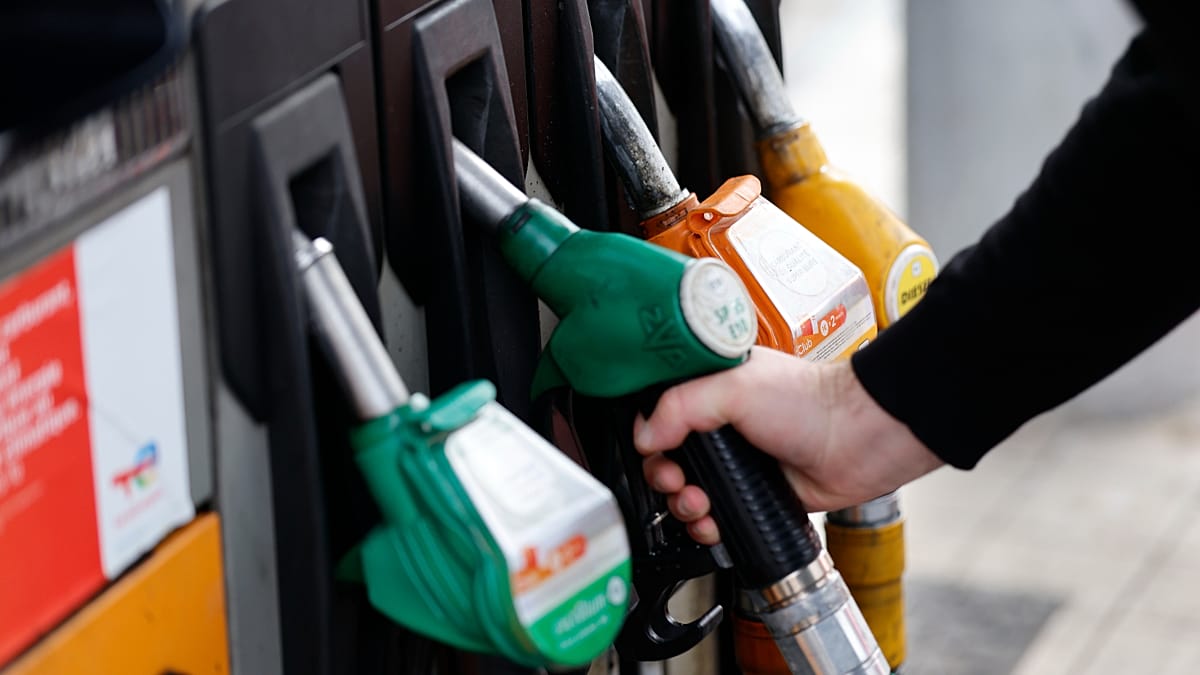
French motorists are set to see some relief at the pump as the government moves to lower diesel prices by up to 18 cents per litre starting Sunday, 1 November. The measure, announced by Prime Minister Sébastien Lecornu, is designed to ease the financial strain on households and businesses amid one of the most severe energy price spikes in recent memory.
Speaking on social media platform X on Monday, Lecornu said the state was "shouldering its responsibilities" in the face of a crisis "we did not choose." The reduction, he explained, will also apply to domestic heating oil, diesel for transport professionals, and off-road diesel used by farmers, fishers, and construction workers.
The discount, which will remain in place until the end of January, is made possible by releasing 10 million barrels of diesel from France's strategic reserves. These barrels were purchased before the outbreak of the war in Iran at a cost of just 0.28 euros per litre, allowing the government to sell them at cost price and pass the savings on to consumers.
France among the priciest in the EU
Government intervention was widely expected. As of 5 October, the average price of diesel in France stood at 2.355 euros per litre, according to the comparison site fuel-price. That is well above the EU-27 average of 2.149 euros, with only Finland (2.553 euros), the Netherlands (2.506 euros), and Denmark (2.488 euros) charging more.
The surge is not confined to France. Across the border in Belgium, a litre of diesel sells for an average of 2.349 euros, while in Germany it costs 2.254 euros and in Italy 2.273 euros. Spain, by contrast, remains one of the cheaper options at 1.918 euros per litre.
But the headline price at the pump does not tell the whole story. Wage levels play a decisive role in how hard the bill hits motorists. A worker earning the average wage in Spain can buy 54.2 litres of diesel with one day's pay, while in France that figure is 52.8 litres. In Italy, a day's work buys just 47 litres, but in Germany it buys 62.3 litres. When it comes to filling a full tank, France sits close to the European average, with the cost equivalent to 4.4% of the average net monthly salary.
The situation is broadly similar for petrol. France is among the most expensive countries for a litre of unleaded, at an average of 2.212 euros on 5 October, compared with the EU average of 2.006 euros. Only Denmark (2.605 euros), the Netherlands (2.432 euros), and Finland (2.370 euros) are pricier. Yet when adjusted for purchasing power, France again hovers near the EU average: one day's work buys 56.2 litres, against a bloc-wide figure of 57.4 litres.
Heating oil costs far above EU average
Motorists are not the only ones feeling the pinch. As winter approaches, households that rely on heating oil face steep bills. On 5 October, 1,000 litres of domestic heating oil cost 1,907.08 euros in France, according to European Commission figures. That is 165.14 euros more than the EU average and 179.09 euros more than the euro area average.
France's heating oil prices have followed a similar trajectory to those in Portugal and Italy, where 1,000 litres now sell for 2,204 euros and 2,063.10 euros respectively. Other countries have managed to keep costs more contained. In Germany, the same quantity sells for 1,726.40 euros, while in Belgium and Spain it is significantly cheaper at 1,533.40 and 1,495.34 euros respectively — 19.6% and 21.6% less than in France.
The French government's decision to tap strategic reserves is a direct response to the pressure on household budgets. The move echoes similar actions taken by other European governments, though the scale of the discount is notable. Whether it will be enough to quell public discontent remains to be seen, especially as energy prices continue to fluctuate on global markets.
For now, the promise of a €10 saving per full tank offers a tangible, if temporary, reprieve. The measure runs until the end of January, after which the government will have to decide whether to extend it or let prices revert to market levels.