The Gulf states and the wider Middle East are holding their breath as multiple signals point to a possible resumption of hostilities between the US, Israel, and Iran. A new US State Department travel alert, a massive American military buildup in the region, and heightened alert levels for Israeli and Iranian forces have all contributed to a sense that an escalation could be imminent.
On Wednesday evening, the US State Department announced it had ordered non-essential government employees and their families to leave Saudi Arabia, citing the risk that "hostilities have the potential to escalate rapidly beyond that immediate area." While Washington said the move was linked to growing Houthi attacks, several diplomatic sources told news outlets that similar evacuation orders had been issued for embassy staff in the United Arab Emirates, Jordan, Qatar, and Bahrain. State Department spokesperson Tommy Pigott dismissed those reports as "inaccurate," insisting that the ordered departure applied only to Saudi Arabia.
The Saudi-specific warning came just days after Washington issued a broader red alert for US citizens in twelve Middle Eastern countries, including Israel, Iraq, Lebanon, Jordan, Qatar, Bahrain, Kuwait, Oman, the UAE, Yemen, and Iran, citing potential attacks on American interests.
Elections and the spectre of war
The timing of these alerts is particularly sensitive. Israel is heading to the polls next week, with Prime Minister Benjamin Netanyahu facing a tight race that could see him lose power. In the United States, midterm elections are due next month, and soaring prices linked to the ongoing conflict have fuelled voter anger. Against this backdrop, there is growing speculation that Washington and Jerusalem might launch a new strike on Iran either before or after these votes.
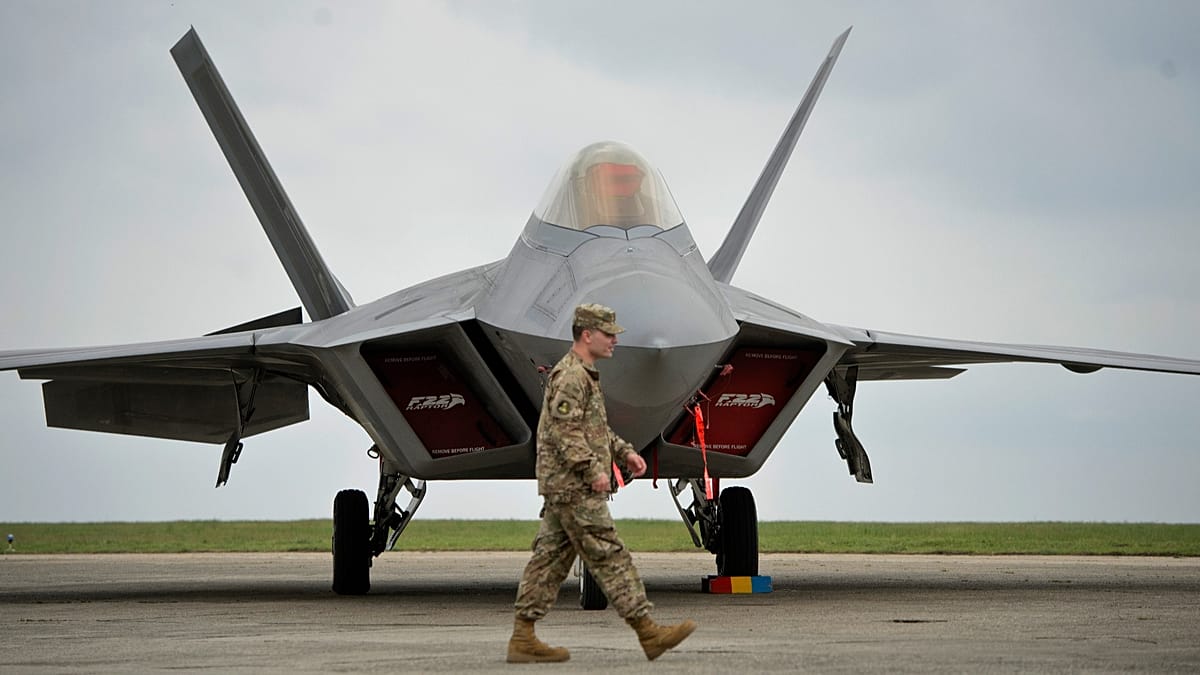
The US has been quietly rebuilding a formidable strike force in the Gulf, deploying a third aircraft carrier and thousands of additional troops. This represents the largest American naval and air presence in the Middle East since the 2003 invasion of Iraq. Iran, for its part, has spent weeks warning that it has reorganised its defences and would respond to any attack with what it calls a devastating retaliation against US interests and civilian infrastructure across the region—far worse than its previous barrages against Gulf nations.
Iranian officials and the Islamic Revolutionary Guard Corps (IRGC) are reportedly preparing for war, with some expressing "100% certainty" that the US and Israel will strike again. Tehran has activated its so-called Mosaic Defence doctrine, a decentralised command system that allows local commanders to continue fighting even if the central leadership is destroyed.
According to a New York Times report citing US officials, Washington and Israel have developed specific plans for strikes on Iranian energy infrastructure, nuclear facilities, and missile and drone arsenals. The stated objective would be to push Tehran into a deal to end the war and reopen the Strait of Hormuz. US President Donald Trump has said any decision on a new attack would come after the midterm elections.
US Secretary of Defence Pete Hegseth met with Netanyahu earlier this week during an unannounced visit to Israel to discuss "threats in the region." Speaking at an IDF officer graduation ceremony on Wednesday night, Netanyahu called for the overthrow of the Tehran regime, claiming that Iran's new Supreme Leader, Ayatollah Mojtaba Khamenei, had "decided to follow in his father's footsteps (to attempt) once again to develop the bombs of death." The younger Khamenei, who succeeded his father Ali Khamenei after the latter was killed in the opening US-Israeli strikes on Tehran on 28 February, has yet to appear in public amid persistent questions about his health.
Earlier this week, US media reported that dozens of Israeli fighter jets and refuelling aircraft flew towards the Iranian border before turning back—a manoeuvre the Times of Israel described as a military exercise and "show of force." US officials, however, suspect the sorties were designed to test Iranian air defences and provoke a response.
Israeli security officials have reportedly warned their government that an attack on Iran could be seen as political interference in next week's election. Opposition leader Yair Lapid told Israeli media that "based on the information available to me, there is absolutely no reason to attack Iran or anywhere else before the elections."
Strait of Hormuz in the crosshairs
On Thursday, seven oil tankers caught fire or were damaged in the Strait of Hormuz after being hit by Iran or striking naval mines, according to Tehran. The incident underscores the waterway's centrality as a point of leverage in any negotiations with the US.
French President Emmanuel Macron, during a state visit to Qatar, issued a stern warning about the risks of escalation. His comments echo broader European concerns about the destabilising impact of a renewed conflict on global energy markets and regional security. For the Gulf nations, the prospect of being caught in the crossfire of a US-Iranian war is a nightmare scenario they have tried to avoid for years.
As the world watches the electoral calendars in Washington and Jerusalem, the region remains on edge. The combination of military buildups, diplomatic alerts, and inflammatory rhetoric suggests that the window for a diplomatic solution is narrowing. Whether the coming weeks bring a new round of strikes or a last-minute de-escalation remains uncertain, but the stakes could hardly be higher.