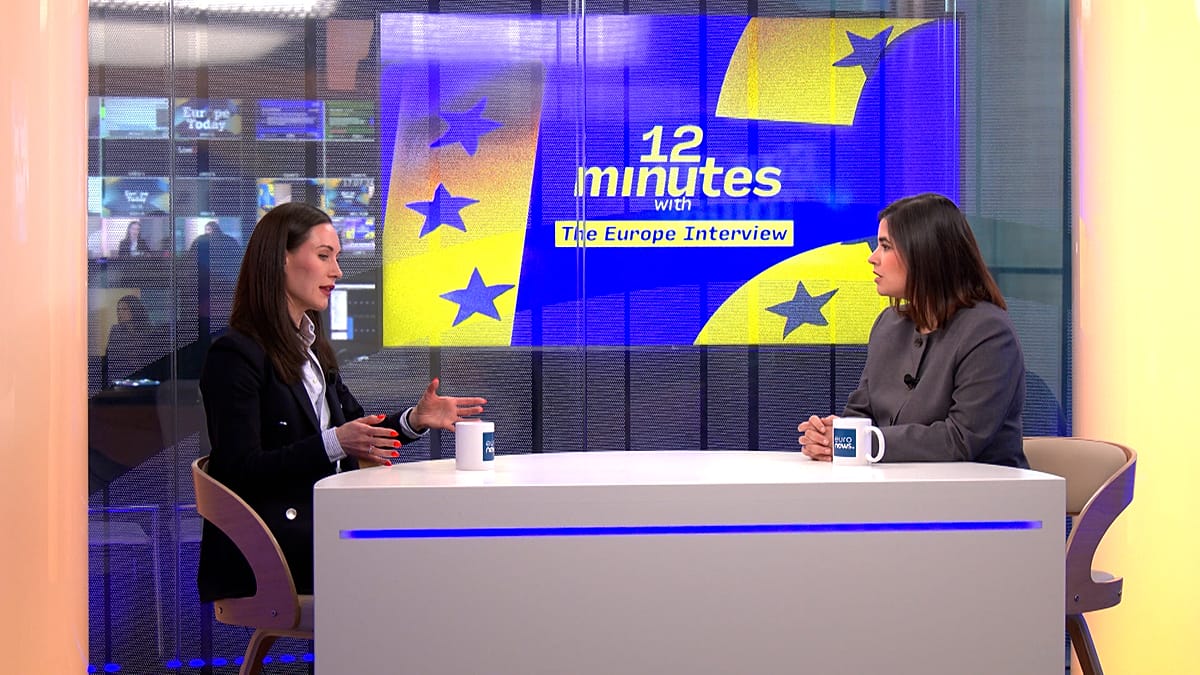
Former Finnish Prime Minister Sanna Marin has issued a stark warning to European Union leaders: the bloc must urgently integrate Ukraine's hard-won battlefield expertise into its own defence planning or risk squandering billions of euros on outdated military models.
In an interview with Euronews, Marin stated that the EU must recognise its own dependency on Ukrainian capabilities. "We need to understand how badly we need them," she said, arguing the relationship is symbiotic. "We are as dependent on Ukraine and Ukrainian capabilities as Ukraine is dependent on our help." She pointed to Ukraine's position as possessing "the largest, most functional and modern army with modern warfare experience" in the conflict with Russia, a resource Europe cannot afford to ignore.
The High Cost of Getting Defence Wrong
Marin's comments come as NATO members, including European allies, have committed to spending 5% of GDP on defence by 2035, a significant increase from the longstanding 2% target. The EU is also mobilising funds through instruments like its €150 billion Security Action for Europe (SAFE) programme to boost industrial capacity.
While welcoming this financial push, Marin stressed that the destination of funds is more critical than the amount. "If we use it in the wrong way, with old-fashioned, traditional models that cost a huge amount of money and not the ones that are actually used on the battlefield, then we will just waste every euro that we spend," she cautioned. The key, she insists, is investing in the technologies and tactics proven effective in Ukraine, such as drone warfare, cyber defence, and the use of AI for targeting and intelligence.
This technological shift, she noted, has fundamentally altered the geography of threat. "You need to also understand in Portugal, in Spain, in France, that you're not safe even though you're further away from the border," Marin said, highlighting that drones and cyberattacks render distance obsolete. A recent report by the International Centre for Counter-Terrorism (ICCT) documented over 150 Russian hostile operations in Europe since 2022, including in Belgium, the Netherlands, and Denmark, underscoring the continent-wide nature of the threat.
A Continent in the Crosshairs
Marin expressed grave concern about Russian intentions, stating she "cannot rule out" that Moscow is preparing for a broader war with Europe. "Russia is, as we speak, preparing itself. It is modernising its army and preparing itself for much wider fights," she warned. This assessment aligns with concerns voiced by senior European military figures, such as Germany's General Carsten Breuer and Sweden's Chief of Defence Michael Claesson, who have warned of potential Russian tests of NATO's collective defence clause in the coming years.
The recent wave of Ukrainian drone strikes on Russian oil refineries, which prompted Kremlin warnings to European capitals, exemplifies the complex, escalatory dynamics at play. This new reality demands a new kind of preparedness, one that Marin argues must be forged in partnership with Kyiv. "We need their capabilities when it comes, for example, to building drones, innovating and transforming military capabilities," she said.
This technological warfare includes tactics like AI-generated deepfakes used to demoralise troops, a sign of how conflict is evolving beyond traditional boundaries.
Europe Must "Focus on Our Own Game"
Addressing the uncertain future of transatlantic relations, Marin argued Europe must accelerate its strategic autonomy. While reaffirming her support for Finland's NATO accession and a continued US role, she noted the alliance has already changed. "It means that we need to focus on our own game," she stated, adding that Europe can no longer take American presence and capabilities for granted.
This self-reliance, she suggested, must extend to the most sensitive security discussions, including nuclear deterrence. France remains the EU's sole nuclear power, and Paris has recently initiated talks with partners like Poland on joint exercises, potentially opening a European dialogue on the role of its nuclear arsenal. "I would be prepared for different scenarios," Marin said. "We cannot only walk the path that we wish to be on, we have to walk the path that we might end up on."
Marin's call for a pragmatic, Ukraine-informed defence overhaul strikes at the heart of Europe's strategic dilemma. As governments from Berlin to Rome grapple with budget increases, her message is that procurement must be guided by the brutal lessons of the Donbas and Kharkiv, not by legacy preferences. The continent's security may depend on listening not just to its own generals, but to the commanders in Kyiv who have spent two years fighting—and adapting to—the very enemy Europe now fears.



