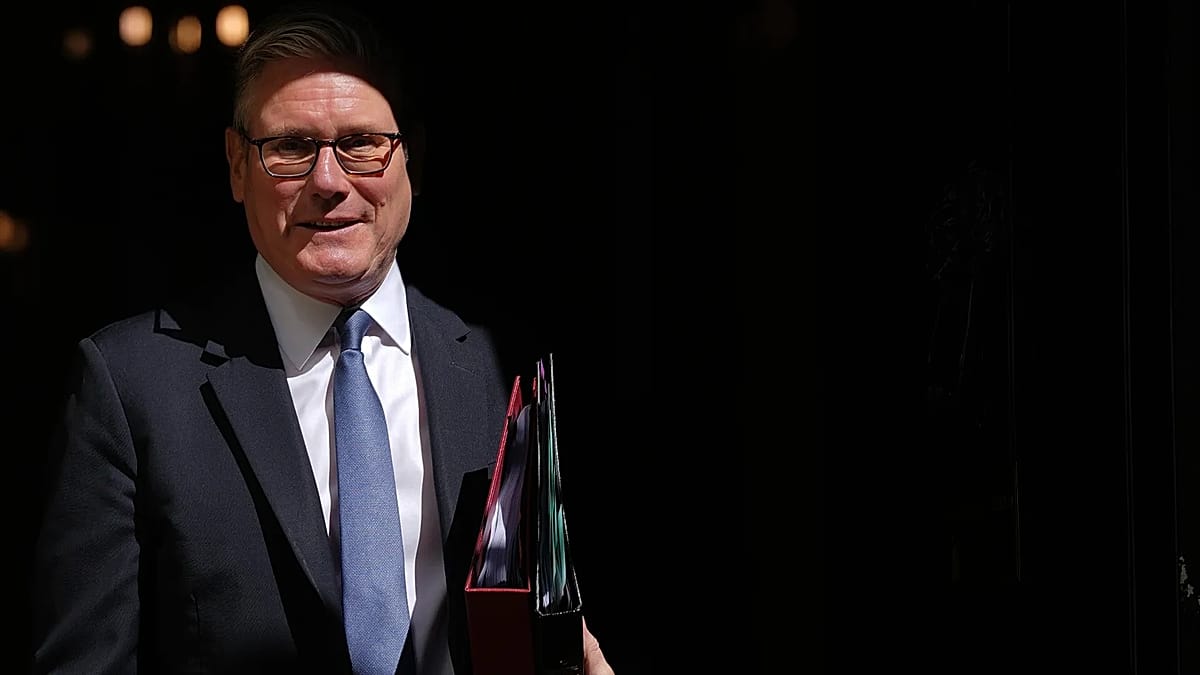
British Prime Minister Keir Starmer has firmly rejected mounting demands for his resignation, stemming from a deepening scandal over his government's appointment of veteran politician Peter Mandelson as the United Kingdom's ambassador to Washington. The controversy, which has dominated Westminster for weeks, centres on allegations that critical security warnings were withheld from the Prime Minister and questions about Mandelson's past business associations.
A Parliamentary Showdown
Speaking in a tense session of the House of Commons, Starmer declared that recent testimony had "put to bed" accusations that he knowingly misled Parliament. His statement followed explosive evidence given by Olly Robbins, the former Permanent Secretary at the Foreign, Commonwealth & Development Office, who was dismissed by Starmer last week. Robbins told a parliamentary committee that Downing Street exerted "constant pressure" on civil servants to approve Mandelson's appointment, creating an "unmistakable feeling" that security concerns were to be dismissed.
Starmer's defence hinges on Robbins's admission that he did not share a critical security recommendation with the Prime Minister, Number 10, or other ministers. "That puts to bed all the allegations levelled at me ... in relation to dishonesty," Starmer told MPs. He argued that opposition claims he was aware of the vetting officials' negative recommendation were false. "A week ago opposition politicians were all saying that it must have been shared with me ... It was not."
The Core of the Controversy
The appointment process for Mandelson, a former European Trade Commissioner and twice-resigned UK cabinet minister, has unravelled into a significant political crisis. Mandelson was named to the prestigious diplomatic post in December 2024, shortly before Donald Trump's inauguration the following month, and assumed the role in February 2025. The exact nature of the risks flagged by vetting officials remains classified, though Robbins stated they were unrelated to Mandelson's association with the late financier and convicted sex offender Jeffrey Epstein.
The scandal's European dimension was thrust into the spotlight by Conservative leader Kemi Badenoch. She challenged Starmer in Parliament over a due diligence report that noted Mandelson "remained on the board of the Kremlin-linked defence company, Systema, long after Putin's first invasion of Ukraine in 2014." Badenoch demanded to know, "Why did the prime minister want to make a man with links to the Kremlin, our ambassador in Washington?" This line of attack connects the domestic scandal directly to European security concerns, particularly regarding relationships with Russian-linked entities. The episode echoes broader European anxieties about foreign influence, similar to the challenges highlighted in our report on AI-generated disinformation campaigns targeting Ukraine.
Starmer has conceded an "error of judgement" in proceeding with the appointment but maintains he would have halted it had he been fully informed. He has repeatedly shifted blame onto Robbins for the failure in communication, creating a bitter rift between the political leadership and the senior civil service.
Broader Implications and Fallout
The affair has triggered resignations within Starmer's inner circle, most notably his former top aide, Morgan McSweeney, who is scheduled to testify before MPs. The scandal threatens to undermine Starmer's authority and his government's credibility on both the domestic and international stage, particularly in its dealings with a Trump administration in Washington.
For a European audience, the crisis illustrates the complex intersection of domestic political appointments, national security vetting, and foreign policy. The focus on Mandelson's past role with a Russian-connected firm underscores the persistent challenge of managing historical business ties in a post-2022 geopolitical landscape, where European unity against the Kremlin is a stated priority. This scrutiny of elite connections parallels ongoing investigations within Europe itself, such as the legal pressures facing major Russian cultural entities.
The political storm also raises questions about the robustness of appointment procedures in other European capitals, from the Élysée to the Bundestag. As Starmer fights to retain his premiership, the episode serves as a stark reminder of how diplomatic postings, especially in key allied nations like the US, remain fraught with potential for political disaster, capable of destabilising governments and testing transatlantic relationships at a delicate time.