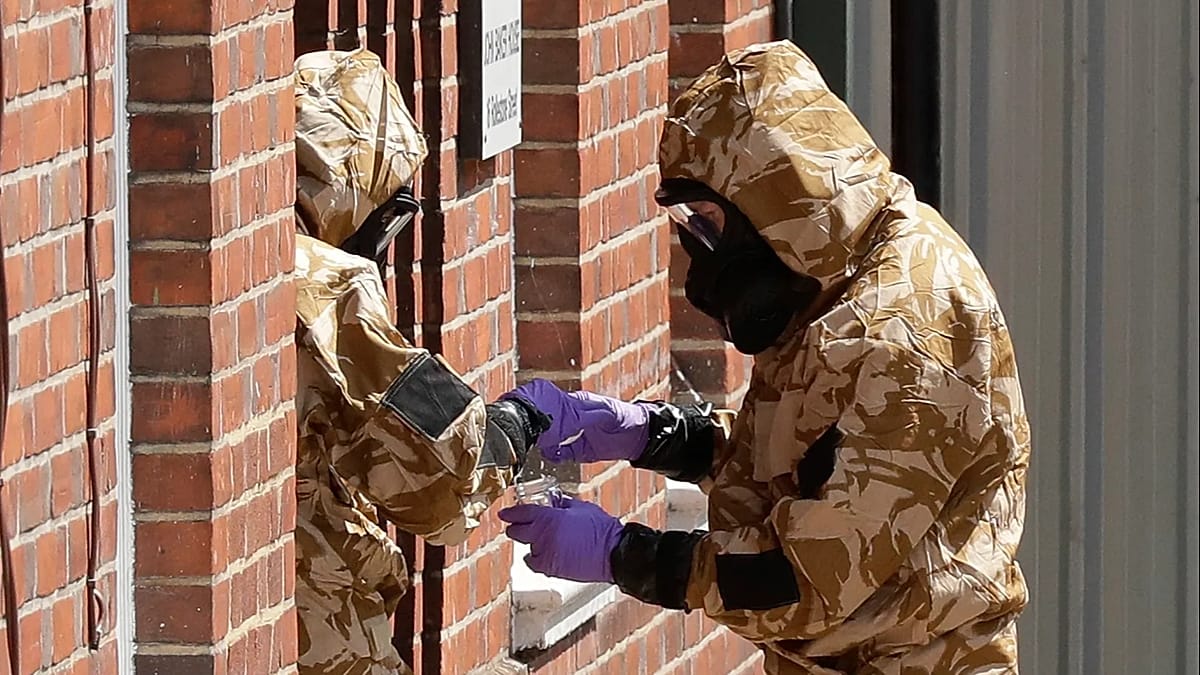
A Vienna criminal court has acquitted Johannes Peterlik, Austria's former highest-ranking civil servant at the foreign ministry, on charges of abusing his authority and breaching confidentiality. The case centred on his request for a classified document detailing the Novichok nerve agent formula in 2018.
The prosecution had argued that Peterlik requested the sensitive report from the Organisation for the Prohibition of Chemical Weapons (OPCW) "without official necessity" in October 2018. This report contained technical information related to the OPCW's investigation into the poisoning of former Russian double agent Sergei Skripal in Salisbury, UK, earlier that year. A court spokesman confirmed the acquittal to the AFP news agency, adding that prosecutors intend to appeal the verdict.
Links to a Broader Espionage Network
Central to the prosecution's case was the allegation that Peterlik showed the OPCW documents to Egisto Ott, a former Austrian intelligence official. Ott is currently standing trial on multiple charges, including handing over sensitive devices and selling state secrets to Russian intelligence services. He denies all allegations.
The case forms part of a wider and troubling pattern for Austrian security. Ott is also accused of having passed secret information for years to Jan Marsalek, the fugitive former chief operating officer of the collapsed German fintech firm Wirecard. Marsalek, wanted for fraud in Germany and suspected of working for Russian intelligence, is believed to be living under a false identity in Moscow.
According to an international media investigation published by Der Standard and other outlets, Marsalek reportedly attempted to impress business associates by showing them documents containing the recipe for Novichok. He is also said to have possessed internal OPCW documents about the Skripal investigation.
Austria's Vulnerability to Espionage
This acquittal, while a legal outcome for Peterlik, does little to dispel the shadow cast by repeated Russian espionage scandals in Austria. As an EU member state that is not part of NATO and has a history of neutrality, Vienna has often been viewed as a fertile ground for intelligence operations. The case highlights the ongoing challenge European nations face in countering sophisticated foreign influence campaigns and espionage, a concern echoed in other security contexts across the continent.
The incident recalls the persistent threat of chemical weapons and the importance of institutions like the OPCW. It also intersects with broader European security anxieties, where pro-Russian networks are deploying advanced methods like AI-generated deepfakes to wage information warfare, and where energy security remains precarious, as warned recently by the EU's energy chief.
For Austria, the damage to its reputation as a secure diplomatic hub is tangible. Each revelation of suspected infiltration fuels debates about the adequacy of the country's counter-intelligence frameworks and its role within European security architecture. The case underscores that the continent's internal security is often only as strong as its weakest link, a principle also visible in efforts to combat corruption within the EU, such as the recent move by the Greek parliament to strip immunity from MPs in a fraud investigation.
While Peterlik walks free from this particular courtroom, the wider trial of Egisto Ott continues. Its outcome may provide further insight into the depth and mechanisms of alleged Russian intelligence operations on Austrian soil. For European security officials, the case serves as a stark reminder that the battle against espionage is fought not only in border regions but within the corridors of domestic institutions.



