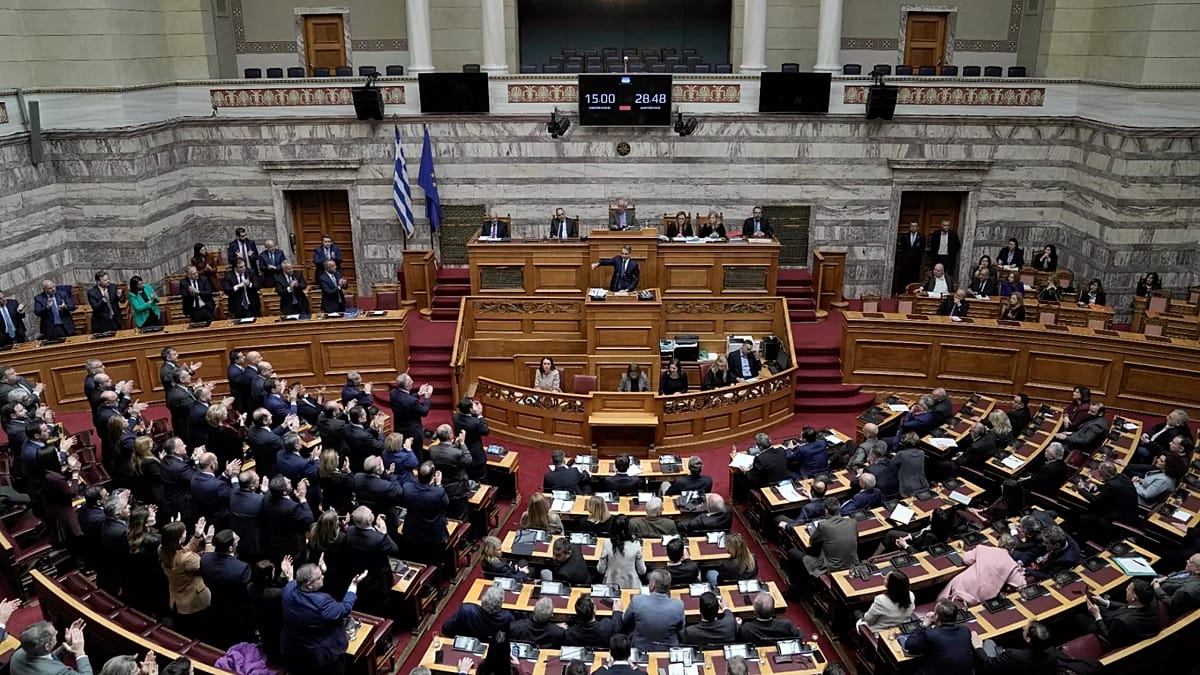
In a decisive move, the Greek parliament has voted to lift the legal immunity of thirteen sitting lawmakers, all members of the ruling conservative New Democracy party. The action, taken on Wednesday, clears the way for a full investigation by both Greek authorities and the European Public Prosecutor's Office (EPPO) into a sprawling scandal involving the alleged theft of millions in European Union agricultural subsidies.
The investigation centers on a network accused of defrauding at least €23 million from EU funds. According to the EPPO, the scheme exploited a shift in the EU's Common Agricultural Policy (CAP), which began calculating subsidies based on land area rather than livestock in 2014. At the time, Greece's incomplete national land registry created significant ambiguity over property ownership, allowing applicants to declare land owned elsewhere in the country to claim payments.
A Network Under Scrutiny
The European Public Prosecutor's Office has announced formal probes into twenty individuals associated with New Democracy, including both current and former members of parliament. The politicians in question reportedly feature in legal wiretaps, where they are alleged to have discussed specific farmers' cases and frequently attempted to intervene on their behalf.
All those implicated have denied any wrongdoing. Many argue that assisting constituents with bureaucratic matters is a core part of their parliamentary duties. "The role of a member of parliament is to take an interest in the citizen and, of course, to intervene in matters that cannot be resolved under the existing legislation," former agriculture minister Costas Tsiaras, who resigned in April, told state broadcaster ERT.
The scandal has already triggered significant political fallout within the government of Prime Minister Kyriakos Mitsotakis. Several senior figures, including two ministers and two deputy ministers, have resigned this month, prompting a cabinet reshuffle. The parliament's vice president, Georgios Georgantas, stated that lawmakers overwhelmingly approved the waiver of immunity after the politicians themselves requested the move to clear their names.
Legal Hurdles and Political Tensions
The case highlights the complex legal framework governing the prosecution of high-ranking officials in Greece. Ministers cannot be independently prosecuted by Greek courts; any investigation must first pass through parliament, a process often blocked by the government's majority. The current scandal, however, has gained momentum through the involvement of the Luxembourg-based EPPO, an independent EU body tasked with investigating crimes against the Union's financial interests.
Prime Minister Mitsotakis, who notes the alleged fraud began before he took office in 2019, has vowed to imprison those responsible and reclaim the funds. However, he has also questioned the EPPO's approach, stating on social media that the office must "prove its objectivity." Some government members have labelled the investigation politically motivated and criticised frequent media leaks from the probe.
The EPPO has detailed accusations of "instigation of breach of trust, computer fraud and false attestation with the intent to obtain for another an unlawful benefit." Investigators allege beneficiaries made claims for land they did not own and exaggerated livestock numbers, with some recipients having no link to agriculture whatsoever.
While dozens of arrests were made by Greek police last year, none involved politicians until now. The lifting of parliamentary immunity marks a critical juncture, allowing prosecutors to pursue charges directly against the elected officials. The investigation's progress will be closely watched, not only for its impact on Greek politics but also as a test of the EU's ability to enforce financial accountability across member states.
The timing is sensitive for Mitsotakis, with national elections scheduled for next year. While his New Democracy party leads in opinion polls, it is not projected to secure an absolute majority. The subsidy scandal adds to a complex political landscape where economic pressures remain acute. As EU energy chiefs warn of prolonged price hikes stemming from global conflicts, managing domestic political stability becomes ever more challenging for European leaders.
The case underscores persistent vulnerabilities in the administration of EU funds, particularly in regions with legacy bureaucratic challenges. It also demonstrates the growing reach and authority of the European Public Prosecutor's Office, established to combat fraud that crosses national borders and undermines the financial integrity of the Union.