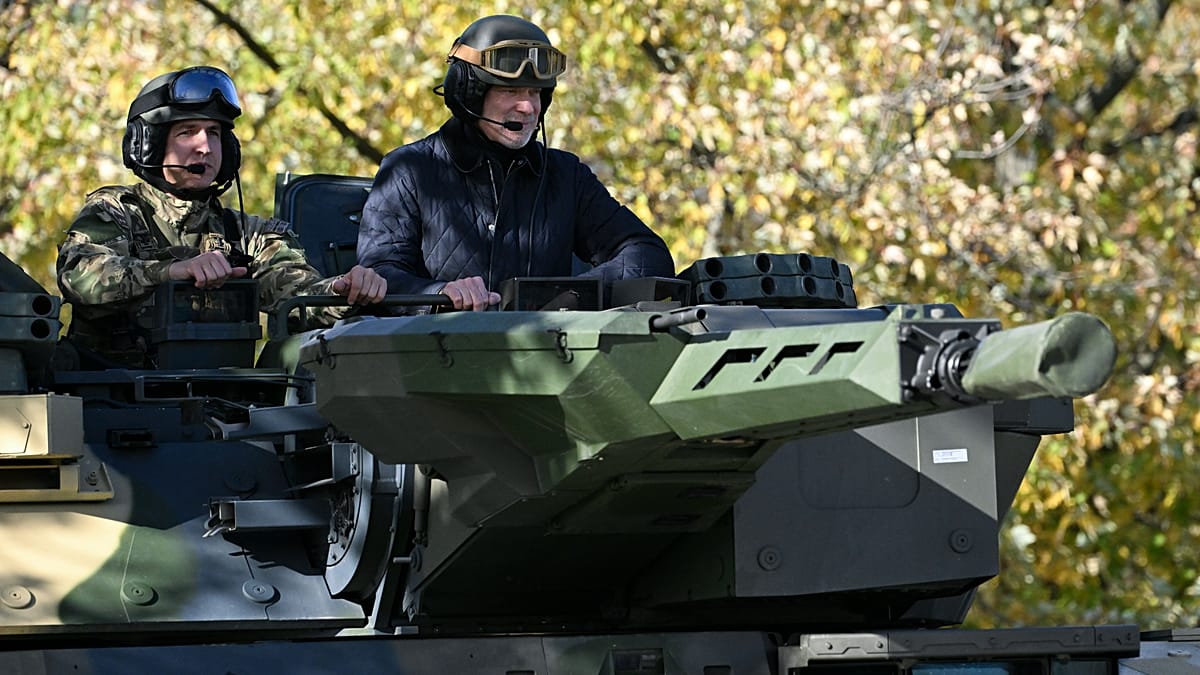
Hungary's incoming government, led by Péter Magyar, is conducting a critical review of a substantial defence funding plan submitted to the European Union by the defeated administration of Viktor Orbán. The review centres on potential corruption risks and could lead to significant changes in how Hungary intends to spend €16.2 billion in low-interest EU loans earmarked for defence industrial projects.
The funds are part of the EU's Strategic Armaments Financing for Europe (SAFE) instrument, a €150 billion initiative launched last year to bolster defence industries and military readiness across the bloc in response to Russia's war in Ukraine. Nineteen member states have submitted national plans. While the Czech and French plans were approved in March, Hungary's submission remains the last pending case.
A Plan Under Scrutiny
A source within Magyar's Tisza Party, speaking on condition of anonymity, told European Pulse that the new administration will subject the Orbán-era proposal to rigorous examination. "We will critically review the list submitted by the outgoing government and make decisions based on real needs and an assessment of corruption risks," the source said. The concerns are understood to relate to Hungarian industrial interests with close ties to the previous government.
The European Commission has signalled its openness to working with the new team in Budapest. "The Commission is, of course, open to engaging on the Hungarian SAFE plan with the incoming government," Commission spokesperson Thomas Regnier stated, confirming that the assessment of Hungary's defence plan is ongoing and will be approved when ready. He firmly rebutted suggestions from Hungarian diplomats that the plan had been politically blocked, noting that Budapest had been asked for revisions.
This development follows Péter Magyar's victory in Hungary, which has fundamentally altered Budapest's diplomatic posture towards Brussels. Unblocking billions in frozen EU funds was a central pledge of his campaign.
High-Level Diplomacy in Budapest
The SAFE plan was a key topic during a significant, informal visit to Budapest over the weekend by a senior European Commission delegation. Led by Ursula von der Leyen's chief of staff, Björn Seibert, the group included several director-generals and met with Tisza Party officials who have not yet formally taken power.
The talks also focused on the broader issue of Hungary's approximately €17 billion in frozen EU cohesion and recovery funds, which were withheld from the Orbán government over persistent rule-of-law and anti-corruption deficiencies. Both sides expressed a willingness to resolve the impasse. Failure to reach a deal on the recovery funds by the end of August would see Hungary forfeit €10 billion.
Magyar and Commission President von der Leyen have agreed to establish a direct communication channel between their teams to work towards releasing the funds. This new cooperative dynamic marks a stark departure from the years of contentious standoff between Orbán and Brussels, which often saw Hungary isolated in EU decision-making.
The Hungarian SAFE request is among the largest, trailing only those of Poland and Romania and exceeding the €15.1 billion sought by France. Officials from the Orbán government had argued that the Commission's delay in approving their plan was politically motivated, claiming Budapest had met all necessary criteria. "This is not a regular procedure; it is an obvious political blockage," a senior Hungarian official claimed.
The review by Magyar's team underscores a shifting political landscape where new governments are reassessing major strategic commitments. This mirrors broader European debates on defence spending, as highlighted when the Estonian president urged EU defence buildup to reinforce continental security. The outcome in Hungary will be closely watched in other capitals, including Warsaw and Bucharest, which have also submitted large-scale SAFE plans.
The Commission maintains that all national plans are treated as confidential due to their sensitive nature. The final shape of Hungary's revised defence investment strategy, and its subsequent approval by the Commission, will be a critical early test for the Magyar government's ability to navigate complex EU procedures while addressing domestic concerns over graft and fiscal responsibility.