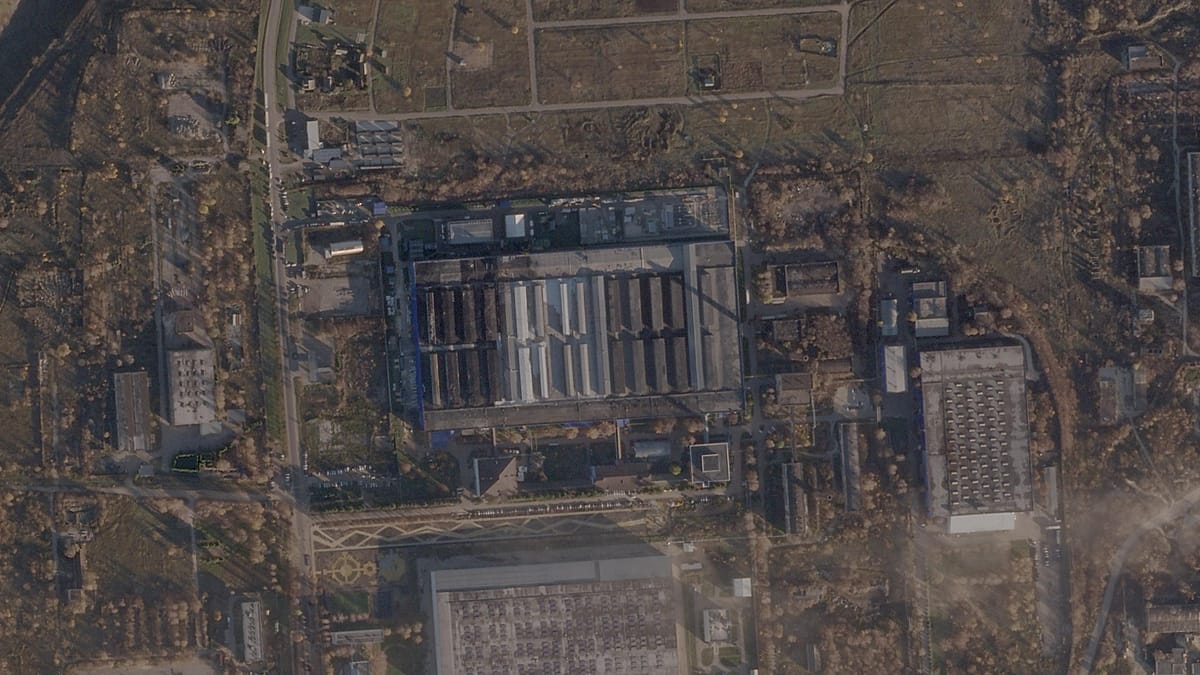
In a series of coordinated strikes throughout October, Ukrainian drones targeted five data centres operated by Russia's largest technology firms, inflicting significant damage on the country's digital infrastructure. The attacks, which hit facilities in five different regions, have disrupted everything from taxi bookings and card payments to cloud storage and navigation, according to reports from Russian users and analysts.
The first strike occurred on 7 October at a Yandex facility in Sasovo, Ryazan region, followed by attacks on Yandex data centres in Kaluga on 9 October and Vladimir on 11 October. On 14 October, a Sber data centre in Balakovo, Saratov region, was hit, and on 18 October, a VKontakte server farm near St Petersburg in the Leningrad region came under fire.
Yandex, Sber, and VKontakte together form the backbone of Russia's consumer internet, handling everything from ride-hailing and payment processing to messaging and cloud services. None of the companies has publicly disclosed the full extent of the damage, but persistent outages have been widely reported by users across the country.
A costly setback for Russian AI
Analysts say the strikes will have long-lasting consequences, particularly for Russia's artificial intelligence ambitions. Mikhail Klimarev, head of the Internet Protection Society, told the Associated Press that restoring the damaged infrastructure could take months or even years. The Yandex facilities housed some of the country's most powerful supercomputers, including one that once ranked 19th globally but has since fallen out of the top 100.
“After such a strike it is hard to expect anything to have survived: data-centre equipment is fragile, demanding and expensive. Soot from fires is extremely harmful to electronics,” Klimarev said. The damage is compounded by Western sanctions and a global chip shortage, which make it nearly impossible for Russia to legally import the advanced processors, such as Nvidia's A100 chips, that power these systems.
Connor Martin of the Council on Foreign Relations noted that “Ukrainian drone strikes will probably delay the development of Russian artificial intelligence even further.” Before the attacks, Russia was already several years behind the US and China in AI development.
Russia's own attacks on Ukrainian data centres
The strikes come as Russia has been systematically targeting Ukraine's IT infrastructure. On 19 October, a Russian attack destroyed a major Datagroup facility in Kyiv, which was declared beyond repair. The following day, Kyiv's GigaCenter was damaged. Russia has hit several other Ukrainian data centres in September and October, and an earlier strike in July disrupted internet, mobile, and television services across the capital.
Since the full-scale invasion began in February 2022, Moscow has repeatedly targeted Ukrainian data infrastructure, including a government server facility and the National Data Backup Centre. Ukraine has since moved most of its data to servers in European countries, limiting the impact of subsequent attacks.
Vulnerability of Russia's 'sovereign internet'
Analysts point out that Russian data centres are more vulnerable than their Ukrainian counterparts due to legislation requiring all data to be stored on servers within the country. This concentration makes them easier targets. “Russia's problem is that it has to provide air defence over a vast territory, and it does not have enough resources for that,” said Nick Reiners, senior geo-technology analyst at Eurasia Group. “Since all the infrastructure and all the data are located inside Russia, it is relatively easier to disable them.”
The strikes have also exposed a potential unintended consequence for Russia's internet policy. Klimarev suggested that companies may now be forced to move their computing resources abroad, most likely to Europe, to avoid future attacks. “Paradoxically, the attacks on data centres have saved the Russian internet from isolation,” he said, adding that many Russian firms are likely exploring European markets for renting computing capacity. This could prompt Moscow to ease its efforts to tighten internet controls to limit economic damage.
Infrastructure for surveillance and disinformation
These data centres are not purely commercial; they are integrated into Russia's surveillance apparatus. Under the SORM legislation, all domestic internet companies, including Yandex, VKontakte, and Sber, are legally required to install backdoors for the FSB, giving security services access to user data and communications. VKontakte has been extensively used for state-sponsored propaganda and recruitment, leading Ukraine to ban it in 2017.
Moscow has also leveraged AI tools in its disinformation campaigns, rewriting real news articles with pro-Kremlin slants and publishing them on fake sites mimicking legitimate outlets. AI-generated video and audio have been used to fabricate statements attributed to Western officials, and AI-cloned voices impersonating European politicians have circulated online. More recently, Russia has flooded the internet with repetitive pro-Kremlin content to skew what AI chatbots retrieve and how they are trained.
The strikes on Russian data centres are a reminder of the growing role of digital infrastructure in modern conflict. As Ukraine continues to defend its own IT systems, it has shown that even the most advanced economies can be vulnerable to targeted attacks on their technological foundations.