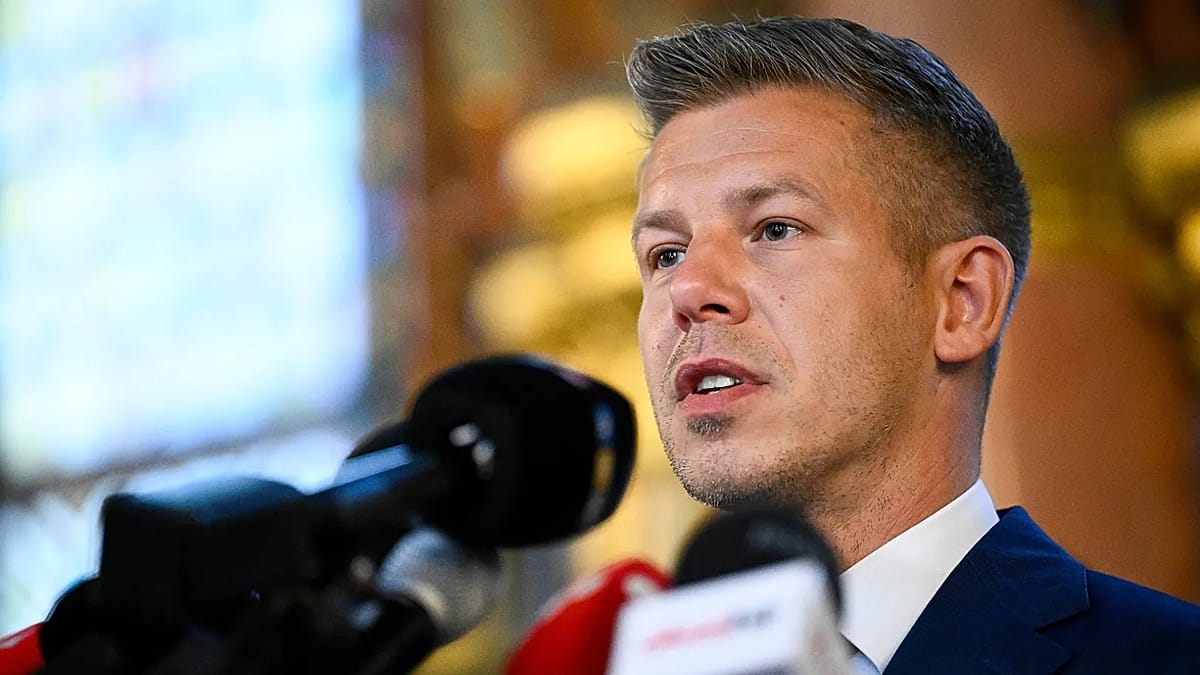
Hungary's incoming Prime Minister, Péter Magyar, is set to meet Italian Prime Minister Giorgia Meloni in Rome on Thursday, according to a brief statement from the Italian government on Wednesday. The announcement offered no details on the agenda, fueling speculation about how relations between Budapest and Rome may evolve after 16 years of Viktor Orbán's rule.
Orbán and Meloni, both prominent figures on Europe's right, were allies on issues like immigration and EU skepticism. Yet Italy never developed the same level of coordination with Hungary as it did with Robert Fico's Slovakia or Poland under former premier Mateusz Morawiecki. Meloni has taken a more pragmatic, less confrontational stance toward the European Union than Orbán, and she has been far more supportive of Ukraine in its war against Russia's full-scale invasion.
The two leaders also belong to different European Parliament groups. Orbán's Fidesz sits in the Patriots for Europe group, while Meloni's Brothers of Italy leads the European Conservatives and Reformists. In 2024, Fidesz attempted to join the ECR but faced resistance from several leaders, including Meloni, and ultimately abandoned the effort. Magyar's Tisza party, which won the April elections, is a member of the European People's Party.
Despite these differences, Meloni may find common ground with Magyar. In recent weeks, several of Orbán's allies have signaled openness to working with the new Hungarian government. US President Donald Trump has also expressed support, calling Magyar a good man who will do a good job.
Magyar: 'We had to fight a different kind of mafia in Hungary'
Magyar left for Italy on Tuesday to attend the Riviera Film Festival in Sestri Levante, where the documentary Spring Wind - The Awakening was screened. The film, directed by Tamas Yvan Topolanszky, chronicles the two-year campaign that led to Magyar's landslide victory in early April, ending Orbán's 16-year tenure.
Magyar credited the film with helping him reach voters despite state-controlled media. "Before the film, voters didn't have the chance to get to know our goals... like my kids, watching the propaganda, they didn't have the chance to meet with the truth," he told journalists at the festival.
Initially unsure of the film's impact, Magyar said he realized its potential after a limited theatrical release in Hungary. "I saw the result in the movie, the emotions and everything, and in that moment I felt that it could have an impact, a strong impact," he added. He then urged the filmmakers to broaden its reach. The documentary was eventually uploaded to YouTube over the Easter weekend and viewed by 3.4 million people, according to producers.
"This is the weekend when Hungarian families are together, the younger generation, the elderly, and I hoped, and maybe I was right, that that's the right moment for the family to sit together, to watch the film, and then to speak to each other," Magyar said.
He emphasized that the film was not a promotional tool for his conservative, pro-EU Tisza party, but rather "about the two years of our nation, the past and the possible future of our nation."
The meeting with Meloni comes as Magyar begins to shape his foreign policy, signaling a potential departure from Orbán's confrontational approach. Observers will be watching for signs of a new alignment between Budapest and Rome, particularly on EU affairs and support for Ukraine. For more on the evolving dynamics in European politics, see our coverage of Meloni's stance on AI regulation and Magyar's cabinet appointments.