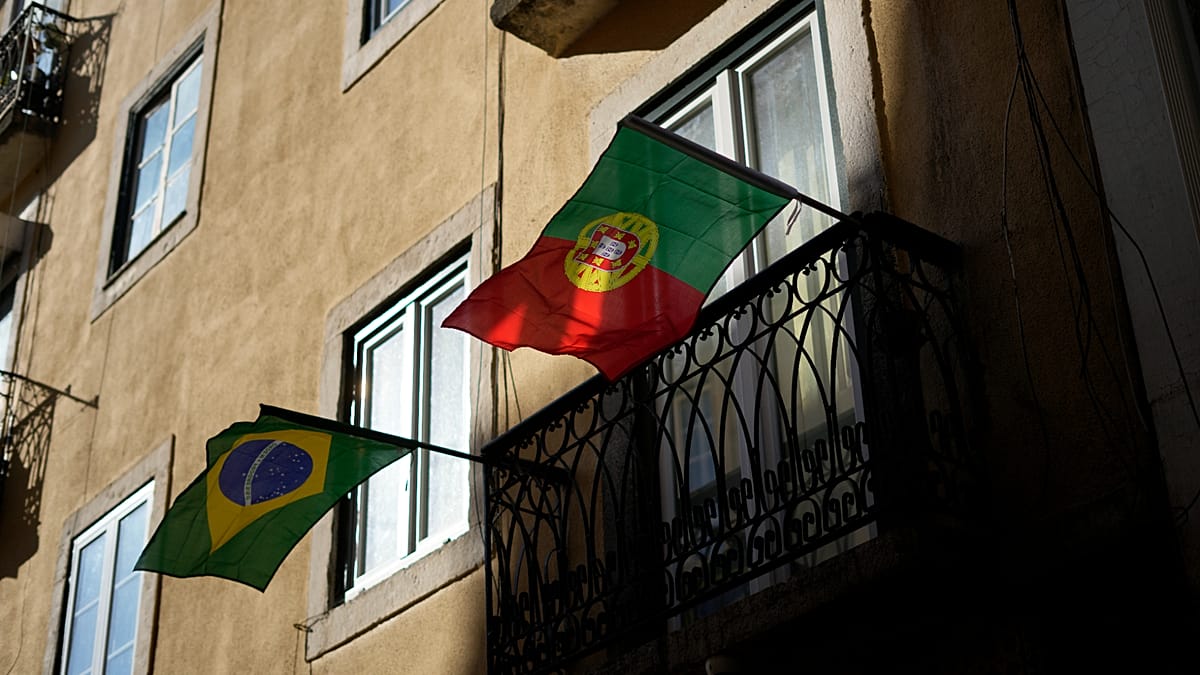
On World Portuguese Language Day, celebrated annually on 5 May, the Community of Portuguese Language Countries (CPLP) and Portugal are renewing their push to elevate Portuguese to an official language of the United Nations. The language, spoken by over 265 million people across five continents, is currently the only non-official UN language recognised by UNESCO, a status it received in November 2019.
Portuguese is the official tongue of nine nations: Angola, Brazil, Cabo Verde, Guinea-Bissau, Equatorial Guinea, Mozambique, Portugal, São Tomé and Príncipe, and Timor-Leste, as well as the Macao Special Administrative Region. UN projections estimate that by 2050, the number of speakers will approach 400 million, and by 2100, exceed 500 million. These figures make Portuguese the fourth most spoken language in the world, yet it remains absent from the UN's six official languages: English, French, Spanish, Russian, Arabic, and Chinese.
A Decade-Long Ambition
The campaign for official status is not new. In November 2016, during the 11th CPLP Summit in Brasília, member states approved a proposal to seek UN recognition. The following year, at the 72nd session of the UN General Assembly in New York, then-Portuguese Prime Minister António Costa addressed Secretary-General António Guterres, stating that by mid-century Portuguese would have nearly 400 million speakers, justifying its elevation in international organisations. Costa called the adoption of Portuguese as an official UN language a “shared goal” of CPLP members.
Portugal's current government programme, covering the period up to 2030, includes support for a coordinated strategy with the CPLP to achieve this recognition. Florbela Paraíba, chair of the board of Camões – Institute for Cooperation and Language, described official status as “a kind of seal of recognition” that would place Portuguese “on an equal footing with the other six official languages.” She emphasised that the goal requires collective effort: “This goal should be an incentive for us, in a coordinated and convergent way, all Portuguese-speaking countries and everyone who loves Portuguese and values Portuguese, to work together.”
Portuguese already holds official or working language status in 32 international organisations, including Mercosur, the African Union, the European Union, and the World Health Organization. Paraíba sees UN recognition as the “culmination of this journey.”
Diplomatic and Financial Hurdles
Beyond political will, significant logistical and financial challenges remain. Translating all UN official documents into Portuguese and hiring new human resources would cost millions of euros annually, though no official estimate has been provided. Paraíba argues that Portuguese has the advantage of being “a language on the rise,” with strong demographic prospects and growing interest among non-speakers, particularly on social media. According to UN data, Portuguese is the fifth most used language on the internet, with a growth rate of nearly 2,000% between 2000 and 2017, and ranks between third and fourth on Facebook.
The Camões Institute operates 325 teaching posts in its official network and 651 in a supported network, with a concentration in Europe—35 in Germany, 107 in France, 66 in Switzerland, 30 in the United Kingdom, 22 in Spain, and smaller numbers in Andorra, Belgium, the Netherlands, and Luxembourg. In Africa, the institute has 25 teachers in non-CPLP countries, including 19 in South Africa, 3 in Namibia, 1 in Eswatini, and 2 in Zimbabwe. Courses are also offered in Venezuela, the United States, Canada, and Australia, reflecting growing global interest driven by professional advancement and economic ties.
As Europe grapples with its own linguistic and digital challenges, such as AI ambitions clashing with power grids, the push for Portuguese at the UN underscores the continent's broader role in shaping global governance. The effort also aligns with trends in global wealth shifts, as Nordic nations lead Europe's billionaire growth, highlighting the economic weight of Portuguese-speaking markets.
Paraíba remains optimistic: “I believe it is a worthwhile goal and I think we will all work to make it possible.” The path to official status, however, depends not only on Portugal and CPLP countries but also on broader diplomatic consensus within the UN system.