A leading French MEP has sharply criticised the European Union’s decision to sign a trade agreement with the United States, arguing that the deal was doomed from the start because the Trump administration cannot be trusted to keep its word.
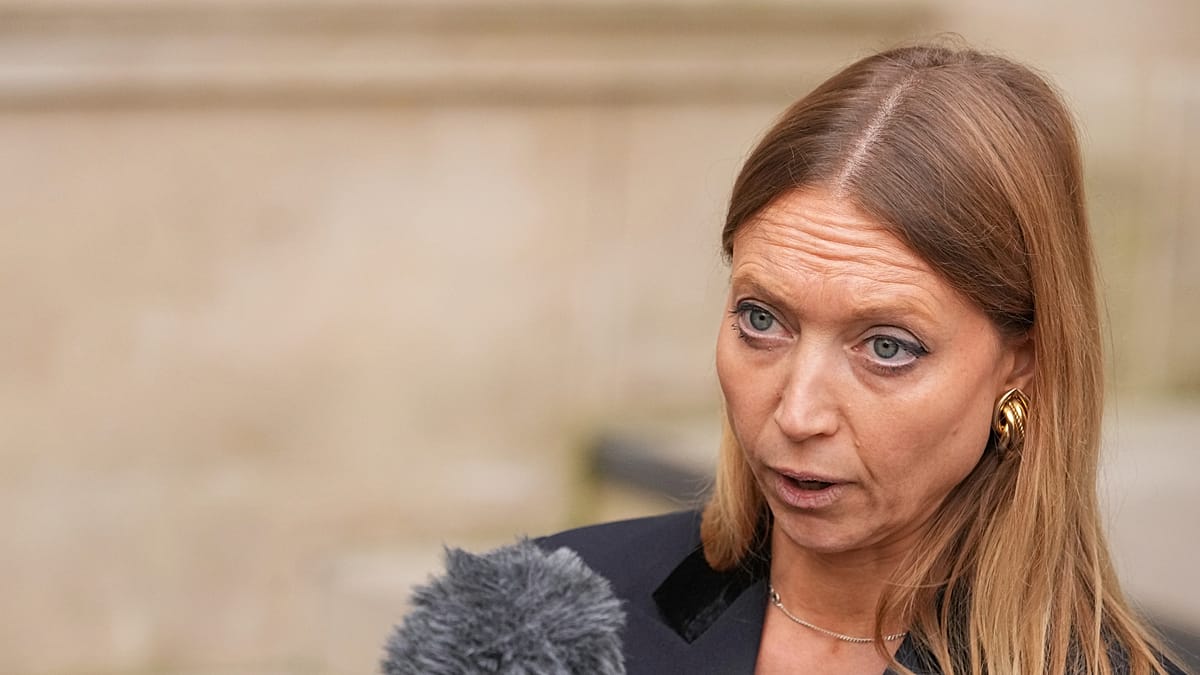
Aurore Lalucq, who chairs the European Parliament’s powerful Committee on Economic and Monetary Affairs, told Euronews that she sees no justification for the pact sealed in July 2025 between US President Donald Trump and European Commission President Ursula von der Leyen. Her remarks come after Trump threatened on Friday to impose 25% tariffs on EU cars — a level well above the 15% ceiling agreed under the deal.
“I don’t see how anyone can strike a deal with an administration that doesn’t keep its word,” Lalucq said. “The talking points we were given were that the deal would bring predictability for business. Yet since that much-hyped press conference in July 2025 between Ursula von der Leyen and Donald Trump, there’s been nothing particularly predictable about any of this.”
A deal that never delivered stability
The agreement, concluded at Turnberry in Scotland, eliminated EU tariffs on US goods while leaving the bloc facing 15% tariffs and committing to significant investment in the United States. It was already suspended earlier this year by MEPs after Trump used tariffs as leverage in his push to acquire Greenland. Last week, tensions escalated again when the US president posted on social media that he could impose 25% tariffs on EU cars, following criticism from German Chancellor Friedrich Merz of the US war in Iran.
European officials hope that a meeting on Tuesday between EU Trade Commissioner Maroš Šefčovič and US Trade Representative Jamieson Greer in Paris will help calm the situation. But EU leaders have largely remained silent since Trump’s latest threat, wary of fuelling what many see as another provocation from the White House.
Lalucq said European leaders humiliated themselves by signing the deal in the first place. “We are representatives in the truest sense of the word. When Ursula von der Leyen sits in that room with Donald Trump, the humiliation isn’t personal — it’s Europe being humiliated. We should have taken a far tougher line.”
Divisions within the Socialists & Democrats
Lalucq’s stance puts her at odds with another key socialist MEP, Bernd Lange, who chairs the Parliament’s influential trade committee and has pushed to move the deal forward with safeguards attached. The split underscores differing views within the Socialists & Democrats (S&D), the European Parliament’s second-largest political group, where positions often reflect national interests. Countries more exposed to the US market — notably Germany and Italy — have generally taken a less confrontational approach than Lalucq, while still seeking to secure favourable terms.
Those safeguards are currently under discussion between EU governments and lawmakers. One proposal would cut EU tariffs on US industrial goods only if Washington fully complies with the agreement. Another — the so-called “sunset clause” — would terminate the deal in March 2028 unless it is renewed. EU member states remain split on these issues, with some capitals favouring the preservation of the original agreement negotiated by the Commission last summer.
The broader context of transatlantic trade tensions is also playing out in other arenas. The EU has been preparing for digital talks with the US, but as the bloc’s trade chief has made clear, it will not scrap its tech rules. Meanwhile, the Trump administration’s accusation that the EU breached the trade deal has added another layer of uncertainty for European exporters.
Lalucq’s critique reflects a growing frustration among some European lawmakers that the EU’s traditional approach of seeking negotiated settlements with the US has left the bloc vulnerable to unpredictable policy shifts. As the S&D group debates its next steps, the question of whether Europe should have ever entered such a deal with Washington remains sharply contested.