Stockholm is moving forward with plans to create a dedicated foreign intelligence service, a significant restructuring of its national security apparatus driven by the ongoing war in Ukraine. Foreign Minister Maria Malmer Stenergard announced on Tuesday that the new agency, to be called Sweden's foreign intelligence service (UND), is expected to begin operations in January 2027.
“During the ongoing war in Ukraine, it has become very clear that an information advantage and the ability to rapidly and continuously adapt various technical systems are just as crucial as advanced weapons systems,” Stenergard told reporters in Stockholm. She described the new body as comparable to the United Kingdom's MI6, focusing on threats emanating from beyond Sweden's borders.
Restructuring Intelligence for a New Era
Sweden already maintains two principal intelligence organizations: the Military Intelligence and Security Service (MUST), which handles foreign threats, and the non-military Swedish Security Service (SAPO), which concentrates on domestic security. The new UND will assume some of MUST's responsibilities, working closely with the Armed Forces, SAPO, and the National Defence Radio Establishment (FRA), which specializes in signals intelligence.
The creation of UND marks a departure from Sweden's historical posture. In 2022, Stockholm abandoned two centuries of military non-alignment and applied to join NATO following Russia's full-scale invasion of Ukraine. Sweden formally became a member of the alliance in 2024. Stenergard noted that as a NATO ally, Sweden now faces “new expectations” regarding its intelligence capabilities.
“As we now develop our intelligence structure, we will also be better aligned with the structures that exist within NATO and among our allies,” she said. The agency's primary mission will be to identify “external threats against Sweden,” with activities centered on “the collection, processing, and analysis of information,” according to the foreign minister.
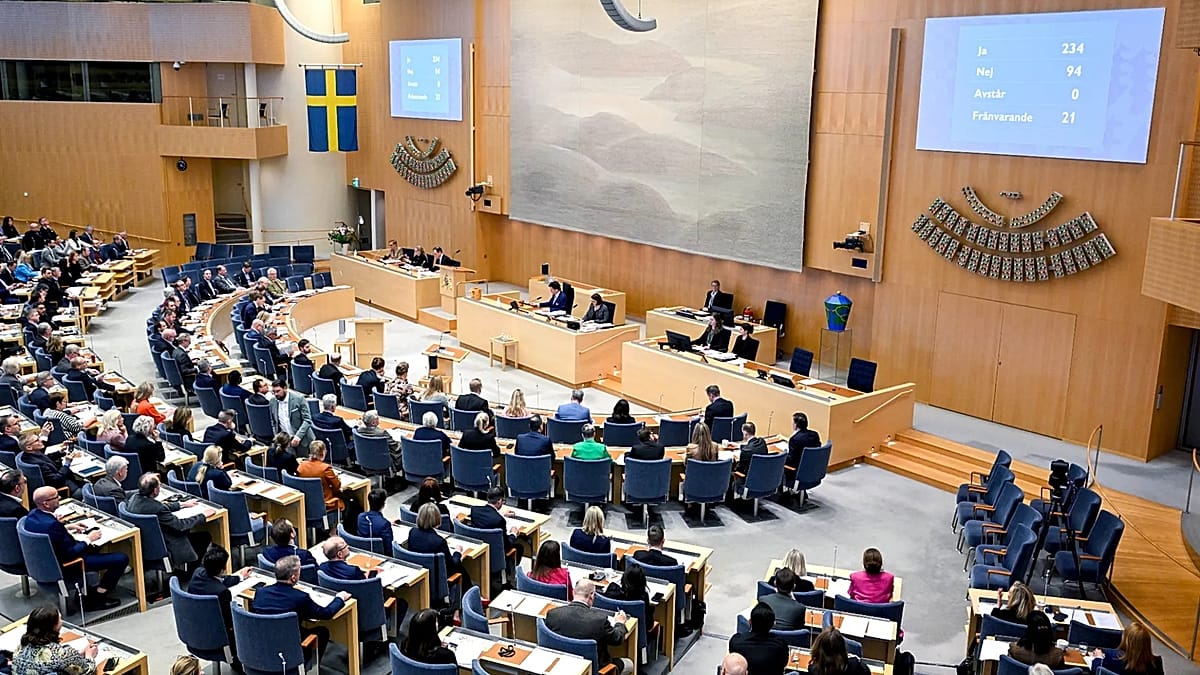
The government has sent a bill to the Council on Legislation, which reviews draft laws for constitutional and legal consistency. The administration plans to submit the legislation to the Riksdag, Sweden's parliament, in June.
This restructuring reflects a broader European reassessment of security priorities. As NATO's credibility crisis deepens amid US disengagement, European states are increasingly investing in autonomous intelligence and defense capabilities. Sweden's move also comes as Russian strikes continue to kill civilians across Ukraine, underscoring the persistent threat from Moscow.
The new agency is expected to enhance Sweden's ability to operate within NATO's intelligence-sharing framework, a key requirement for the alliance's collective defense planning. By centralizing foreign intelligence under a civilian-led body, Stockholm aims to improve coordination between military and civilian agencies while maintaining robust oversight.