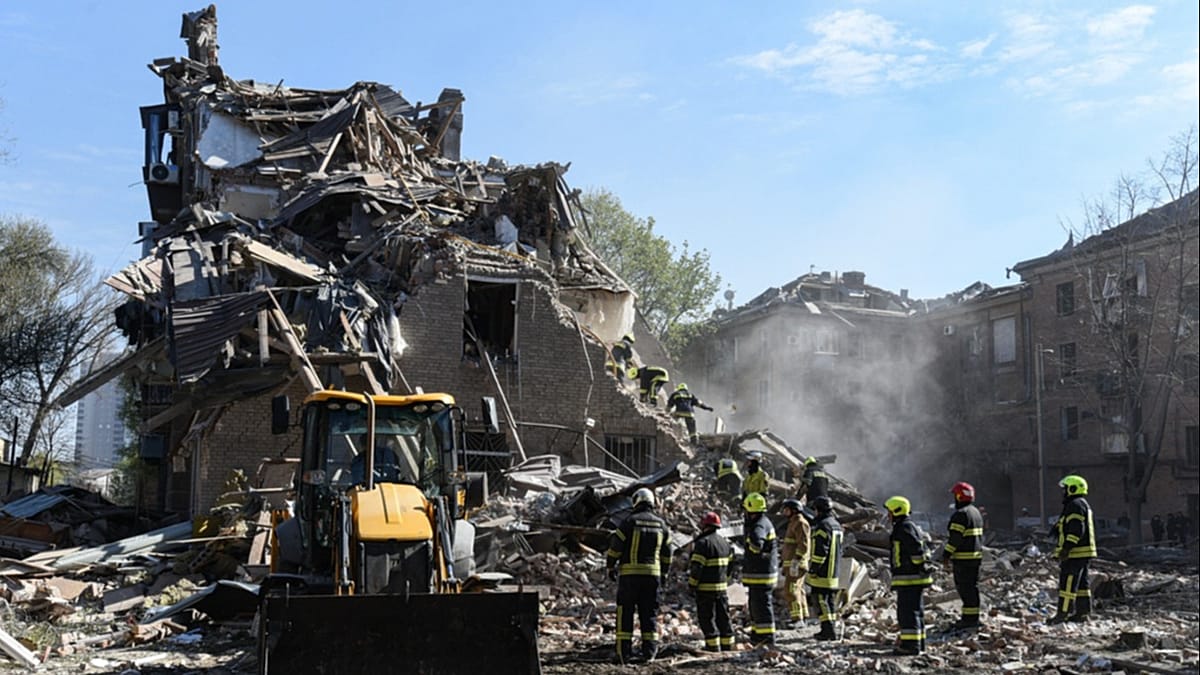
Russian forces launched a fresh wave of drone and missile strikes across Ukraine over the past 24 hours, killing at least 10 civilians and wounding more than 76, according to Ukrainian officials. The attacks, which targeted over a dozen cities, underscore Moscow's continued willingness to strike civilian infrastructure and residential areas far from the front lines.
In the southern city of Mykolaiv, a ballistic missile struck early Sunday morning, injuring five people — three men and two women — who were transported to local hospitals. The severity of their injuries remains unclear. The attack was part of a broader barrage that Ukraine's Air Force said included at least 268 drones and missiles launched from Russian territory on Saturday and into the early hours of Sunday. Ukrainian air defences intercepted 249 of those drones, but at least 19 Iranian-made Shahed drones and one ballistic missile hit their targets across 15 separate locations.
Casualties Across the East and South
In the eastern Donbas region, two people were killed in the towns of Dobropillia and Mykolaivka, according to Donetsk regional governor Vadym Filashkin. Nine others were injured in separate attacks on the region, which remains the most active stretch of the front line. In the southern Zaporizhzhia region, two more people were killed and five injured, including a child. Further south, in Kherson, Russian forces struck residential areas across 39 settlements, killing three civilians.
The attacks come as Ukraine continues to develop its long-range strike capabilities, particularly against Russian energy infrastructure. In the early hours of Sunday, Ukrainian President Volodymyr Zelenskyy announced that two oil tankers had been struck at the entrance to the port of Novorossiysk on the Black Sea. “These tankers had been actively used to transport oil – not anymore,” Zelenskyy wrote on X. “Ukraine’s long-range capabilities will continue to be developed comprehensively – at sea, in the air, and on land. Glory to Ukraine!”
Novorossiysk has become a key hub for Russia's oil exports, especially after repeated Ukrainian attacks on the annexed Crimean Peninsula forced Moscow to relocate some operations. The port is also a central node for what Kyiv describes as Russia's “shadow fleet” of tankers used to evade international sanctions. The strikes are part of a broader Ukrainian campaign to degrade Russia's ability to finance its war effort.
The latest violence follows a pattern of escalating attacks on both sides. Earlier this week, Russian drone and missile strikes killed two and injured dozens across Ukraine, while Kyiv has increasingly targeted Russian oil refineries and storage depots. The conflict shows no signs of de-escalation, with both sides investing in long-range precision weapons.
European leaders have condemned the latest attacks. The European Union has provided Ukraine with billions of euros in military aid, including air defence systems, but Kyiv continues to press for more advanced weapons and faster delivery. The strikes also come as the EU grapples with the broader implications of the war, including Ukraine's potential accession to the bloc, a process that has gained urgency after the departure of Hungarian Prime Minister Viktor Orbán from key negotiating positions.
On the diplomatic front, Ukraine has rejected Moscow's offer of a truce for Victory Day, insisting on a lasting ceasefire rather than a temporary pause. The Kremlin's proposal was widely seen as a propaganda move, given that Russian forces have continued offensive operations across the front line.
The human toll of the war continues to mount. Since the full-scale invasion began in February 2022, tens of thousands of civilians have been killed, and millions have been displaced. The latest attacks, targeting cities far from the front, serve as a grim reminder that no part of Ukraine is safe from Russian missiles and drones.