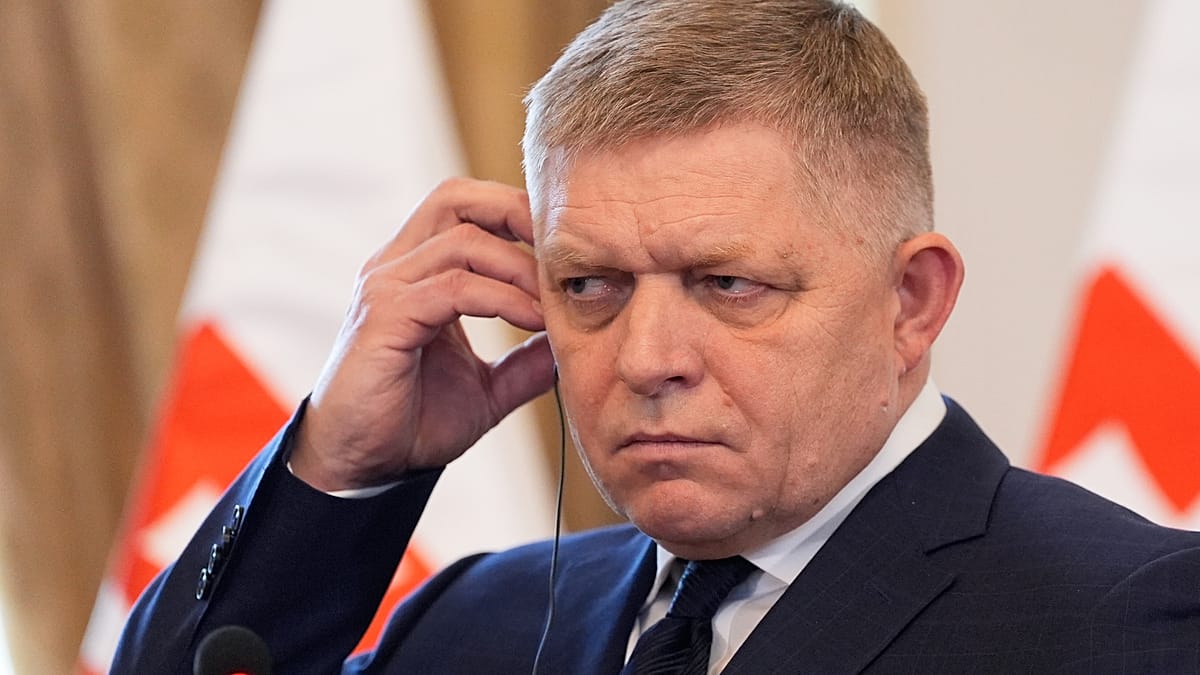
Ukrainian President Volodymyr Zelenskyy has stated that Slovak Prime Minister Robert Fico will support Ukraine's bid for European Union membership, following a phone call between the two leaders on Friday. In a statement released by the Ukrainian presidency, Zelenskyy said the conversation was constructive and that both sides are committed to strengthening bilateral relations.
“We want strong relations between our countries, and we are both committed to that. It was important to hear that Slovakia supports Ukraine’s EU membership and is ready to share its own experience of the accession process,” Zelenskyy wrote. He also revealed that he had invited Fico to Kyiv, and that Fico had invited him to Bratislava, with both invitations accepted.
The development marks a notable departure from Fico’s previous alignment with Hungarian Prime Minister Viktor Orbán, who has been the most vocal EU leader in opposing Ukraine’s accession and blocking aid packages. While Fico has not always joined Orbán in vetoing EU decisions, he has echoed similar rhetoric and taken unilateral actions, such as suspending electricity exports to Ukraine and halting fuel shipments earlier this year. These moves contributed to a weeks-long stand-off over the Druzhba oil pipeline, which supplies crude to several Central European refineries.
Fico’s Shift and the European Political Community Summit
Fico’s announcement that he and Zelenskyy will meet as early as Monday at the European Political Community summit in Yerevan suggests a potential thaw in relations. However, in his own statement on Saturday, Fico did not explicitly mention discussing Ukraine’s EU membership. Instead, he noted that while he and Zelenskyy do not see eye to eye on certain issues, Slovakia wants Ukraine to be a stable and democratic country with which it maintains friendly relations.
This ambiguity leaves room for interpretation. Fico’s government has been under pressure from both domestic and international actors to clarify its stance. Slovakia, a NATO and EU member, shares a 98-kilometer border with Ukraine and has been a key transit route for Western military aid. Yet Fico’s earlier actions, such as halting fuel shipments, had strained ties and raised questions about Bratislava’s reliability as a partner.
The timing of this shift is significant. With Orbán’s exit from the Hungarian premiership, the EU is confronting the challenges of Ukraine’s accession more directly. As Orbán's Exit Forces EU to Confront Ukraine's Accession Challenges highlights, the bloc must now navigate internal divisions while maintaining a united front against Russian aggression. Fico’s support, even if conditional, could help ease the path for Kyiv.
Meanwhile, the security situation in Ukraine remains dire. Russian Drone and Missile Strikes Kill Two, Injure Dozens Across Ukraine underscores the ongoing human cost of the war, which continues to shape the political calculus in European capitals. For Zelenskyy, securing EU membership is not just a diplomatic goal but a strategic necessity to anchor Ukraine in the Western alliance system.
Fico’s move also reflects a broader trend among Central European leaders who have sought to balance national interests with EU solidarity. While Orbán has often acted as a spoiler, Fico’s more pragmatic approach may signal a willingness to engage constructively, even if disagreements persist. The upcoming meeting in Yerevan will be a test of whether this phone call translates into concrete policy shifts.